
Photography of Birds – Set # 86
Set # 86
Eastern Towhee (M)

Eastern Towhee (M)
Eastern Towhee (F)
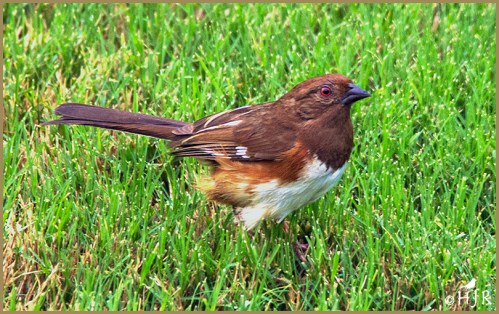
Eastern Towhee (F)
Arrival and departure of eastern towhees into summer breeding grounds varies with location. According to a literature review, eastern towhees typically arrive in New York in early April and leave by the middle of November. A review of eastern towhees in New Hampshire describes arrival in late April to May with the majority departing in September. Further south, on the border of Tennessee and North Carolina, migration to high-elevation areas within the Great Smoky Mountains begins as early as March. Eastern towhees typically leave these sites in October.
© HJ Ruiz – Avian101
Share this:

Photography of Birds – Set # 85
Set # 85
Carolina Chickadee
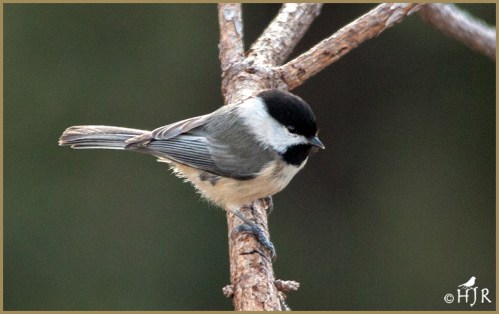
Carolina Chickadee
Carolina chickadees are able to lower their body temperatures to induce an intentional state of hypothermia called torpor. They do this to conserve energy during extremely cold winters. In extremely cold weather conditions they look for cavities where they can hide in and spend up to fifteen hours at a time in torpor; during this time they are awake but unresponsive; they should not be picked up and handled at this time, as the stress of being held may cause their death.
Tufted Titmouse

Tufted Titmouse
The lifespan of the tufted titmouse is approximately 2.1 years, although it can live for more than ten years. On average, these birds will have a clutch size of five to seven eggs. Unlike many birds, the offspring of tufted titmice will often stay with their parents during the winter, and even after the first year of their life. Sometimes, a bird born the year before will help its parents raise the next year’s young.
© HJ Ruiz – Avian101
Share this:

Framed Memories # 4
-

- Northern Cardinal (M)
-
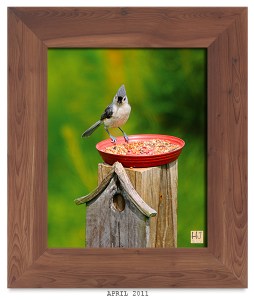
- Tufted Titmouse
© HJ Ruiz – Avian101
Share this:

Photography of Birds – Set # 84
Set # 84
Northern Mockingbird
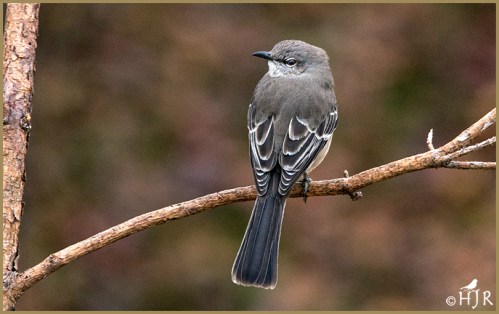
Northern Mockingbird
The birds aggressively defend their nests and surrounding areas against other birds and animals. When a predator is persistent, mockingbirds from neighboring territories may be summoned by distinct calls to join the defense. Other birds may gather to watch as the mockingbirds drive away the intruder. In addition to harassing domestic cats and dogs that they consider a threat, mockingbirds will at times target humans. The birds are bold, and will attack much larger birds, even hawks.
Mourning Dove
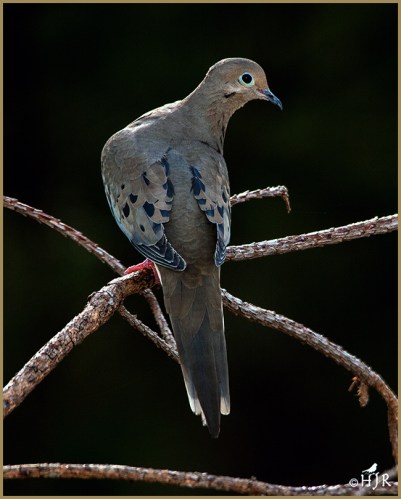
Mourning Dove
Like other columbines, the mourning dove drinks by suction, without lifting or tilting its head. It often gathers at drinking spots around dawn and dusk.
Mourning doves eat almost exclusively seeds, which make up more than 99% of their diet. Rarely, they will eat snails or insects. Mourning doves generally eat enough to fill their crops and then fly away to digest while resting. They often swallow grit such as fine gravel or sand to assist with digestion. The species usually forages on the ground, walking but not hopping. At bird feeders, mourning doves are attracted to one of the largest ranges of seed types of any North American bird, with a preference for rapeseed, corn, millet, safflower, and sunflower seeds.
© HJ Ruiz – Avian101
Share this:

Read Past Reviews

Book # 69

Quote from the Author
“A good chuckle is healthy, it helps you break the monotony of a serious life.” ~ H.J. Ruiz
 H.J. Ruiz - Avian101
You must be logged in to post a comment.