Photography of Birds – Set # 122
Set # 122
American Robin
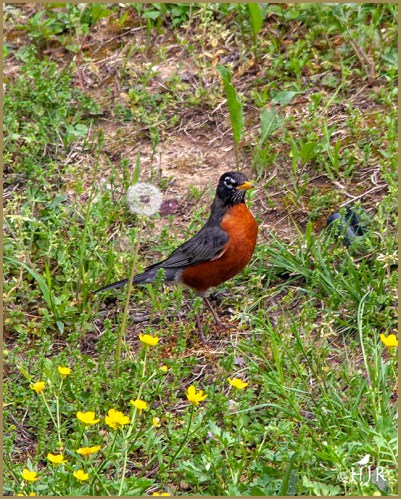
American Robin
The American robin’s diet generally consists of around 40 percent small invertebrates (mainly insects), such as earthworms, beetle grubs, caterpillars and grasshoppers, and 60 percent wild and cultivated fruits and berries. Their ability to switch to berries allows them to winter much farther north than most other North American thrushes. They will flock to fermented Pyracantha berries, and after eating sufficient quantities will exhibit intoxicated behavior, such as falling over while walking. Robins forage primarily on the ground for soft-bodied invertebrates, and find worms by sight (and sometimes by hearing).
Eastern Bluebird
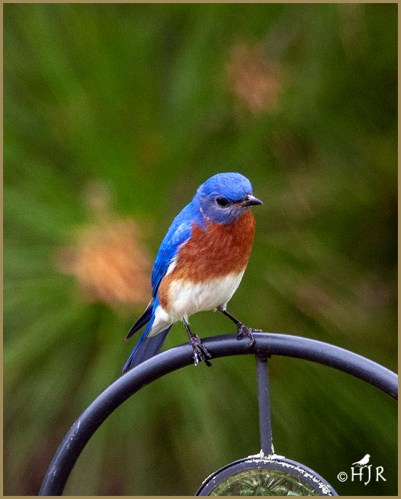
Eastern Bluebird
Both parents cooperate in raising the young, which they feed a diet consisting almost entirely of insects. Some young stay around the nest to help raise another brood. Fledglings are grayish in color, with speckled breasts. The blue color becomes much more prominent and the speckles on their breasts disappear as they mature. Bluebirds may begin breeding the summer after they are hatched.
© HJ Ruiz – Avian101
Share this:

Red Gallery – Northern Cardinal

Photo Gallery


© HJ Ruiz – Avian101
Share this:

Photography of Birds – Set # 121
Set # 121
Tufted Titmouse

Tufted Titmouse
Its habitat is deciduous and mixed woods as well as gardens, parks, and shrublands. Although the tufted titmouse is non-migratory and originally native to Ohio and Mississippi, factors such as bird feeders have caused these birds to occupy a larger amount of territory across the United States and stretching into Ontario, Canada. From 1966 – 2015 the tufted titmouse population has increased by more than 1.5% per year throughout the northeastern U.S., Michigan, and Wisconsin.
Chipping Sparrow
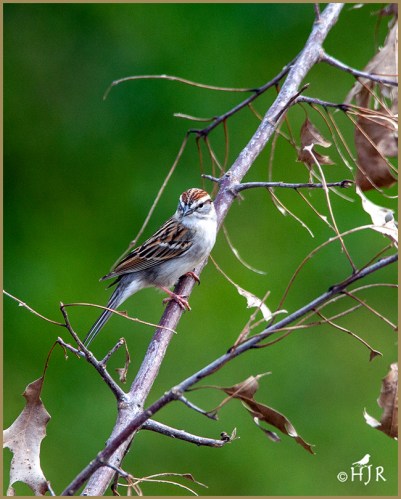
Chipping Sparrow
In the winter, chipping sparrows are gregarious and form flocks, sometimes associating with other bird species. They mostly forage on the ground for seeds and other food items, as well as clambering on plants and trees, feeding on buds and small arthropods. In the west of their range they breed mainly in coniferous forests, but in the east, they choose woodland, farmland, parks and gardens. Breeding starts in late April and May and the nest is often built in a tree.
© HJ Ruiz – Avian101
Share this:

Photography of Birds – Set # 120
Set # 120
Mourning Doves
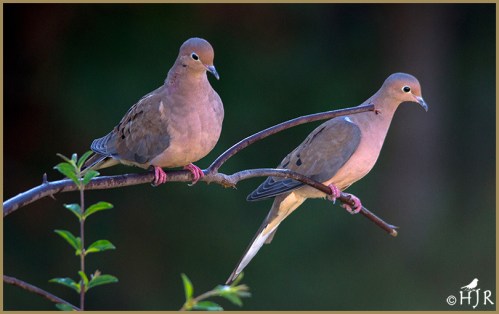
Mourning Doves
Most mourning doves migrate along flyways over land. On rare occasions, mourning doves have been seen flying over the Gulf of Mexico, but this appears to be exceptional. Mourning doves (Z. m. carolinensis) are native to the North Atlantic archipelago of Bermuda, approximately 1,044 km (649 mi) east-southeast of Cape Hatteras, North Carolina (the nearest landfall); 1,236 km (768 mi) south of Cape Sable Island, Nova Scotia; and 1,538 km (956 mi) due north of the British Virgin Islands, from which they had been migratory, but since the 1950s have become year-round residents.
Blue Jays
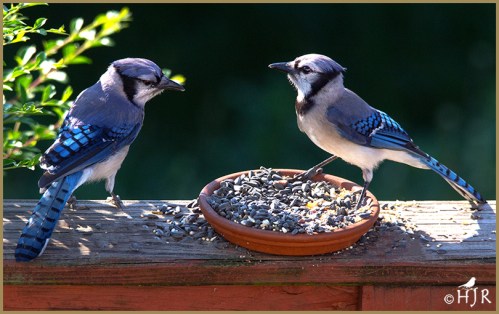
Blue Jays
The blue jay occurs from southern Canada (including the southern areas of provinces from Alberta eastward to Quebec and throughout the Atlantic provinces) and throughout the eastern and central United States south to Florida and northeastern Texas. The western edge of the range stops where the arid pine forest and scrub habitat of the closely related Steller’s jay (C. stelleri) begins, generally in the eastern foothills of the Rocky Mountains. Recently, the range of the blue jay has extended northwestwards so that it is now a rare but regularly seen winter visitor along the northern US and southern Canadian Pacific Coast.
© HJ Ruiz – Avian101
Share this:

Read Past Reviews

Book # 69
Quote from the Author
“A good chuckle is healthy, it helps you break the monotony of a serious life.” ~ H.J. Ruiz
 H.J. Ruiz - Avian101
You must be logged in to post a comment.