
Photography of Birds – Set # 128
Set # 128
Brown-headed Cowbird
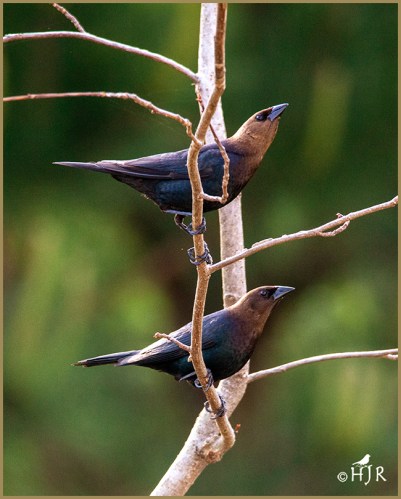
Brown-headed Cowbirds
Before European settlement, the brown-headed cowbird followed bison herds across the prairies. Its population expanded with the clearing of forested areas and the introduction of new grazing animals by settlers across North America. Brown-headed cowbirds are now commonly seen at suburban birdfeeders.
European Starlings (Juv.)
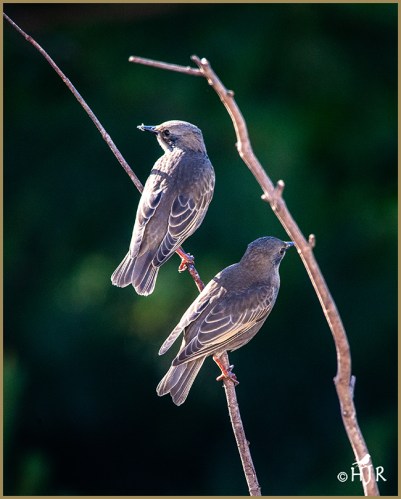
European Starlings (Juv.)
The species has declined in numbers in parts of northern and western Europe since the 1980s due to fewer grassland invertebrates being available as food for growing chicks. Despite this, its huge global population is not thought to be declining significantly, so the common starling is classified as being of Least Concern by the International Union for Conservation of Nature.
© HJ Ruiz – Avian101
Share this:

Photography of Birds – Set # 127
Set # 127
Eastern Phoebe
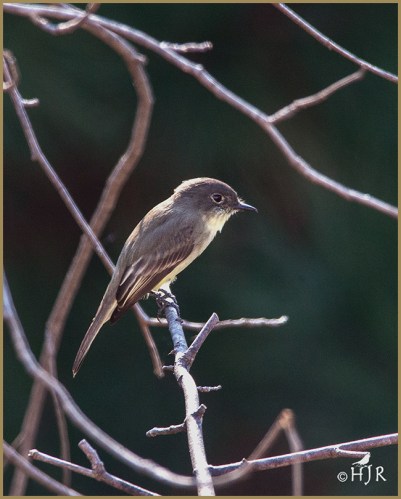
Eastern Phoebe
This species appears remarkably big-headed, especially if it puffs up the small crest. Its plumage is gray-brown above. It has a white throat, dirty gray breast and buffish underparts which become whiter during the breeding season. Two indistinct buff bars are present on each wing. Its lack of an eye ring and wingbars, and its all dark bill distinguish it from other North American tyrant flycatchers, and it pumps its tail up and down like other phoebes when perching on a branch.
Pine Warbler
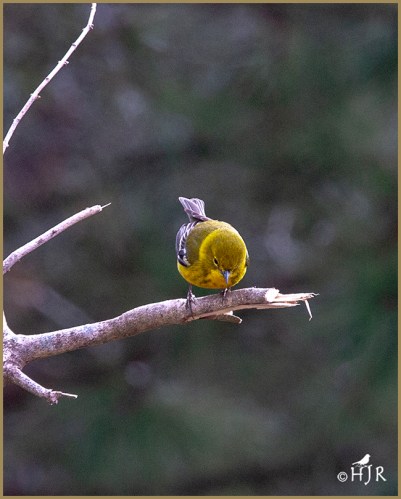
Pine Warbler
They forage slowly on tree trunks and branches by poking their bill into pine cones. These birds also find food by searching for it on the ground. These birds mainly eat insects, seeds and berries.
Their nests are deep, open cups, which are placed near the end of a tree branch. Pine warblers prefer to nest in pine trees, hence their names. Three to five blotched white eggs are laid.
© HJ Ruiz – Avian101
Share this:

Red Gallery – Northern Cardinal

Photo Gallery


© HJ Ruiz – Avian101
Share this:

Photography of Birds – Set # 126
Set # 126
Blue-Gray Gnatcatcher
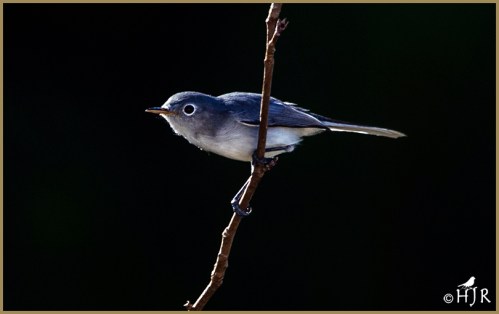
Blue-Gray Gnatcatcher
They forage actively in trees or shrubs, mainly eating insects, insect eggs and spiders. They may hover over foliage while snatching prey (gleaning), or fly to catch insects in flight (hawking).
The tail is often held upright while defending territory or searching for food.
Eastern Towhee (Juv.)
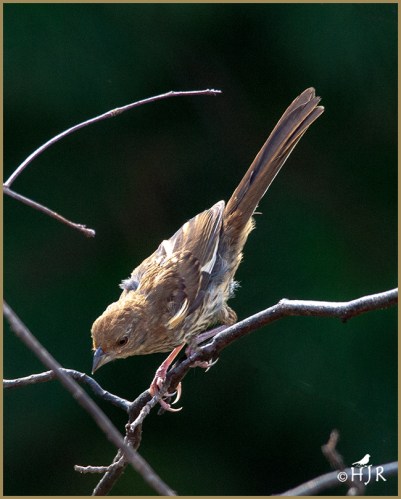
Eastern Towhee (Juv.)
Adults have rufous sides, a white belly, and a long dark tail with white edges. The eyes are red, white for birds in the southeast. Males have a black head, upper body, and tail; these parts are brown in the female. Juveniles are brown overall. Eastern towhees of all ages and both sexes generally are unmistakable and are not known to co-exist with the similar western spotted towhee.
© HJ Ruiz – Avian101
Share this:

Read Past Reviews

Book # 69
Quote from the Author
“A good chuckle is healthy, it helps you break the monotony of a serious life.” ~ H.J. Ruiz
 H.J. Ruiz - Avian101
You must be logged in to post a comment.