
Photography of Birds – Set # 178
Set # 178
American Goldfinch

American Goldfinch (M)
The American Goldfinch (Spinus tristis) is a small North American bird in the finch family. It is migratory, ranging from mid-Alberta to North Carolina during the breeding season, and from just south of the Canada–United States border to Mexico during the winter.The only finch in its subfamily to undergo a complete molt, the American goldfinch displays sexual dichromatism: the male is a vibrant yellow in the summer and an olive color during the winter, while the female is a dull yellow-brown shade which brightens only slightly during the summer. The male displays brightly colored plumage during the breeding season to attract a mate.
House Finch (M)
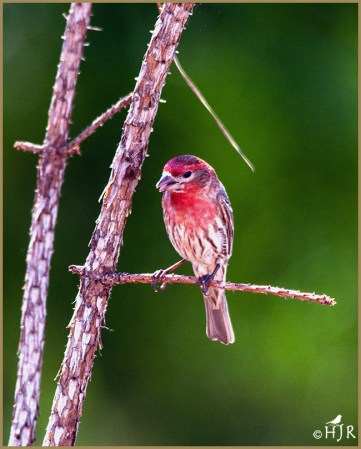
House Finch (M)
These birds are mainly permanent residents throughout their range; some northern and eastern birds migrate south. Their breeding habitat is urban and suburban areas across North America, as well as various semi-open areas in the west from southern Canada to the Mexican state of Oaxaca; the population in central Chiapas may be descended from escaped cage-birds. Analyses of nest records from House Finches in California spanning more than a century found that egg‐laying occurred significantly earlier in warmer springs.
© HJ Ruiz – Avian101
Share this:

Photography of Birds – Set # 177
Set # 177
Willet
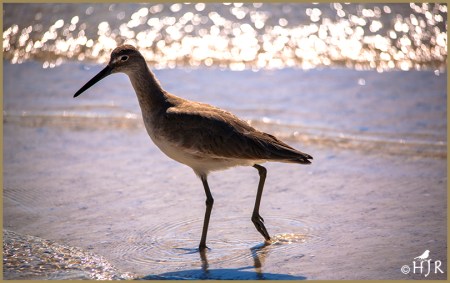
Willet
The Willet (Tringa semipalmata), is a large shorebird in the family Scolopacidae. It is a relatively large and robust sandpiper, and is the largest of the species called “shanks” in the genus Tringa. Its closest relative is the lesser yellowlegs, a much smaller bird with a very different appearance apart from the fine, clear, and dense pattern of the neck, which both species show in breeding plumage. It breeds in North America and the West Indies and winters in southern North America, Central America, the West Indies and South America.
Reddish Egret
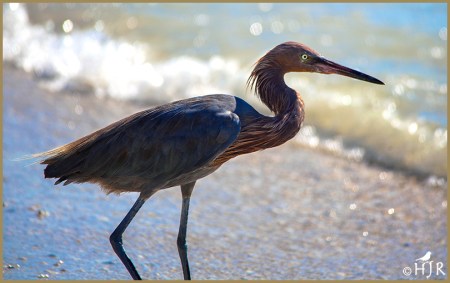
Reddish Egret
The reddish egret is considered one of the most active herons, and is often seen on the move. It stalks its prey visually in shallow water far more actively than other herons and egrets, frequently running energetically and using the shadow of its wings to reduce glare on the water once it is in position to spear a fish; the result is a fascinating dance. Due to its bold, rapacious yet graceful feeding behavior, author Pete Dunne nicknamed the reddish egret “the Tyrannosaurus rex of the Flats”. It eats fish, frogs, crustaceans, and insects. The bird’s usual cry is a low, guttural croak.
© HJ Ruiz – Avian101
Share this:

Red Art Gallery – Northern Cardinal # 3
Red Art Gallery
-

- Male
-
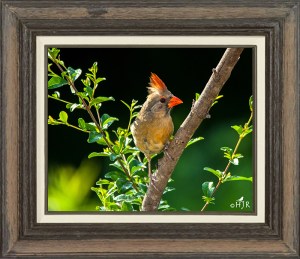
- Female
© HJ Ruiz – Avian101
Share this:

Photography of Birds – Set # 176
Set # 176
Tufted Titmouse
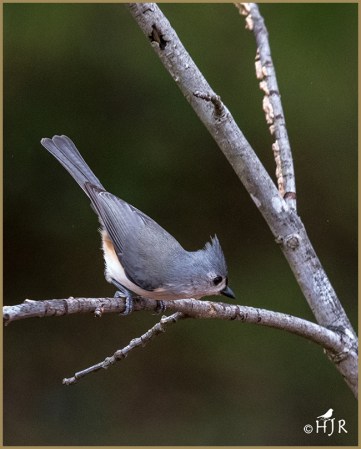
Tufted Titmouse
The lifespan of the Tufted Titmouse is approximately 2.1 years, although it can live for more than ten years. On average, these birds will have a clutch size of five to seven eggs. Unlike many birds, the offspring of tufted titmice will often stay with their parents during the winter, and even after the first year of their life. Sometimes, a bird born the year before will help its parents raise the next year’s young.
Blue-Gray Gnatcatcher
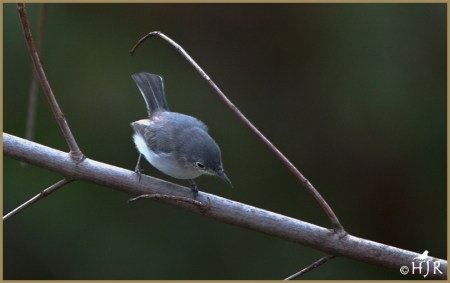
Blue-Gray Gnatcatcher
The Blue-Gray Gnatcatcher (Polioptila caerulea) is a very small songbird, 10–13 cm (3.9–5.1 in) in length, 6.3 in (16 cm) in wingspan, and weighing only 5–7 g (0.18–0.25 oz). Adult males are blue-gray on the upperparts with white underparts, have a slender dark bill, and a long black tail edged in white. Females are less blue, while juveniles are greenish-gray. Both sexes have a white eye ring.
© HJ Ruiz – Avian101
Share this:

Read Past Reviews

Book # 69
Quote from the Author
“A good chuckle is healthy, it helps you break the monotony of a serious life.” ~ H.J. Ruiz
 H.J. Ruiz - Avian101
You must be logged in to post a comment.