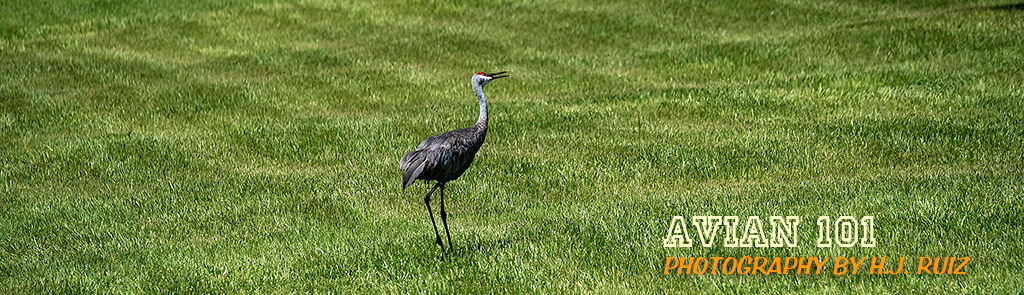
Photography of Birds – Set # 216
Set # 216
Blue Jay
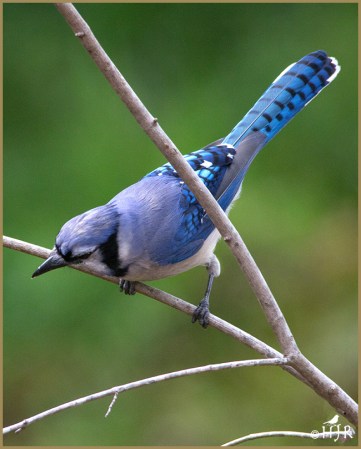
Blue Jay
Blue Jays have strong black bills which they use for cracking nuts, usually while holding them with their feet, and for eating corn, grains and seeds. Its food is sought both on the ground and in trees and includes virtually all known types of plant and animal sources, such as acorns and beech mast, weed seeds, grain, fruits and other berries, peanuts, bread, meat, small invertebrates of many types, scraps in town parks, bird-table food and rarely eggs and nestlings.
Eastern Bluebird (M)
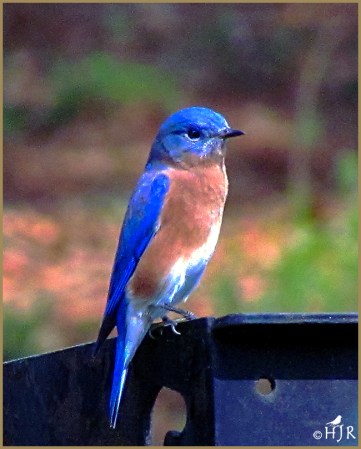
Eastern Bluebird (M)
Eastern Bluebirds thrived in the 1700s and 1800s. This flourishing is thought to be connected with the activity of settlers. Clearing forests made new habitat available for bluebirds and nesting sites were created in the increasing numbers of apple orchards and in wooden fence posts that eventually rotted. It is believed that bluebirds were most abundant around 1900. However, increasing competition with the invasive species of European Starlings and House Sparrows along with loss of farmland began to take a toll on bluebird populations.
© HJ Ruiz – Avian101
Share this:

Special Places – # 2
Photo Gallery
-

- Scene shot at my Art Studio at home.
-

- Under a wooden Pier in Florida, Westcoast.
-

- Ship docked at NYC West – Hudson River Pier
-

- Rural old house in Upstate New York.
© HJ Ruiz – Avian101
Share this:

Red Art Gallery – Northern Cardinal # 11
Red Art Gallery
-
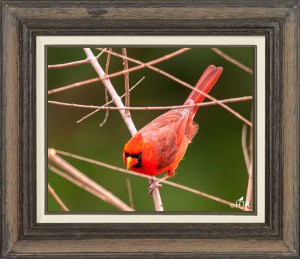
- Male
-

- Female
© HJ Ruiz – Avian101
Share this:

Photography of Birds – Set # 215
Set # 215
Osprey
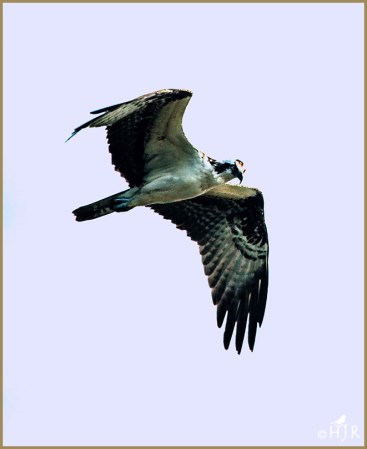
Osprey
The Osprey differs in several respects from other diurnal birds of prey. Its toes are of equal length, its tarsi are reticulate, and its talons are rounded, rather than grooved. The osprey and owls are the only raptors whose outer toe is reversible, allowing them to grasp their prey with two toes in front and two behind. This is particularly helpful when they grab slippery fish. It has always presented something of a riddle to taxonomists, but here it is treated as the sole living member of the family Pandionidae, and the family listed in its traditional place as part of the order Falconiformes.
Brown Pelicans
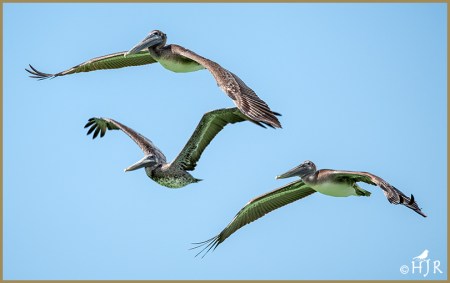
Brown Pelicans
The Brown Pelican mainly feeds on fish, but occasionally eats amphibians, crustaceans, and the eggs and nestlings of birds. It nests in colonies in secluded areas, often on islands, vegetated land among sand dunes, thickets of shrubs and trees, and mangroves. Females lay two or three oval, chalky white eggs. Incubation takes 28 to 30 days with both sexes sharing duties. The newly hatched chicks are pink, turning gray or black within 4 to 14 days. About 63 days are needed for chicks to fledge. Six to 9 weeks after hatching, the juveniles leave the nest, and gather into small groups known as pods.
© HJ Ruiz – Avian101
Share this:

Read Past Reviews

Book # 69
Quote from the Author
“A good chuckle is healthy, it helps you break the monotony of a serious life.” ~ H.J. Ruiz
 H.J. Ruiz - Avian101
You must be logged in to post a comment.