
Red Art Gallery – Northern Cardinal # 15
Red Art Gallery
-

- Male
-
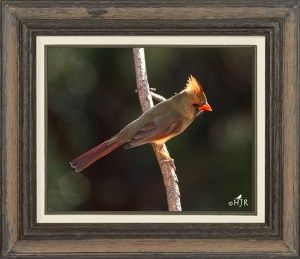
- Female
© HJ Ruiz – Avian101
Share this:

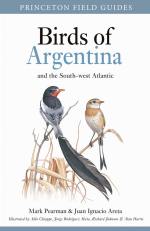
Book Review # 62 – Birds of Argentina
Birds of Argentina
And the South-West Atlantic
Author:
Mark Pearman and Juan Ignacio Areta
Publisher:
Princeton University Press
Brief Review:
More Info
The authors, Mark Pearman and Juan Ignacio Areta are the creators of this book, being the only up to date English language guide to the birds of Argentina and the islands of the Southwest Atlantic.
It’s a straight forward guide where you find descriptions of 1075 species of birds including, their location areas, whether they are residents, endemics, migrants and vagrants. There are 2300 images, 200 plates of birds illustrated by professional artists: Aldo Chiappe, Jorge Rodriguez Mata, Richard Johnson and Alan Harris.
This 480 pages guide has a great deal of information for the English speaking Ornithologists, Birders or any person interested to learn about the avian status in Argentina.
Reviewed by:
H.J. Ruiz -Avian101.Wordpress.com – February 5th, 2021
© HJ Ruiz – Avian101
Share this:

Photography of Birds – Set # 231
Set # 231
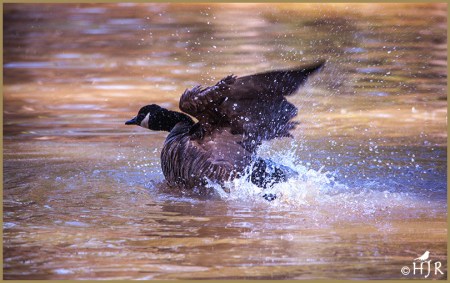
Canada Goose
Canada Goose
The Canada Goose is native to North America. It breeds in Canada and the northern United States in a wide range of habitats. The Great Lakes region maintains a very large population of Canada geese. Canada geese occur year-round in the southern part of their breeding range, including the northern half of the United States’ eastern seaboard and Pacific coast, and areas in-between. Between California and South Carolina in the southern United States and in northern Mexico, Canada geese are primarily present as migrants from further north during the winter.
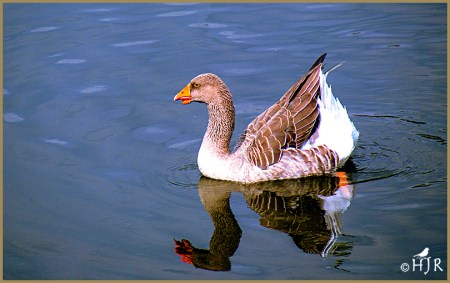
Graylag Goose
Graylag Goose
The Greylag Goose (Anser anser) is a species of large goose in the waterfowl family Anatidae and the type species of the genus Anser. It has mottled and barred grey and white plumage and an orange beak and pink legs. A large bird, it measures between 74 and 91 centimetres (29 and 36 in) in length, with an average weight of 3.3 kilograms (7.3 lb). Its distribution is widespread, with birds from the north of its range in Europe and Asia migrating southwards to spend the winter in warmer places. It is the type species of the genus Anser and is the ancestor of the domestic goose, having been domesticated at least as early as 1360 BC. The genus name is from anser, the Latin for “goose”.
Greylag geese travel to their northerly breeding grounds in spring, nesting on moorlands, in marshes, around lakes and on coastal islands. They normally mate for life and nest on the ground among vegetation. A clutch of three to five eggs is laid; the female incubates the eggs and both parents defend and rear the young. The birds stay together as a family group, migrating southwards in autumn as part of a flock, and separating the following year. During the winter they occupy semi-aquatic habitats, estuaries, marshes and flooded fields, feeding on grass and often consuming agricultural crops. Some populations, such as those in Southern England and in urban areas across the species’ range, are primarily resident and occupy the same area year-round.
© HJ Ruiz – Avian101
Share this:

Photography of Birds – Set # 230
Set # 230
Willet
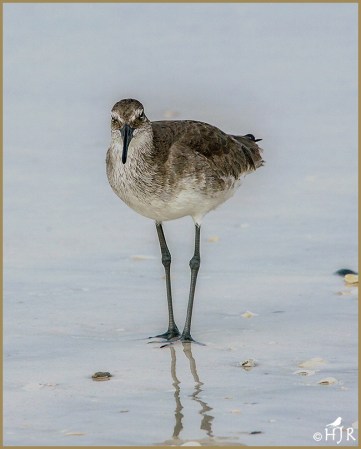
Willet
The Willet is an inelegant and heavily built shorebird with a structure similar to that of the common redshank but being larger in size than the greater yellowlegs while resembling a godwit in flight with black primary coverts and primaries contrasting with a broad white band, white secondaries with a white rump and gray tail band. The black underwing coverts may be conspicuous in flight. Willets are identified on the ground by their gray legs and shortish, heavy but straight bill.The plumage is gray above with a white rump, and white below with a distinct white area above the lores and a narrow whitish eye ring giving the bird a spectacled appearance. The underparts are white. In breeding plumage the bird shows brown barring on the upperparts. Non-breeding birds are plainer.
Little Blue Heron
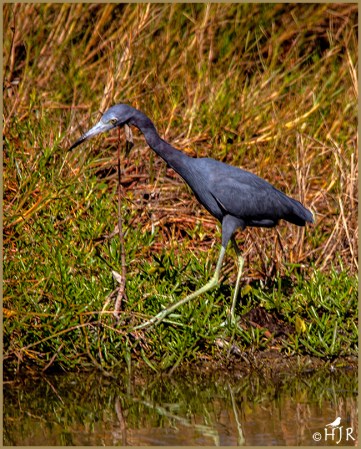
Little Blue Heron
The Little Blue Herons prefer freshwater swamps and lagoons in the South, while on islands in the North they inhabit coastal thickets. They breed in sub-tropical and tropical swamps with mangrove vegetation, wetlands (bogs, fens, peatlands, etc.) and marine intertidal salt marshes. The little blue heron nests in colonies, often with other herons, usually on platforms of sticks in trees or shrubs. Three to seven light blue eggs are laid. The little blue heron stalks its prey methodically in shallow water, often running as it does so. It eats fish, frogs, crustaceans, small rodents and insects. It eats more insects than the larger herons. Adults usually forage alone, while immatures usually feed in groups.
© HJ Ruiz – Avian101
Share this:

Read Past Reviews

Book # 69
Quote from the Author
“A good chuckle is healthy, it helps you break the monotony of a serious life.” ~ H.J. Ruiz
 H.J. Ruiz - Avian101
You must be logged in to post a comment.