Special Places # 12
Photo Art by H.J. Ruiz
Photo Gallery
-
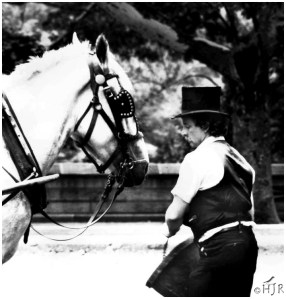
- Central Park, NYC
-

- Lima, Peru
-

- The Loop, Chicago
-
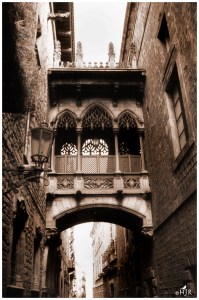
- Barcelona, Spain
-
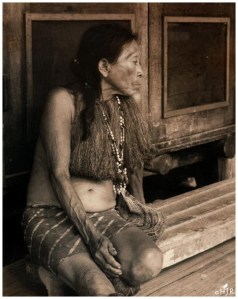
- Iquitos, Peru
-

- Jerusalem, Israel
© HJ Ruiz – Avian101
Share this:

Red Art Gallery – Northern Cardinal # 21
Red Art Gallery
Photo Gallery
-
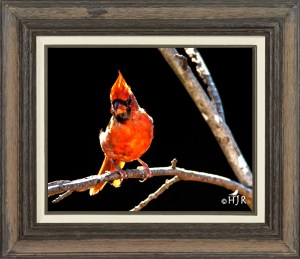
- Male (Juv.)
-
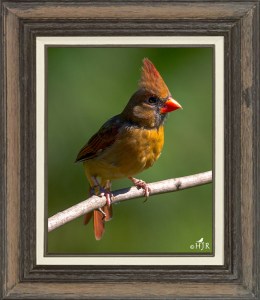
- Female (Juv.)
© HJ Ruiz – Avian101
Share this:

Photography of Birds – Set # 253
Set # 253
Black-bellied Plover
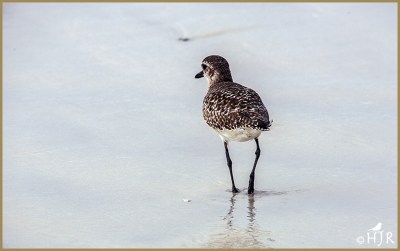
Black-bellied Plover (Winter plumage)
The Black-bellied Plover migrate to winter in coastal areas throughout the world. In the New World they winter from southwest British Columbia and Massachusetts south to Argentina and Chile, in the western Old World from Ireland and southwestern Norway south throughout coastal Africa to South Africa, and in the eastern Old World, from southern Japan south throughout coastal southern Asia and Australia, with a few reaching New Zealand. Most of the migrants to Australia are female. It makes regular non-stop transcontinental flights over Asia, Europe, and North America, but is mostly a rare vagrant on the ground in the interior of continents, only landing occasionally if forced down by severe weather, or to feed on the coast-like shores of very large lakes such as the Great Lakes, where it is a common passage migrant.
Peruvian Booby
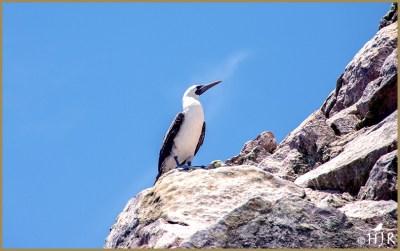
Peruvian Booby
Peruvian Boobies have relatively low wing loading, and are considered glide-flappers, meaning they alternate active flapping with short periods of gliding. Because of their wing morphology and style of flight, they have a preference of flying across the wind, as opposed to flying with a tailwind or headwind. This is beneficial because it requires less energy than flying directly into the wind, while it results in a higher prey encounter rate than flying at high speed with a tailwind.
The average speed of the Peruvian booby is approximately 44 km/hour, however they have been seen to be able to fly at speeds up to 139 km/hour.
© HJ Ruiz – Avian101
Share this:

Photography of Birds – Set # 252
Set # 252
House Finch (M)

House Finch (M)
House Finches forage on the ground or in vegetation normally. They primarily eat grains, seeds and berries, being voracious consumers of weed seeds such as nettle and dandelion; included are incidental small insects such as aphids. They are frequent visitors to bird feeders throughout the year, particularly if stocked with sunflower or nyjer seed, and will congregate at hanging nyjer sock feeders. The house finch is known to damage orchard fruit and consume commercially grown grain, but is generally considered an annoyance rather than a significant pest.
Purple Finch (F)

Purple Finch (F)
The Purple Finches species and the other “American rosefinches” were formerly included with the rosefinches of Eurasia in the genus Carpodacus; however, the three North American species are not closely related to the rosefinches of the Old World, and have thus been moved to the genus Haemorhous by most taxonomic authorities.
It is included in the finch family, Fringillidae, which is made up of passerine birds found in the northern hemisphere, Africa, and South America. The purple finch was originally described by Johann Friedrich Gmelin in 1789.
There are two subspecies of the purple finch, H. p. purpureus and H. p. californicus. H. p. californicus was identified by Spencer F. Baird in 1858. It differs from the nominate subspecies in that it has a longer tail and shorter wings. The plumage of both males and females is darker, and the coloration of the females is more greenish. The bill of H. p. californicus is also longer than that of the nominate subspecies.
© HJ Ruiz – Avian101
Share this:

Read Past Reviews

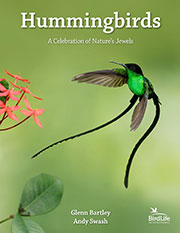
Book # 69
Quote from the Author
“A good chuckle is healthy, it helps you break the monotony of a serious life.” ~ H.J. Ruiz
 H.J. Ruiz - Avian101
You must be logged in to post a comment.