
Photography of Birds – Set # 264
Set # 264
Pekin Duck
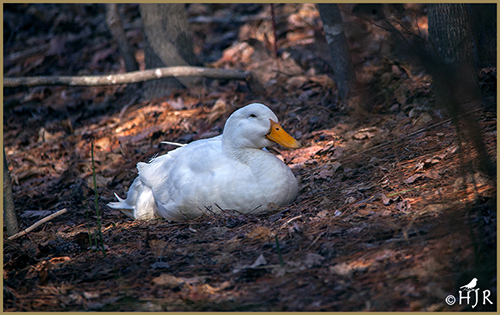
In 1872, James E. Palmer of Stonington, Connecticut, loaded fifteen white ducks of this type for shipment to a businessman named McGrath in the United States. The birds were loaded at Shanghai but had been hatched in Peking (now called Beijing). Nine of them – six hens and three drakes – survived the voyage, which took 124 days and reached New York City on 13 March 1873 Five of the surviving birds were dispatched to McGrath but were eaten before they reached him. Palmer’s four birds became the foundation stock of the American Pekin; by July 1873, his three hens had laid more than three hundred eggs.
Black Skimmer

The black skimmer breeds in loose groups on sandbanks and sandy beaches in the Americas, the three to seven heavily dark-blotched buff or bluish eggs being incubated by both the male and female. The chicks leave the nest as soon as they hatch and lie inconspicuously in the nest depression or “scrape” where they are shaded from high temperatures by the parents. They may dig their own depressions in the sand at times. Parents feed the young almost exclusively during the day with almost no feeding occurring at night, due to the entire population of adults sometimes departing the colony to forage. Although the mandibles are of equal length at hatching, they rapidly become unequal during fledging.
© HJ Ruiz – Avian101
Share this:

Framed Memories # 43
Photo Gallery


© HJ Ruiz – Avian101
Share this:

Book Review # 64
Flight Identification of European Passerines and Selected Landbirds
An illustrated and photographic guide
Author:
Tomasz Cofta
Publisher:
Princeton University Press – ISBN:9780691177571
This interesting illustrated guide has been written by author Tomasz Cofta, he is an experienced professional in the field of Ornithology. He is based in Gdansk, Poland. But his work has brought him to Asia, Africa, and through Europe, ringing passerines.
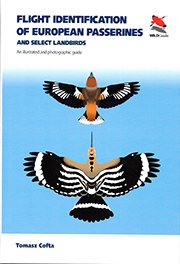
Many of the illustrations are made by him for this guide. You can find in this book of 496 pages, 850 illustrations, 2400 photos of species in flight which are mostly passerines from Europe (205) and 32 near-passerines.
The format for descriptions and important information about every species is concise and precise:
- Name
- Scientiphic name
- Size
- Structure and shape
- Coloration
- Flight
- Flock
- Calls
This guide is well structured, comprehensive and shows photos or illustration of the passerines with from every angle in order to identify the bird in question. Quite smart way to leave no doubt seeking ID.
Reviewed by:
H.J. Ruiz -Avian101.Wordpress.com – April 6th, 2021
© HJ Ruiz – Avian101
Share this:

Photography of Birds – Set # 263
Set # 263
Ruby-crowned Kinglet
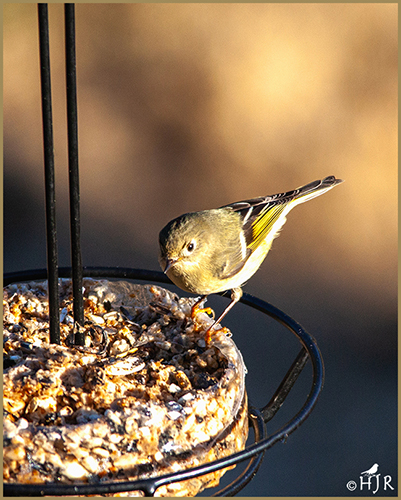
Ruby-crowned kinglets forage actively in trees or shrubs, mainly eating small insects and spiders, some berries and tree sap. They may hover over a branch while feeding and sometimes fly out to catch insects in flight. The red crest is raised when agitated or in display. Often, they perform a “broken-wing” act to draw predators away from their nest, which they will defend fearlessly, mobbing the intruder which may be a cat, squirrel, or human.
Yellow-rumped Warbler
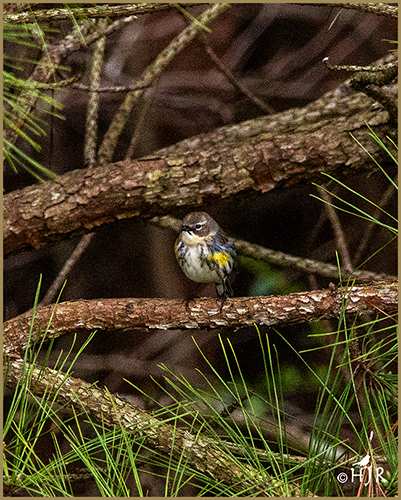
The Yellow-rumped Warbler breeds from eastern North America west to the Pacific, and southward from there into Western Mexico. “Goldman’s” yellow-rumped warbler is a non-migratory endemic within the highlands of Guatemala and the black-fronted warbler is also a non-migratory Mexican endemic. The myrtle and Audubon’s forms are migratory, traveling to the southern U.S., Mexico, Central America, and the Caribbean for winters.
© HJ Ruiz – Avian101
Share this:

Read Past Reviews

Book # 69
Quote from the Author
“A good chuckle is healthy, it helps you break the monotony of a serious life.” ~ H.J. Ruiz
 H.J. Ruiz - Avian101
You must be logged in to post a comment.