
Birds Molting Process
Now is a good time to give important information about a natural process that occurs for most animals. In our case it’s the birds molting process. It’s valid to say that great part of people do not know the details of this process, the following paragraphs will bring you up to par about this process plus a photo gallery with latest examples of the process:
In birds, molting is the periodic replacement of feathers by shedding old feathers while producing new ones. Feathers are dead structures at maturity which are gradually abraded and need to be replaced. Adult birds molt at least once a year, although many molt twice and a few three times each year. It is generally a slow process as birds rarely shed all their feathers at any one time; the bird must retain sufficient feathers to regulate its body temperature and repel moisture. The number and area of feathers that are shed varies. In some molting periods, a bird may renew only the feathers on the head and body, shedding the wing and tail feathers during a later molting period. Some species of bird become flightless during an annual “wing molt” and must seek a protected habitat with a reliable food supply during that time. While the plumage may appear thin or uneven during the molt, the bird’s general shape is maintained despite the loss of apparently many feathers.
The process of molting in birds is as follows: First, the bird begins to shed some old feathers, then pin feathers grow in to replace the old feathers. As the pin feathers become full feathers, other feathers are shed. This is a cyclical process that occurs in many phases. It is usually symmetrical, with feather loss equal on each side of the body. Because feathers make up 4–12% of a bird’s body weight, it takes a large amount of energy to replace them. For this reason, molts often occur immediately after the breeding season, but while food is still abundant.
The plumage produced during this time is called postnuptial plumage.
Photo Gallery
-
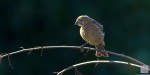
- Female Brown-headed Cowbird
-
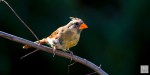
- Female Northern Cardinal
-
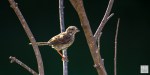
- Song Sparrow
-
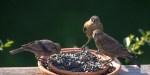
- Brown-headed Cowbirds
-
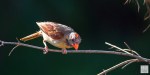
- Female Northern Cardinal
-
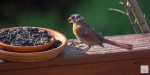
- Female Northern Cardinal
-

- Male Northern Cardinal
-
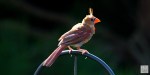
- Female Northern Cardinal
-
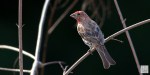
- Male House Finch
Text and photographs © HJ Ruiz – Avian101


 H.J. Ruiz - Avian101
….HJ, is it true (as it seems) that male Goldfinches molt their summer colours in exchange for a more muted version to last through the Winter months?
It’s like something like the groom and bride changing their wedding garment to a regular apparels. Thanks Lance! 🙂
Excellent informational post, HJ. Great photos too!
I do at least one post a year about molting in order to get my followers up to date about the process and not be surprised by the looks of some birds. Thanks Jet! 🙂
Great info – they do look rather ‘ragged’ at this time, don’t they?
Just some of them, reason why I posted about the molting process and I picked some photos showing birds under this natural process. Thank you Carol! 🙂
Note: We do shed skin, hair and some internal organs cells. It’s a renewal process to certain extent of our lives.
Very interesting, loved the photographs.
Thank you Susan! I appreciate your interest. 🙂
Thanks for sharing this informative post Avian, it is good when bloggers teach and help us understand life and the world around us better.
My blog is not about showing photos of birds per se. It’s about pointing a direction at the natural existence of avians and the more we know them we will learn to love them hence Nature. Thanks for sharing Ashley! 🙂
Great information and beautiful pictures, H.J.. I see many birds here too have started the process of changing clothes 🙂
It only means that the end of summer is near! Thanks Tiny! 🙂
Our yard looks like a pillow factory exploded–yup, it’s molting season!!! Thx for sharing this info! 🙂
Those feathers provide good use for building nests later for the birds that decide not to migrate and stay local. Thanks Lori! 🙂
Very informative thank you and great photos 🙂
Thanks Carol! 🙂
Great information perfectly illustrated by your photos, H.J!
Thank you Amy! It clarifies the fact that this process is a natural one. For some reason some people think that birds are sick when they see them shading the feathers. 🙂
Lovely gallery and very interesting post.
Thanks Julie! 🙂
Great post and pictures, HJ. I wonder if molting season is also designed to be in warmer weather. Right now I wish I could shed my skin. 😂
Thank you Lisa! 🙂
Great post and photos HJ!
Thanks Donna! 🙂
Pingback: Molting Bluebirds | Jet Eliot
Very Informative 🙂 love the images too 🙂
Thank you Dian! You’re welcome to my blog! 🙂 – HJ