
White Chinese Goose
The White Chinese Goose is a breed of domesticated goose descended from the wild Swan Goose. Chinese geese differ from the wild birds in much larger size and in having an often strongly developed basal knob on the upper side of the bill. The knob at the top of the beak is more prominent on males than females. By 6–8 weeks of age, the knob is already pronounced enough that it can be used for sexing. Chinese geese are a close cousin of the African goose, a heavier breed also descended from the Swan Goose.
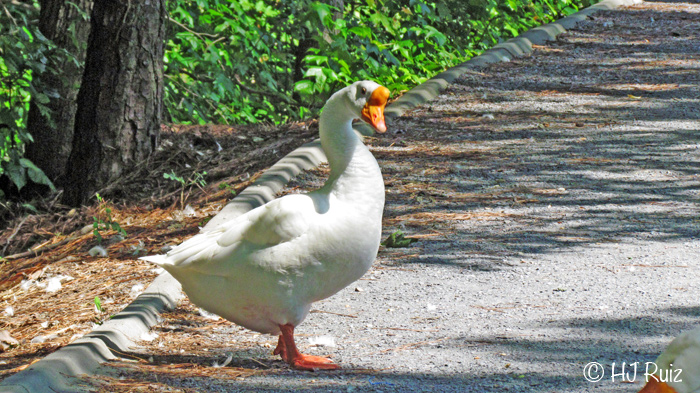
Chinese Goose
Chinese geese appear in two varieties: a brown similar to the wild Swan Goose, and white. While many domestic Chinese geese have a similar body type to other breeds, the breed standards as defined in the American Poultry Association’s Standard of Perfection and other sources call for a slimmer, taller fowl.
Chinese geese are among the better laying breeds of geese. A female Chinese goose can lay 50–60 eggs over the course of the breeding season (February to June), although there are reports of Chinese Geese laying up to 100 eggs during that time.
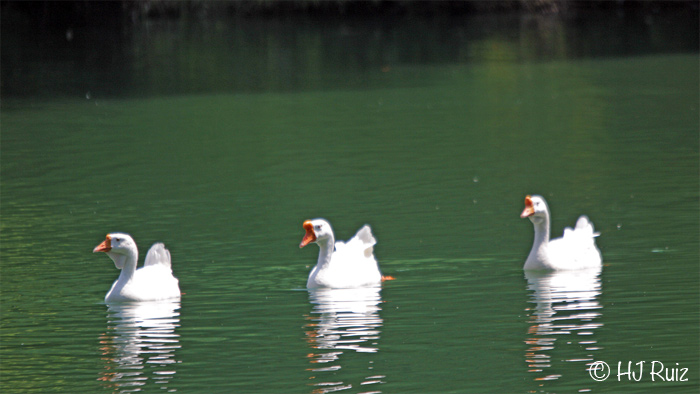
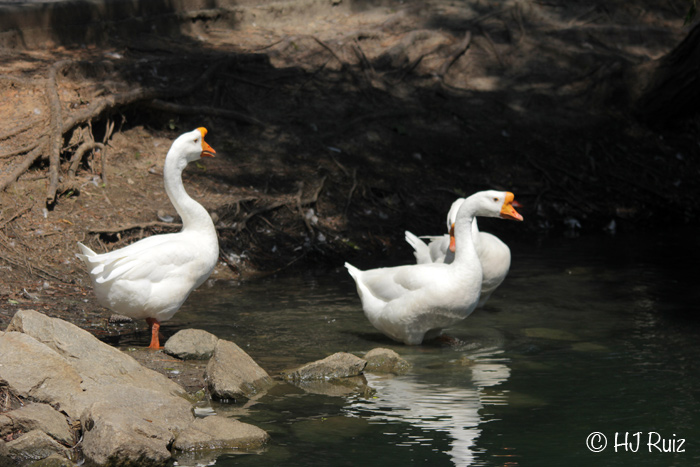
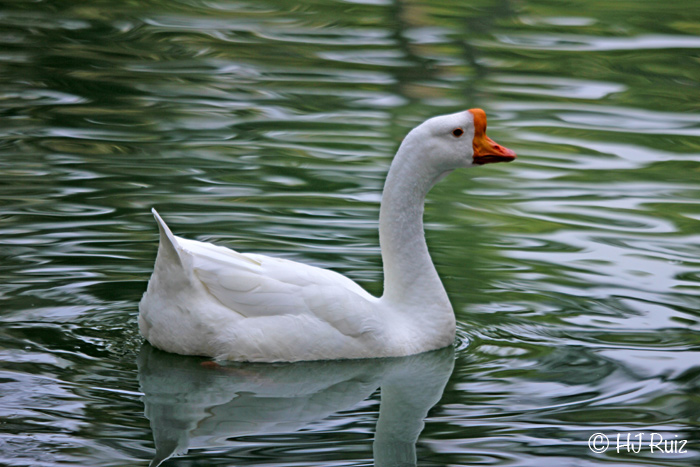
Photographs are © H.J. Ruiz – Avian 101
Text excepts available under the Creative Commons Attribution-ShareAlike License;


 H.J. Ruiz - Avian101
Pingback: White Goose and Goslings « ShutterbugSage.com
If you look closely at your goose, it lacks the “frontal knob”, however, your goose is a different breed of the same Chinese Goose. Thank you for the reference.
I like that bottom photo, H.J. Well done.
Thank you Bob! 🙂
Beautiful pictures, H.J.! I hardly see any white geese here in Holland, only the brown ones. 😉
They’re breeds that were created in China! Thank you for sharing Malou! 🙂
Interesting and beautiful photos HJ!
Thanks a lot Donna! 🙂
There are quite a few of those at Lake Murray just a mile from me.
They’re big guys, don’t mess with them, they might attack you!
There is a white Chinese goose living on the river by our house. We have noticed that his basal knob has turned black recently. He is at least 10-14 years old, other than this color change he appears healthy and active. Do you know what could be causing this color change?
Hi Eileen, The only thing that I could get after doing some searching was that, depending if the goose has been exposed to a very low weather temperature, then is very likely that it got frostbite to the knob, that causes the knob to turn black. This is common for these birds, apparently the knob is very vulnerable to frostbite. I hear that farmers use warm water to help geese avoid the chances of frostbite especially during very cold windy spells. Thank you for visiting and sharing! 🙂
Thanks do much for responding, we live in the NC mountains and it’s been a very cold winter. We will keep an eye on him, there’s a wildlife refuge that can help probably if needed. He had a mate, they had a baby but both have been gone for a number of years. We’re pretty sure he created a hybrid with a Canada goose, he’s quite the character, wonder if we should try and buy a female for him. I think they must have been pets at one time, sure is a beautiful bird to watch in the water!