Bird Flight
Basic mechanics of bird flight
Here are the explanations of the main mode of locomotion used by most of the world’s bird species.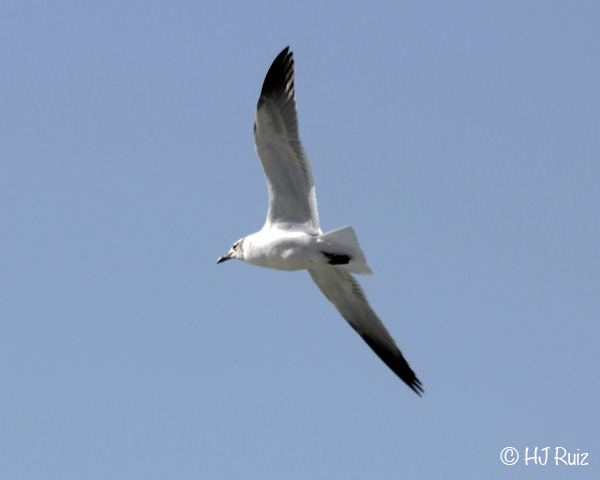
Lift
The fundamentals of bird flight are similar to those of aircraft. Lift force is produced by the action of air flow on the wing, which is an airfoil. The lift force occurs because the air has a lower pressure just above the wing and higher pressure below.
Gliding
When gliding, both birds and gliders obtain both a vertical and a forward force from their wings. This is possible because the lift force is generated at right angles to the air flow, which in gliding flight comes from slightly below the horizontal (because the bird is descending). The lift force, therefore, has a forward component that counteracts drag.
Flapping
When a bird flaps, as opposed to gliding, its wings continue to develop lift as before, but the lift is rotated forward to provide thrust, which counteracts drag and increases its speed, which has the effect of also increasing lift to counteract its weight, allowing it to maintain height or to climb. Flapping involves two stages: the down-stroke, which provides the majority of the thrust, and the up-stroke, which can also (depending on the bird’s wings) provide some thrust. At each up-stroke the wing is slightly folded inwards to reduce upward resistance. Birds change the angle of attack between the up-stroke and the down-stroke of their wings. During the down-stroke the angle of attack is increased, and is decreased during the up-stroke.
Drag
Apart from its weight, there are three major drag forces that impede a bird’s aerial flight: frictional drag (caused by the friction of air and body surfaces), form drag (due to frontal area of the bird, also known as pressure drag), and lift-induced drag (caused by the wingtip vortices). These forces are reduced by streamlining the bird’s body and wings.
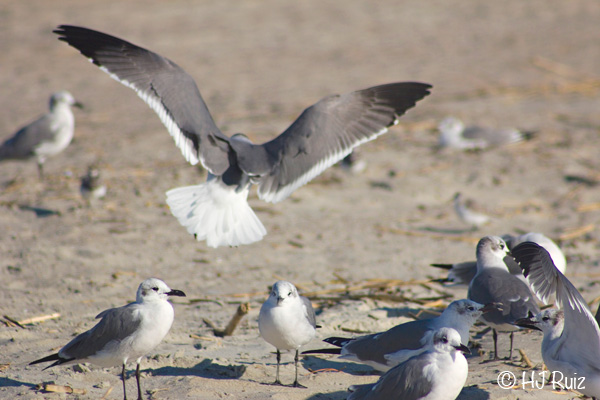
Photographs are © H.J. Ruiz – Avian 101


 H.J. Ruiz - Avian101
A nice lesson in aerodynamics HJ.
Thank you Dave! You should know my friend you’re a professional pilot! 🙂