
Rosy-billed Pochard
Rosy-billed Pochard, a.k.a. Rosybill Pochard – Spec.Name: Netta peposaca
This is a duck with a distinctive red bill on males and a slate-colored bill on females. Though classified as a diving duck, this pochard feeds more like a dabbling duck. The species name peposaca is derived from a Guaraní word for “showy wings”, referring to the broad white stripe that is only visible with stretched out wings.
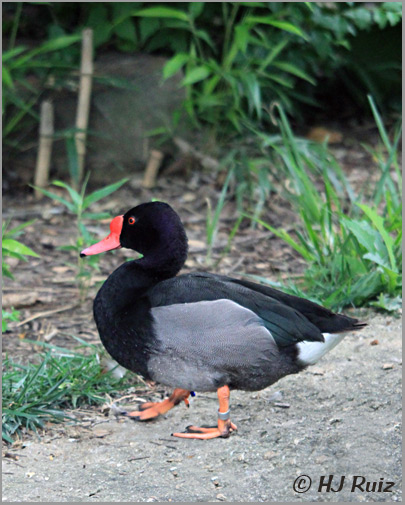
Rosy-billed Pochard
The Rosy-billed Pochard is endemic to South America. It is found in Argentina, central Chile, Paraguay, Uruguay and southern Brazil. The population in southern Argentina migrates northward during the austral winter, reaching Brazil and southern Bolivia. It is a vagrant to the Falkland Islands.
The Rosy-billed Pochard is found near freshwater lakes and marshes of temperate South America. “Although in the Pochard group, it behaves more like a dabbling duck.” Nests are hidden near the water’s edge or built in emergent vegetation. A typical clutch consists of 10 eggs and incubation is 25-26 days.
Rosy-billed are very easy to propagate in aviaries. The hens will prefer to nest on the ground among vegetation and lines the nest with down. 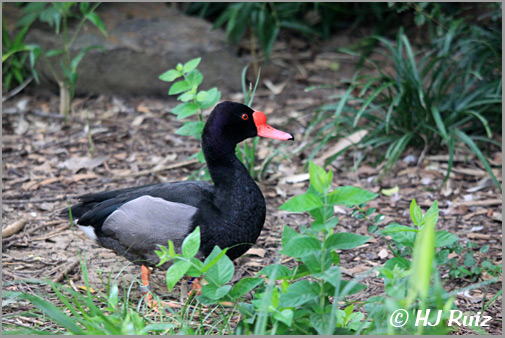
All photographs are © H.J. Ruiz – Avian101
Text is in part available under the Creative Commons Attribution-ShareAlike License; additional terms may apply. See Terms of use for details.



 H.J. Ruiz - Avian101
You must be logged in to post a comment.