
Special Places # 22
Photo Art by H.J. Ruiz
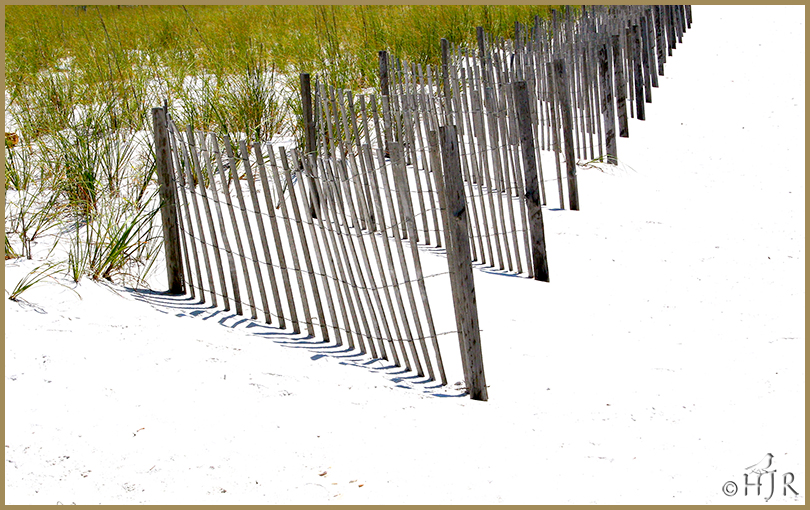




1 – Top Left: Scene of white sand at Santa Rosa Beach, Florida.
2 – Top Right: Multicolor hot air balloon is almost ready to take off. Crowd is helping to launch it. Glenn Falls, New York.
3 – Lower Right: Baby pumpkin sits on a handrail. At home.
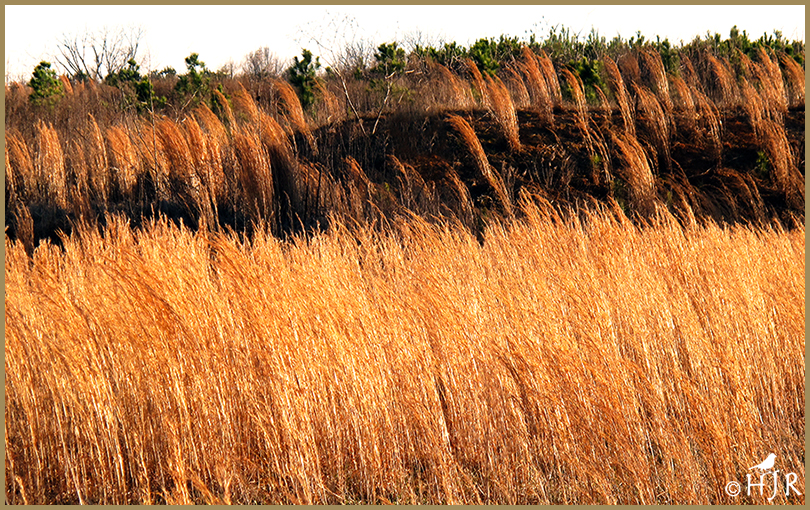
4 – Middle Left: Scene in fields of tall grass at sunset. Georgia.
5 – Bottom Left: Red painted with white trims of side of an old mill. Clinton, New Jersey.
6 – Bottom Right: Scene in the boardwalk in the middle of woods, not far from the Alabama DeSoto Falls in Alabama.
© HJ Ruiz – Avian101
Share this:

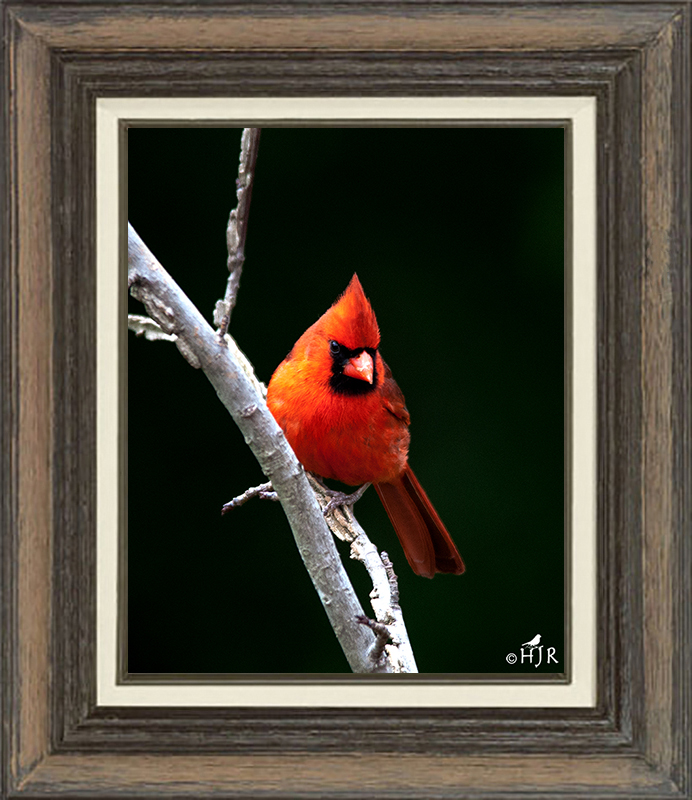
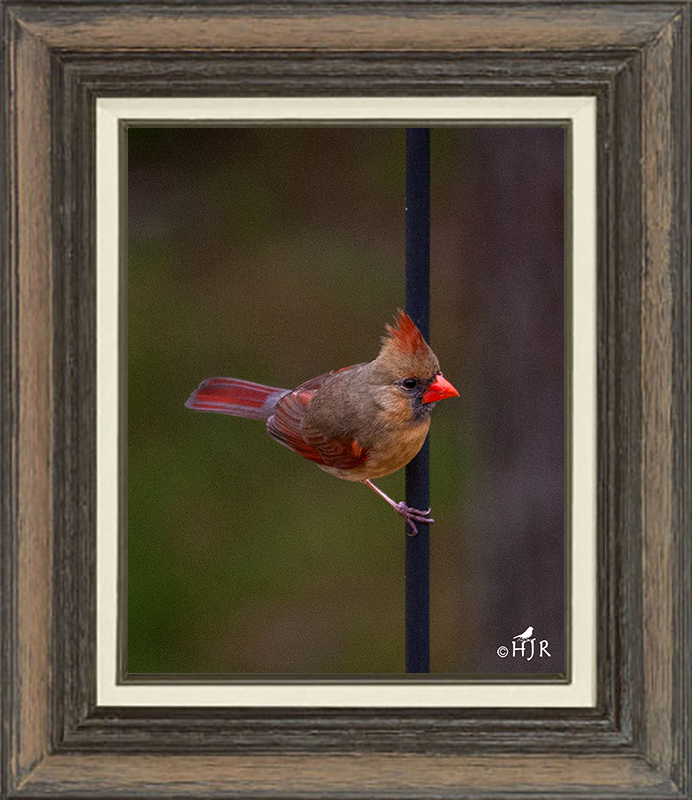
Red Art Gallery – Northern Cardinal # 31
Red Art Gallery
Photo Gallery
© HJ Ruiz – Avian101
Share this:

Birds of the Week # 4
House Finch
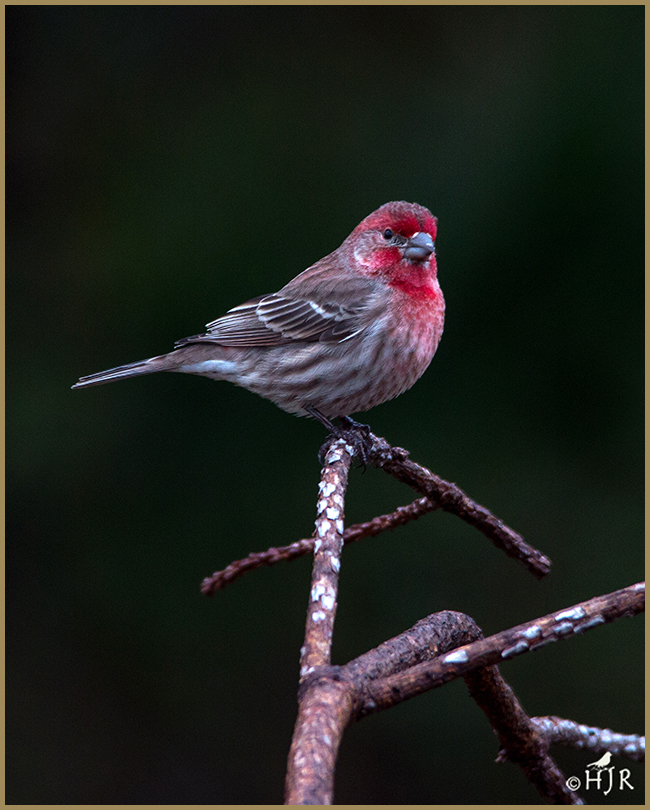
During courtship, the male House Finch will touch bills with the female. He may then present the female with choice bits of food, and if she mimics the behavior of a hungry chick, he may actually feed her. The male also feeds the female during breeding and incubation of the eggs, and raising of the young, and the male is the primary feeder of the fledgelings (who can be differentiated from the females by the pin feathers remaining on their heads). Females are typically attracted to the males with the deepest pigment of red to their head, more so than the occasional orange or yellowish-headed males that sometimes occur.
Purple Finch

Adult Purple Finches have a short forked brown tail and brown wings. Adult males are raspberry red on the head, breast, back and rump; their back is streaked. Adult females have light brown upperparts and white underparts with dark brown streaks throughout; they have a white line on the face above the eye.
White-throated Sparrow
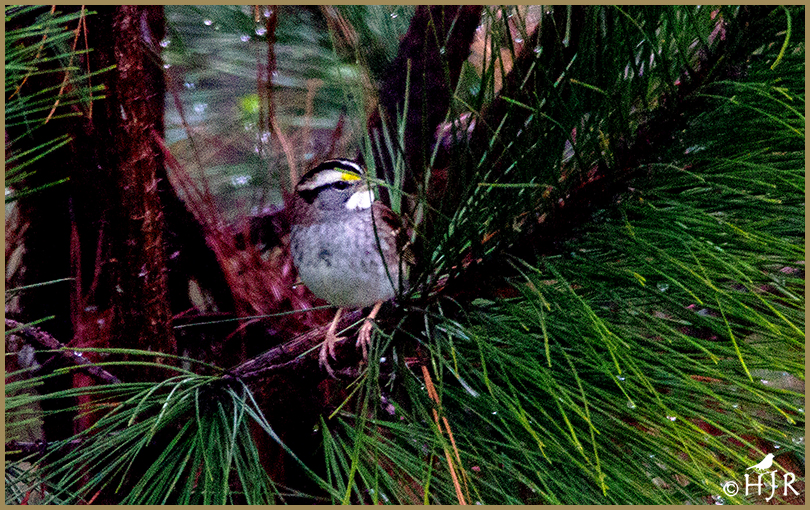
White-throated Sparrows breed in central Canada and New England. They nest either on the ground under shrubs or low in trees in deciduous or mixed forest areas and lay three to five brown-marked blue or green-white eggs. The tan and white morphs of white-throated sparrows use different reproductive strategies. Tan males invest in parental care and guard their mates from others searching for extra pair copulations (EPCs). White males invest in securing additional mates and EPCs through song advertisement and intruding into neighboring territory. Female morphs have similar differences, where tan females invest in parental care and white females solicit EPCs and engage in brood parasitism, leaving their eggs in another’s nest to be raised and fed. Mating with the opposite morphs and using alternative reproductive strategies helps maintain competitive equilibrium.
Song Sparrow
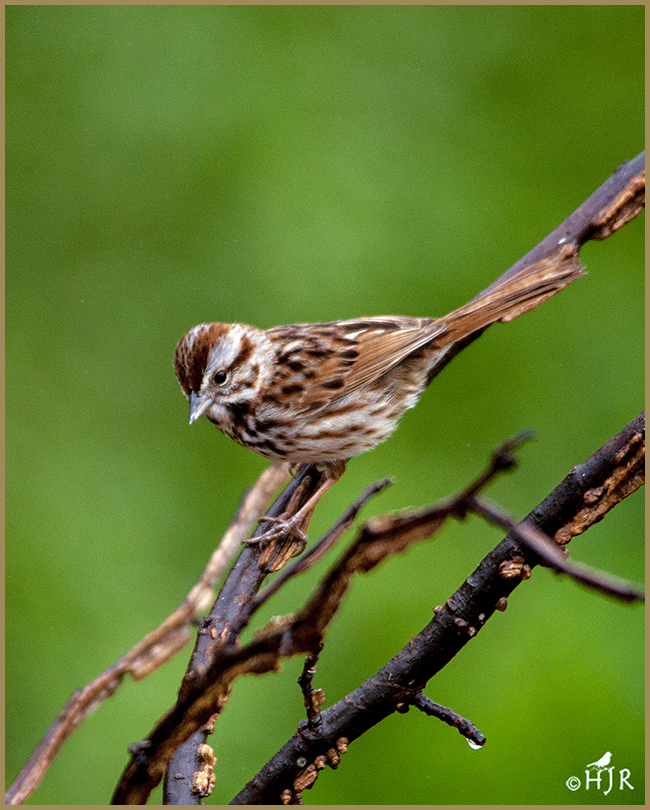
Though a habitat generalist, the Song Sparrow favors brushland and marshes, including salt marshes across most of Canada and the United States. They also thrive in human dominated areas such as in suburbs, agricultural fields, and along roadsides. Permanent residents of the southern half of their range, northern populations of the song sparrow migrate to the southern United States or Mexico during winter and intermingle with the native, non-migratory population. The song sparrow is a very rare vagrant to western Europe, with a few recorded in Great Britain and Norway.
Field Sparrow

The Field Sparrow’s breeding habitat is brushy, shrubby fields across eastern North America. The nest is an open cup on the ground under a clump of grass or in a small thicket. These birds are permanent residents in the southern parts of their range. Northern birds migrate to the southern United States and Mexico.
Chipping Sparrow
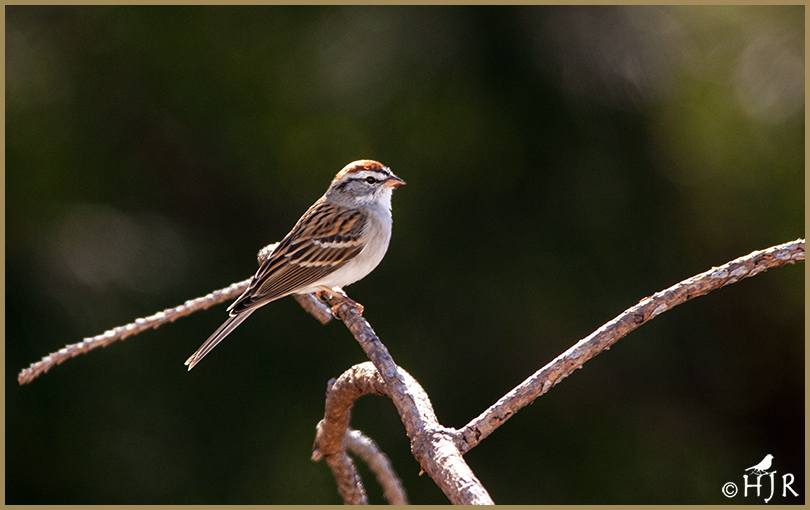
Throughout the year, adult Chipping Sparrows are gray below and an orangish-rust color above. Adults in alternate (breeding) plumage have a reddish cap, a nearly white supercilium, and a black trans-ocular line (running through the eye). Adults in basic (nonbreeding) plumage are less prominently marked, with a brownish cap, a dusky eyebrow, and a dark eye-line. Juvenile chipping sparrows are prominently streaked below. Like non-breeding adults, they show a dark eye-line, extending both in front of and behind the eye. The brownish cap and dusky eyebrow are variable but generally obscure in juveniles.
© HJ Ruiz – Avian101
Share this:

Special Places # 21
Cape Cod, Massachusetts
Cape Cod is a geographic cape extending into the Atlantic Ocean from the southeastern corner of mainland Massachusetts, in the northeastern United States. Its historic, maritime character and ample beaches attract heavy tourism during the summer months.
As defined by the Cape Cod Commission’s enabling legislation, Cape Cod is conterminous with Barnstable County, Massachusetts. It extends from Provincetown in the northeast to Woods Hole in the southwest, and is bordered by Plymouth to the northwest.
Since 1914, most of Cape Cod has been separated from the mainland by the Cape Cod Canal. The canal cuts 7 miles (11 km) roughly across the base of the peninsula, though small portions of the Cape Cod towns of Bourne and Sandwich lie on the mainland side of the canal. Two highway bridges cross the Cape Cod Canal: the Sagamore Bridge and the Bourne Bridge. In addition, the Cape Cod Canal Railroad Bridge carries railway freight and provides limited passenger service onto the Cape. The Cape is divided into fifteen towns, several of which are in turn made up of multiple named villages.
| Location | Massachusetts, United States |
| Coordinates | 41°41′N 70°12′W |
| Offshore water bodies | Cape Cod Bay Buzzards Bay Cape Cod Canal Nantucket Sound |
| Elevation | 306 ft (93 m) |
| Area | 339 sq mi (880 km2) |
Photo Gallery


© HJ Ruiz – Avian101
Share this:

Read Past Reviews

Book # 69
Quote from the Author
“A good chuckle is healthy, it helps you break the monotony of a serious life.” ~ H.J. Ruiz
 H.J. Ruiz - Avian101
You must be logged in to post a comment.