
Birds of the Week # 7
American Crow
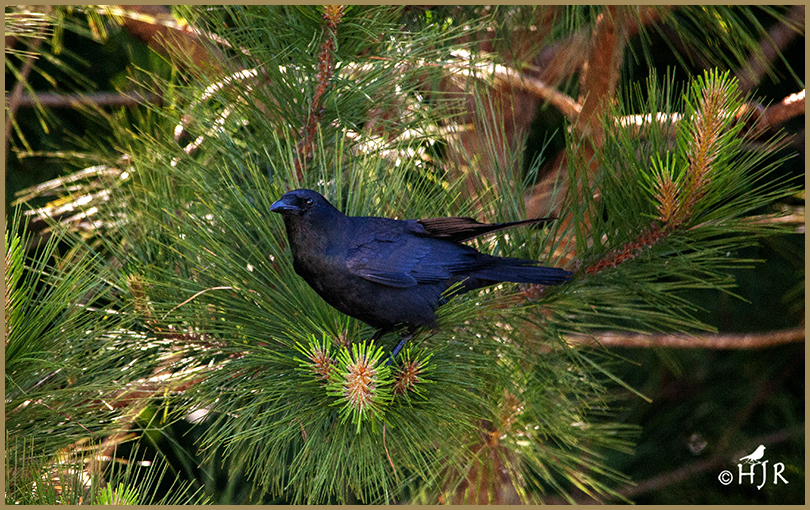
Crows have been noted to be intelligent. They have the same brain-weight-to-body ratio as humans. This has led to some studies that have identified that crows are self-aware and that young crows take time to learn from tolerant parents. While a human has a neocortex, the crow has a different area in their brain that is equally complex. The average lifespan of the American crow in the wild is 7–8 years. Captive birds are known to have lived up to 30 years.
Red-winged Blackbird
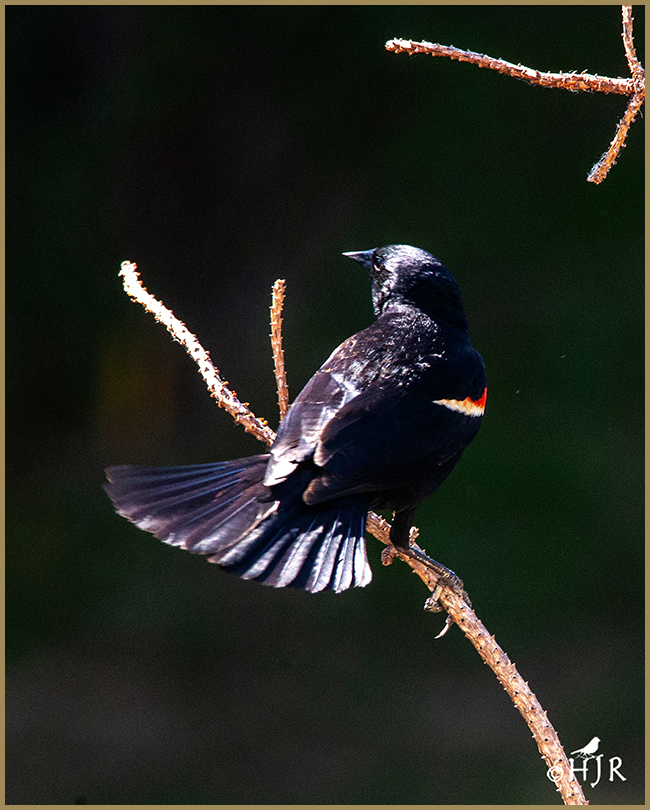
The most critical period of feather molting runs from late August to early September. When viewed in flight, they have a misaligned or “moth-eaten” appearance and generally slower and more laborious travel. Their mobility is reduced due to the lack of several remiges or rectrices or these are not entirely renewed. Most of the Red-winged Blackbirds have moved almost entirely by October. By then, some birds have not completed the molt of the feathers of the capital region and the helmsmen of the center of the tail and the internal secondary sprouts have only partially emerged from the pod. Virtually all individuals have completed their molts by mid-October.
Birds do not begin their migration to wintering quarters until the two outer primary sprouts and the two inner or central rectrices have completed at least two-thirds of their development. Therefore, there is a correlation between molting, particularly replacement of the remiges and rectrices, and fall migration in red-winged blackbirds.
Common Grackle
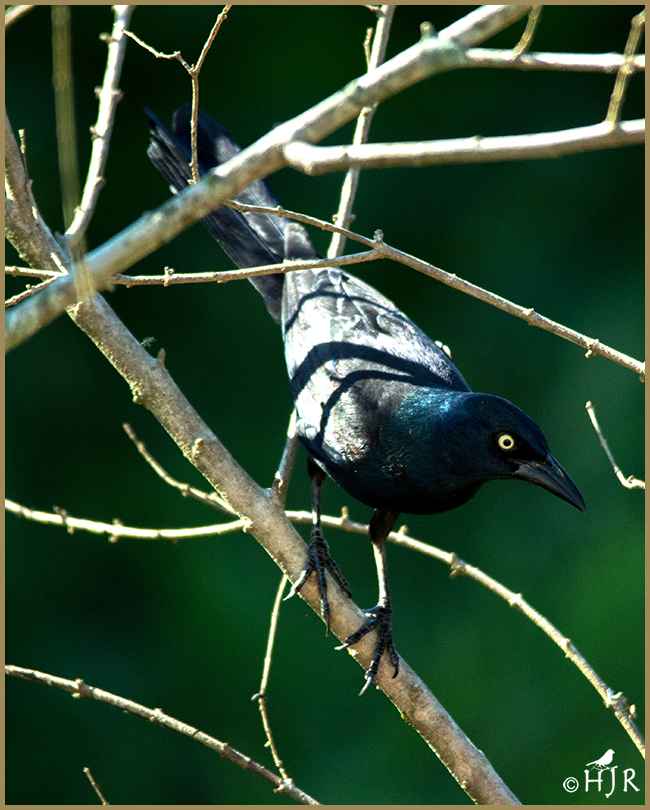
Common Grackles have a unique adaptation in the keel within their bill which allows them to crack and cut hard nuts or kernels. The keel projects downward from the horny palate and is sharper and more abrupt anterior. It extends below the level of the tomium and is used in a sawing motion to score open acorns or dried kernels. Large adductor muscle within their jaw compared to other icterids also makes this adaptation even more useful for opening hard seeds and acorns.
European Starling
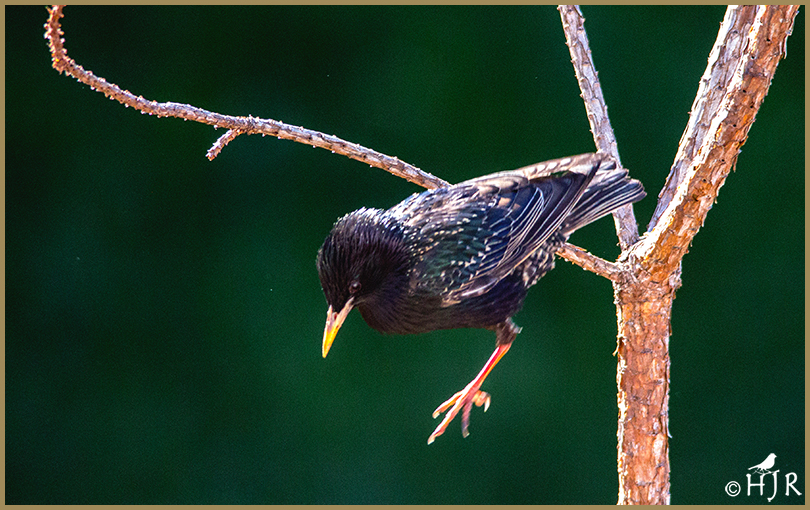
The European Starling family, Sturnidae, is an entirely Old World group apart from introductions elsewhere, with the greatest numbers of species in Southeast Asia and sub-Saharan Africa. The genus Sturnus is polyphyletic and relationships between its members are not fully resolved. The closest relation of the common starling is the spotless starling. The non-migratory spotless starling may be descended from a population of ancestral S. vulgaris that survived in an Iberian refugium during an Ice Age retreat, and mitochondrial gene studies suggest that it could be considered a subspecies of the common starling. There is more genetic variation between common starling populations than between the nominate common starling and the spotless starling. Although common starling remains are known from the Middle Pleistocene, part of the problem in resolving relationships in the Sturnidae is the paucity of the fossil record for the family as a whole.
Great Blue Heron
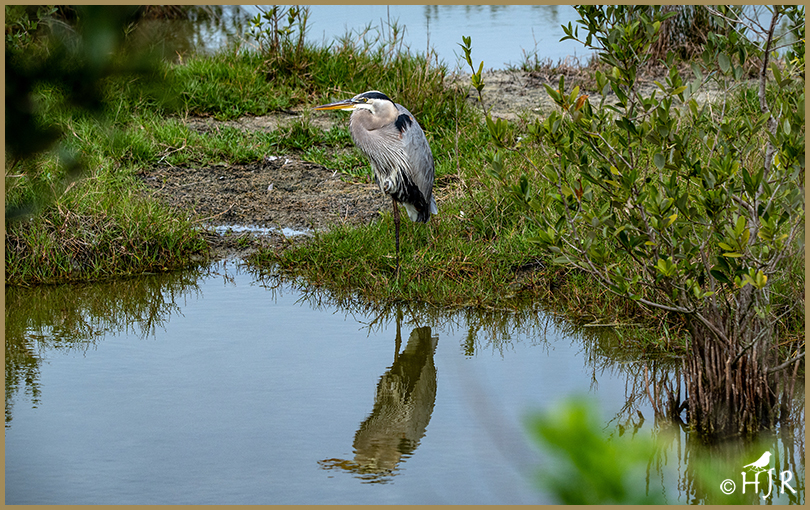
Notable features of Great Blue Herons include slaty (gray with a slight azure blue) flight feathers, red-brown thighs, and a paired red-brown and black stripe up the flanks; the neck is rusty-gray, with black and white streaking down the front; the head is paler, with a nearly white face, and a pair of black or slate plumes runs from just above the eye to the back of the head. The feathers on the lower neck are long and plume-like; it also has plumes on the lower back at the start of the breeding season. The bill is dull yellowish, becoming orange briefly at the start of the breeding season, and the lower legs are gray, also becoming orangey at the start of the breeding season. Immature birds are duller in color, with a dull blackish-gray crown, and the flank pattern is only weakly defined; they have no plumes, and the bill is dull gray-yellow.
Snowy Egret

Snowy Egrets eat fish, crustaceans, insects, small reptiles, snails, frogs, worms and crayfish. They stalk prey in shallow water, often running or shuffling their feet, flushing prey into view by swaying their heads, flicking their wings or vibrating their bills. They may also hover, or “dip-fish” by flying with their feet just above the water surface. Snowy egrets may also stand still and wait to ambush prey, or hunt for insects stirred up by domestic animals in open fields. They sometimes forage in mixed species groups.
© HJ Ruiz – Avian101
Share this:

Special Places # 23
Cascades






1 – Top Left: Near the path on the way to Amicalola Falls in Georgia. Shot in slow speed to create the milky effect on water.
2 – Top Right: Scene of cascade man-made in the Rockaway River for an old mill. Shot taken from an old bridge still in use.
3 – Bottom Left: Scene captured following stream that will form some distance later the DeSoto Falls in Alabama.
4 – Bottom Mid. Left: Continuation of path toward Amicalola Falls.
5 – Bottom Mid. Right: Continuation of path toward Amicalola Falls.
6 – Bottom Right: This scene is one of the hundreds cascades that are next to the climbing path to Amicalola Falls, Georgia.
© HJ Ruiz – Avian101
Share this:

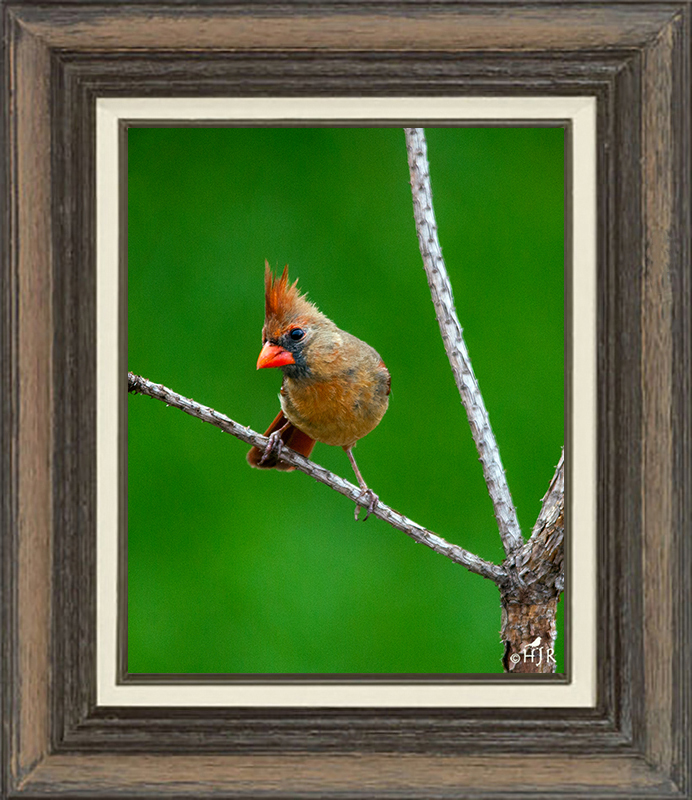
Red Art Gallery – Northern Cardinal # 32
Red Art Gallery
Photo Gallery

© HJ Ruiz – Avian101
Share this:

Birds of the Week # 5
Black-bellied Plover

Their breeding habitat of the Black-bellied Plovers is Arctic islands and coastal areas across the northern coasts of Alaska, Canada, and Russia. They nest on the ground in a dry open tundra with good visibility; the nest is a shallow gravel scrape. Four eggs (sometimes only three) are laid in early June, with an incubation period of 26–27 days; the chicks fledge when 35–45 days old.
Sanderling
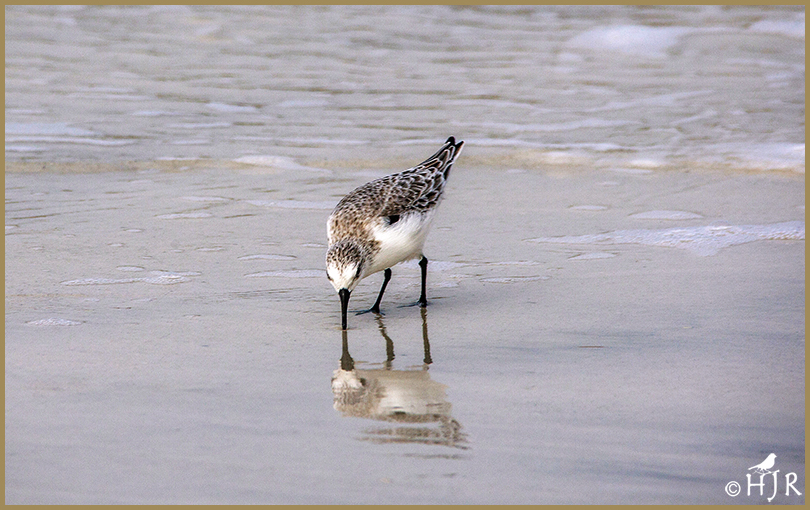
The breeding habitat of the Sanderling is coastal tundra north of 5 °C (41 °F) July isotherm. The species typically chooses nesting sites on dry stony areas near wet areas, from 60 m (200 ft) above sea level to 800 m (2,600 ft). During the winter and its migration, it is most commonly found on coastal sandy beaches, but also occurs on tidal sand flats, mud flats and the shores of lakes and rivers. More infrequently, it may occur on rocky shores.
Purple Martin
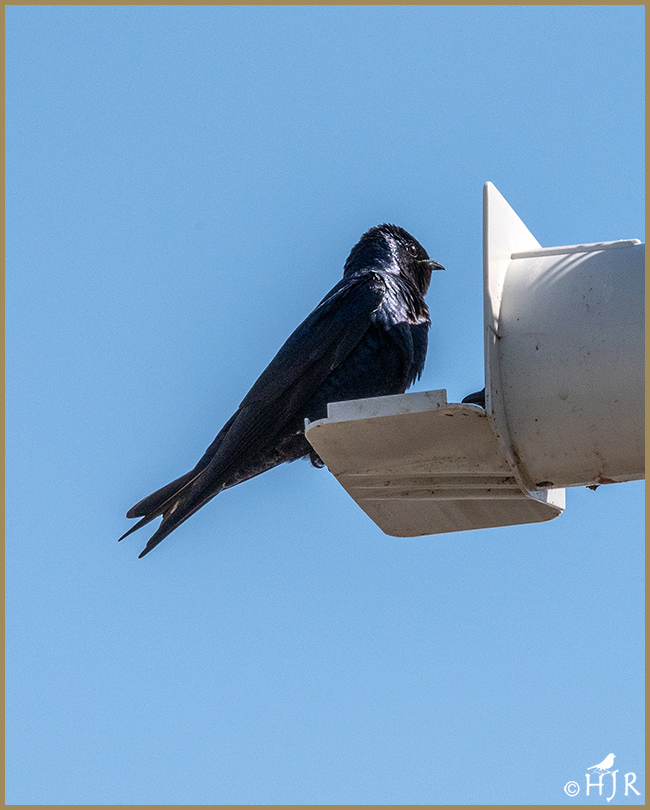
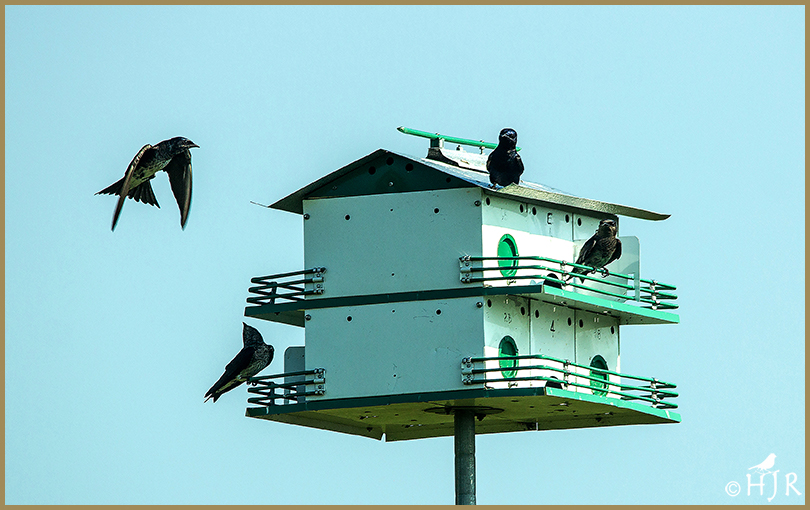
Purple Martins’ breeding range is throughout temperate North America. Their breeding habitat is open areas across eastern North America, and also some locations on the west coast from British Columbia to Mexico. Martins make their nests in cavities, either natural or artificial. In many places, humans put up real or artificial hollow gourds, or houses for martins, especially in the east, where purple martins are almost entirely dependent on such structures. As a result, this subspecies typically breeds in colonies located in proximity to people, even within cities and towns. This makes their distribution patchy, as they are usually absent from areas where no nest sites are provided. Western birds often make use of natural cavities such as old woodpecker holes in trees or saguaro cacti.
Carolina Wren
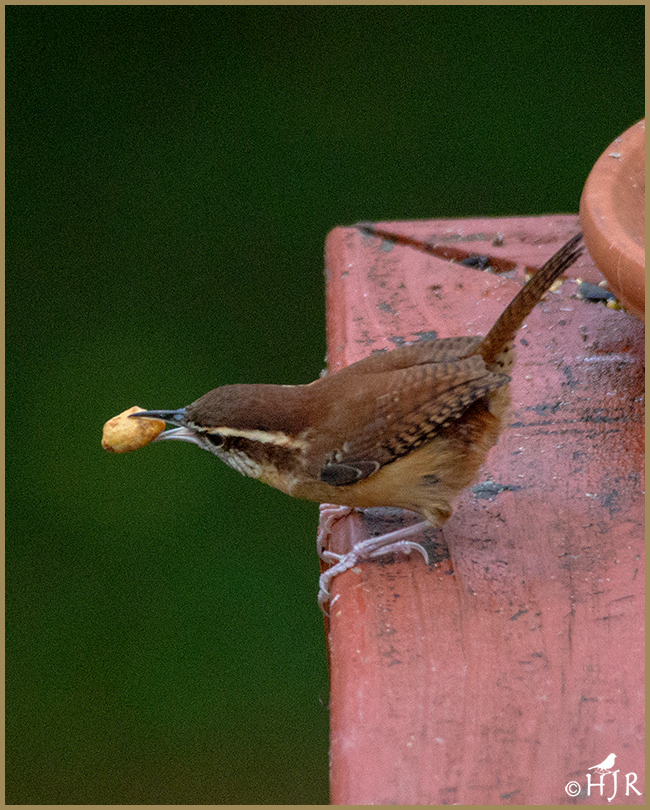
The Carolina Wren (Thryothorus ludovicianus) is a common species of wren that is a resident in the eastern half of the United States of America, the extreme south of Ontario, Canada, and the extreme northeast of Mexico. Severe winters restrict the northern limits of their range while favorable weather conditions lead to a northward extension of their breeding range. Their preferred habitat is in dense cover in forest, farm edges and suburban areas. This wren is the state bird of South Carolina.
Red-breasted Nuthatch
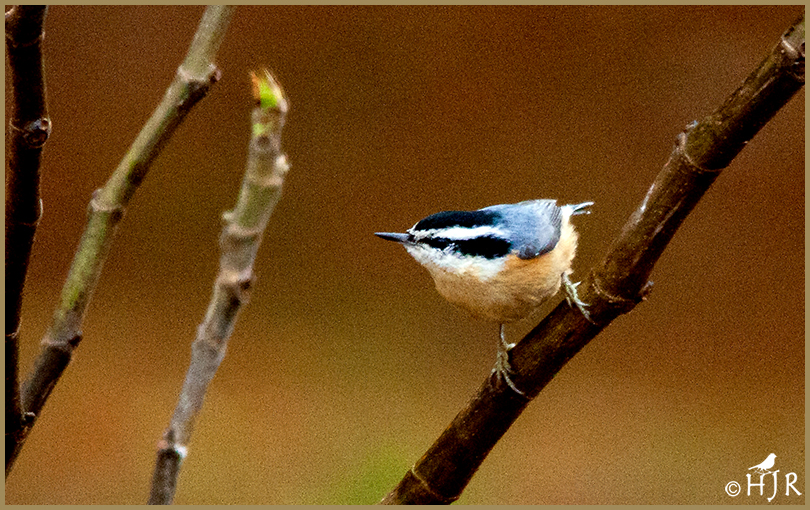
Though it is primarily a full-time resident of northern and subalpine conifer forests, the Red-breasted Nuthatch regularly migrates irruptively, with both the number migrating and the wintering locations varying from year to year. They sometimes reach northern Mexico, where they are rare winter visitors to Nuevo León, Baja California Norte and south along the Pacific slope as far as Sinaloa. In the eastern United States, its range is expanding southwards. Though formerly resident on Isla Guadalupe, an island off the western coast of Mexico, it appears to have been extirpated there, with the last known record of the species on the island dating from 1971. There is a single vagrant record for Mexico’s Isla Socorro. It is an extremely rare vagrant to Europe, with two records in the western Palearctic; one bird successfully overwintered in eastern England.
© HJ Ruiz – Avian101
Share this:

Read Past Reviews

Book # 69

Quote from the Author
“A good chuckle is healthy, it helps you break the monotony of a serious life.” ~ H.J. Ruiz
 H.J. Ruiz - Avian101
You must be logged in to post a comment.