Birds of the Week # 11
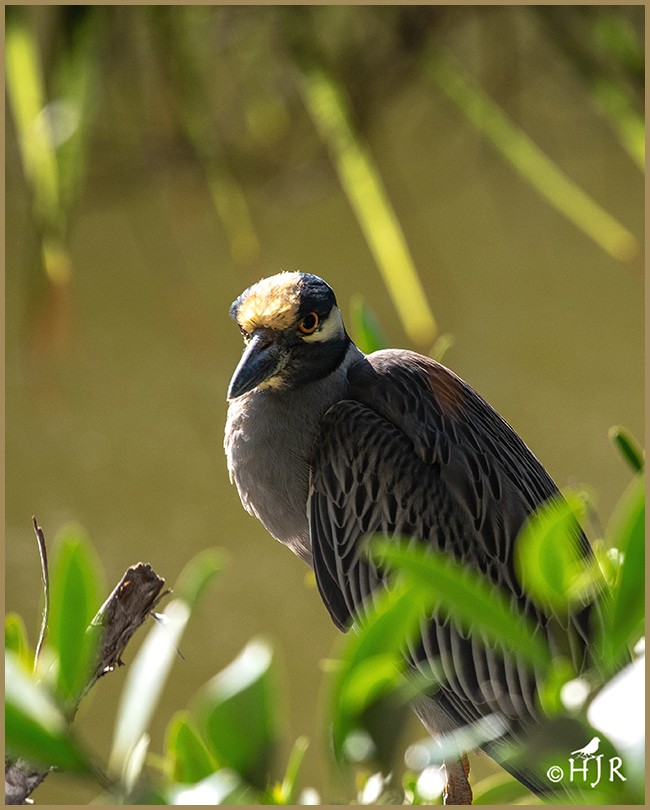
The body and back are a smooth grey-blue, with a black scaled pattern on the wings. The long legs are yellow and turn coral, pink or red during courtship. The most characteristic part of the yellow-crowned night heron is the head: black and glossy, with white cheeks and a pale yellow crown going from the bill, between the eyes and to the back of the head, giving the bird its common name. Such colours make the face appear striped in a horizontal black-white-black-white pattern. Long, thin, white feathers grow to the back of the crown during mating season. The bill, also black, is thick and deeply set under the eyes which are dark orange or red.
Brown Pelican
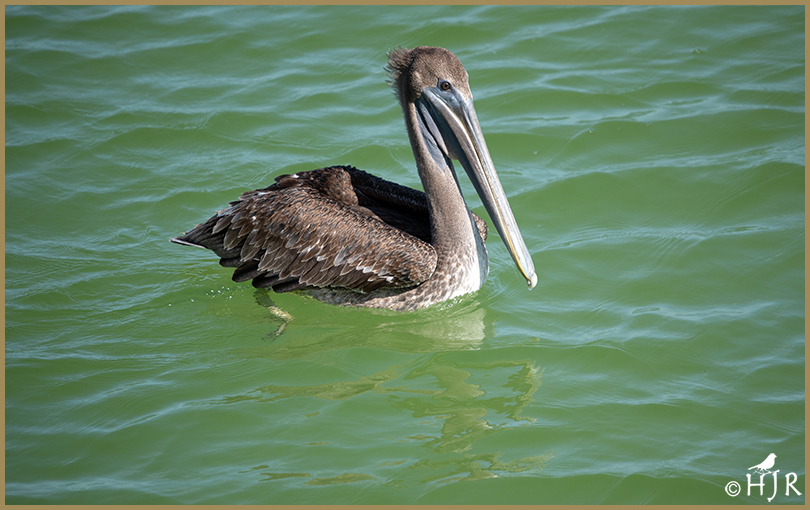
The Brown Pelican mainly feeds on fish, but occasionally eats amphibians, crustaceans, and the eggs and nestlings of birds. It nests in colonies in secluded areas, often on islands, vegetated land among sand dunes, thickets of shrubs and trees, and mangroves. Females lay two or three oval, chalky white eggs. Incubation takes 28 to 30 days with both sexes sharing duties. The newly hatched chicks are pink, turning gray or black within 4 to 14 days. About 63 days are needed for chicks to fledge. Six to 9 weeks after hatching, the juveniles leave the nest, and gather into small groups known as pods.
Boat-tailed Grackle
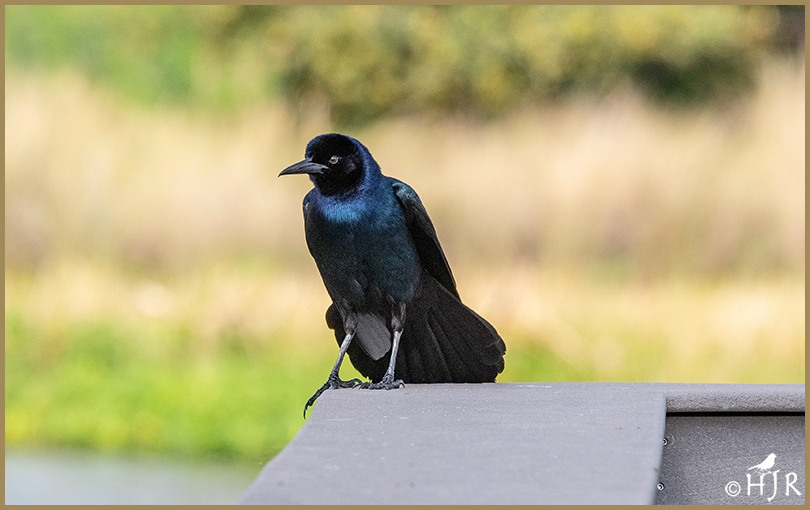
The Boat-tailed Grackle was first described by French naturalist Louis Jean Pierre Vieillot in 1819. Its specific epithet major means “larger” in Latin. Despite its restricted range, there are four subspecies of the boat-tailed grackle, differing in size and iris color. The boat-tailed grackle was once considered the same species as the great-tailed grackle. The great-tailed species is generally quite similar of slightly smaller body size but has a longer tail and lacks this species’ distinct domed head shape. The common grackle, with which the boat-tailed species often overlaps along the Atlantic coastline, is noticeably smaller and shorter-tailed, as well as lacking the domed head shape.
Common Grackle
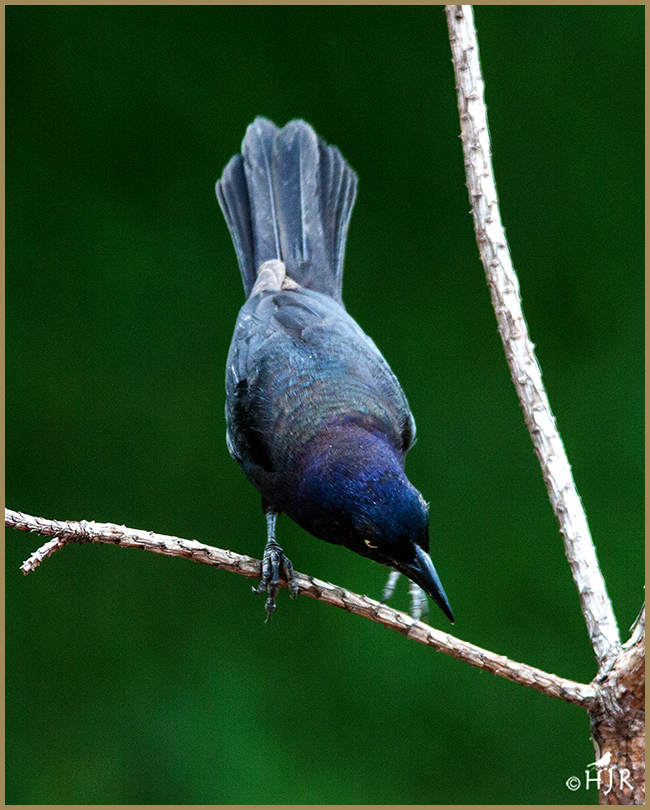
The Common Grackle forages on the ground, in shallow water, or in shrubs; it may steal food from other birds. It is omnivorous, eating insects, minnows, frogs, eggs, berries, seeds, grain, and even small birds and mice. Grackles at outdoor eating areas often wait eagerly until an unwary bird drops some food. They rush forward and try to grab it, often snatching food out of the beak of another bird. Grackles prefer to eat from the ground at bird feeders, making scattered seed an excellent choice of food for them. Grackles can be regularly seen foraging for insects, especially after a lawn trimming.
Brown Thrasher
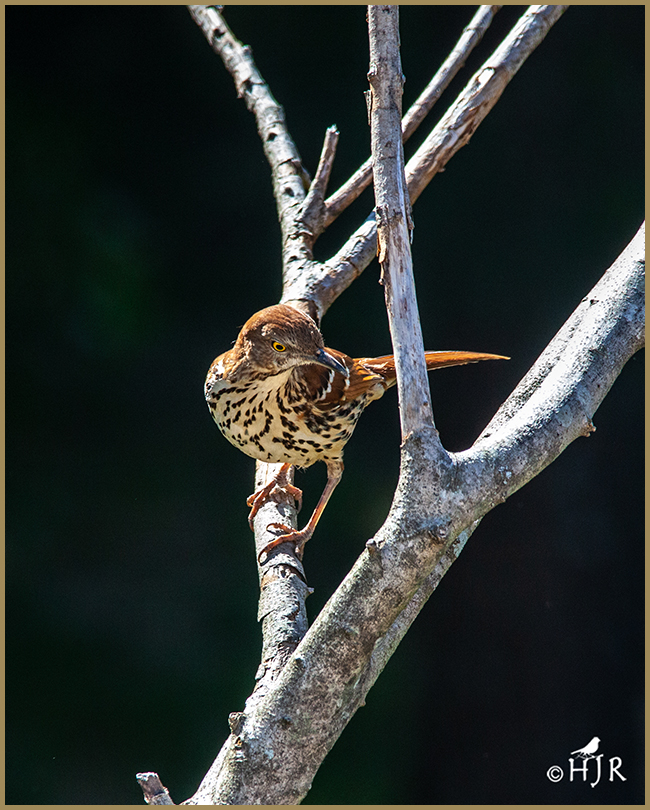
The Brown Thrasher resides in various habitats. It prefers to live in woodland edges, thickets and dense brush, often searching for food in dry leaves on the ground. It can also inhabit areas that are agricultural and near suburban areas, but is less likely to live near housing than other bird species. The brown thrasher often vies for habitat and potential nesting grounds with other birds, which is usually initiated by the males.
European Starling
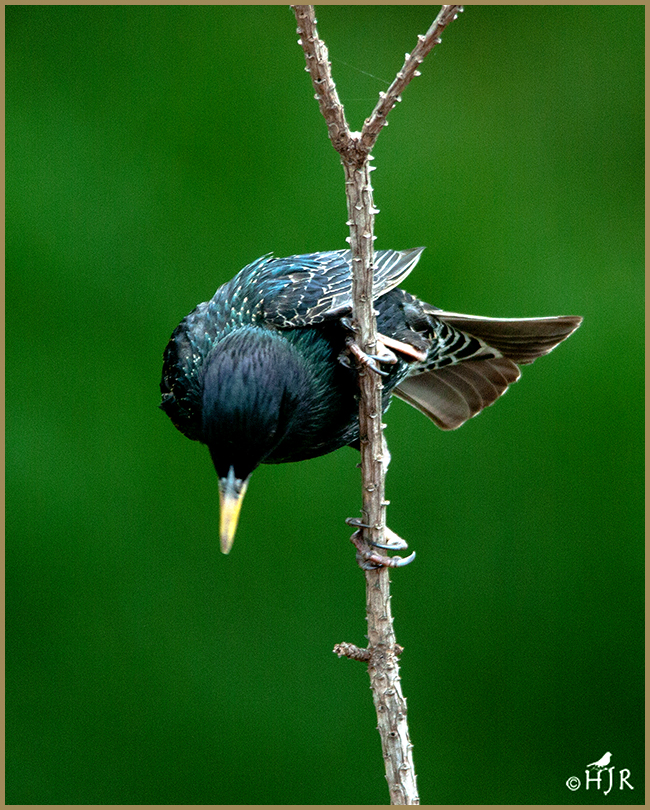
Like most terrestrial starlings the common starling moves by walking or running, rather than hopping. Their flight is quite strong and direct; their triangular-shaped wings beat very rapidly, and periodically the birds glide for a short way without losing much height before resuming powered flight. When in a flock, the birds take off almost simultaneously, wheel and turn in unison, form a compact mass or trail off into a wispy stream, bunch up again and land in a coordinated fashion. Common starling on migration can fly at 60–80 km/h (37–50 mph) and cover up to 1,000–1,500 km (620–930 mi).
© HJ Ruiz – Avian101
Share this:

Special Places # 27
Boats

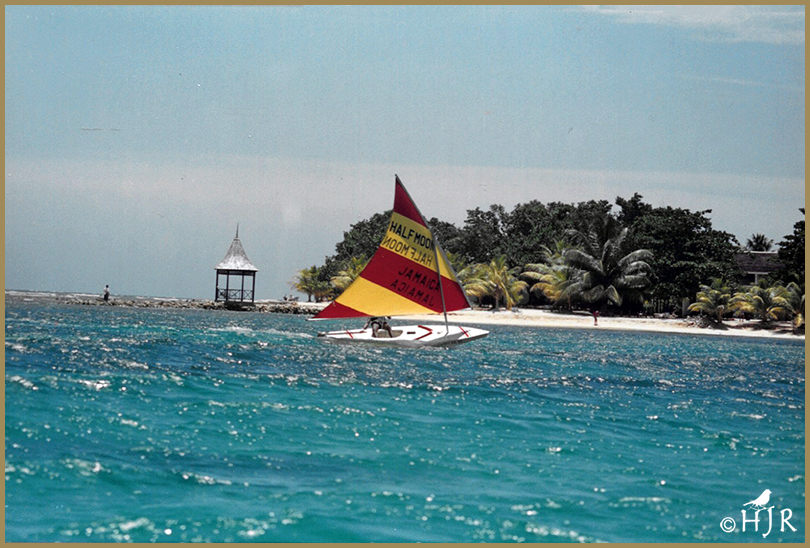



1 – Top Left: Small sailboat docked at marina in Florida West Coast.
2 – Top Right: Fishing boat ready to leave dock in Cape Cod, Massachusetts.
3 – Middle – Left: Small sailboat enjoying the Trade Winds in The Bahamas.
4 – Middle – Bottom: Large boat from a tour sailing between Jekyll Island and Brunswick to view the sunset, in Georgia.
5 – Bottom: Sailboats anchored at Sarasota Bay at near sunset in Florida.
© HJ Ruiz – Avian101
Share this:

Red Art Gallery – Northern Cardinal # 36
Red Art Gallery
Photo Gallery


© HJ Ruiz – Avian101
Share this:

Birds of the Week # 10
Blue Jay
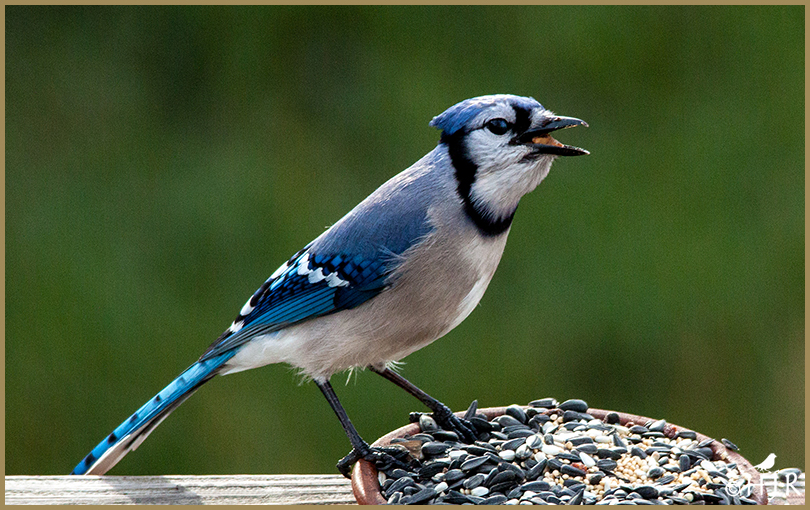
The Blue Jay is a noisy, bold, and aggressive passerine. It is a moderately slow flier (roughly 32–40 km/h (20–25 mph)) when unprovoked. It flies with body and tail held level, with slow wing beats. Its slow flying speeds make this species easy prey for hawks and owls when it flies in open areas. Virtually all the raptorial birds sympatric in distribution with the blue jay may prey upon it, especially swift bird-hunting specialists such as the Accipiter hawks. Diverse predators may prey on jay eggs and young up to their fledgling stage, including tree squirrels, snakes, cats, crows, raccoons, opossums, other jays and possibly many of the same birds of prey who attack adults.
Brown-headed Cowbird
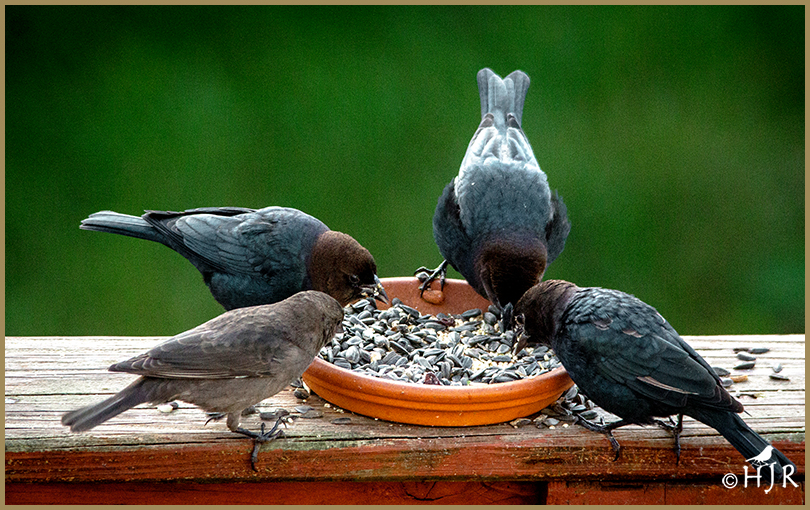
Brown-headed Cowbirds seem to periodically check on their eggs and young after they have deposited them. Removal of the parasitic egg may trigger a retaliatory reaction termed “mafia behavior”. According to one study the cowbird returned to ransack the nests of a range of host species 56% of the time when their egg was removed. In addition, the cowbird also destroyed nests in a type of “farming behavior” to force the hosts to build new ones. The cowbirds then laid their eggs in the new nests 85% of the time.
Blue Grosbeak
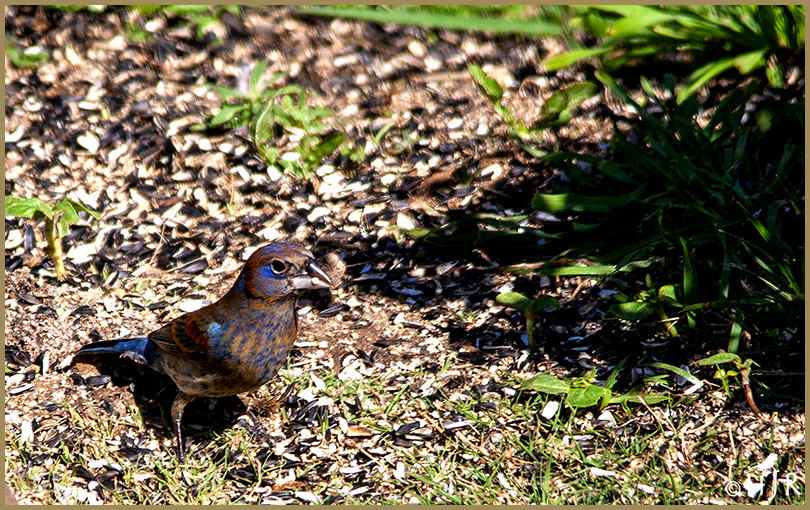
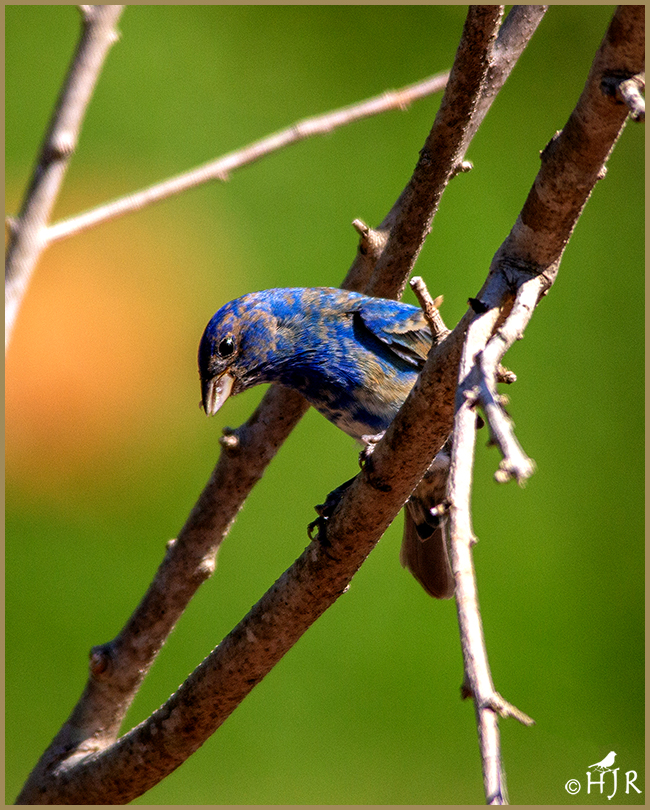
The blue grosbeak was formally described by the Swedish naturalist Carl Linnaeus in 1758 in the tenth edition of his Systema Naturae under the binomial name Loxia caerulea. The specific epithet caerulea is the Latin word for “blue”, “azure-blue”, “sky-blue” or “dark-blue”. Linnaeus based his own description on the “blew gross-beak” described and illustrated by Mark Catesby in his The Natural History of Carolina, Florida and the Bahama Islands. The book had been published in 1729–1732. Catesby gave the location as Carolina and Linnaeus specified America. The type location is now restricted to South Carolina.
Northern Mockingbird
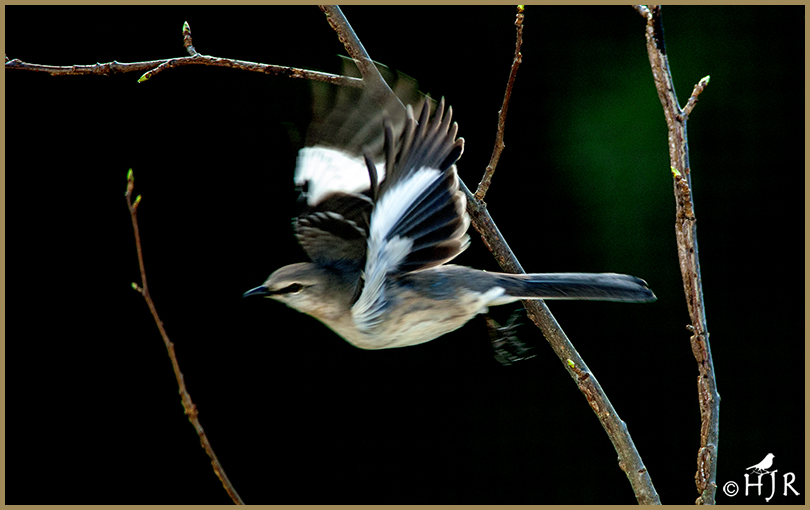
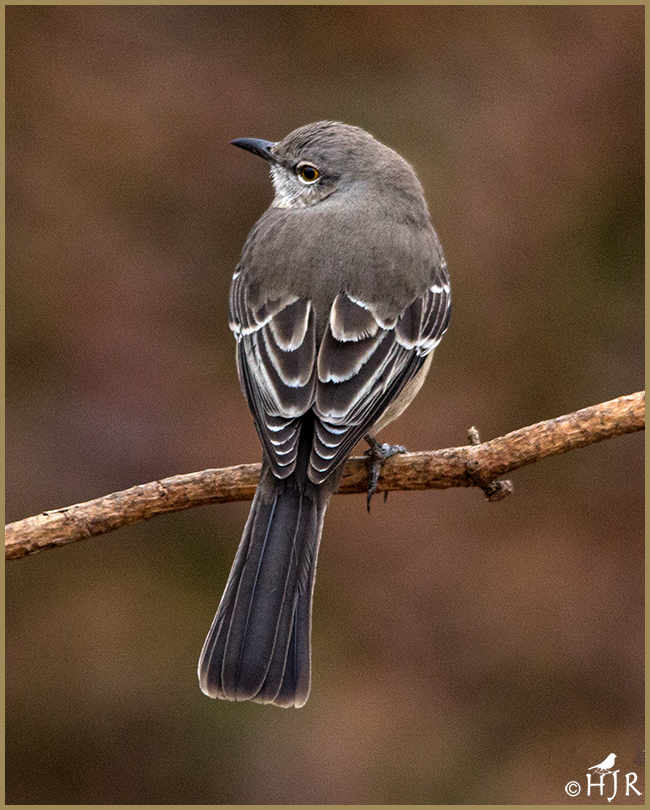
The Northern Mockingbird is known for its intelligence. A 2009 study showed that the bird was able to recognize individual humans, particularly noting those who had previously been intruders or threats. Also birds recognize their breeding spots and return to areas in which they had greatest success in previous years. Urban birds are more likely to demonstrate this behavior.
The mockingbird is influential in United States culture, being the state bird of five states, appearing in book titles, songs and lullabies, and making other appearances in popular culture.
© HJ Ruiz – Avian101
Share this:

Read Past Reviews

Book # 69
Quote from the Author
“A good chuckle is healthy, it helps you break the monotony of a serious life.” ~ H.J. Ruiz
 H.J. Ruiz - Avian101
You must be logged in to post a comment.