Vultures are Dying at Alarming Rate
Veterinary drug residue in cattle and livestock carcasses is killing South Asian vultures.
Vultures in South Asia were on the brink of extinction until Lindsay Oaks and Richard Watson, from The Peregrine Fund in the US, undertook observational and forensic studies to find out why the number of birds was falling so rapidly. They discovered the vultures were being poisoned by residues of an anti-inflammatory drug (diclofenac) used in cattle and other livestock, whose carcasses they feed on. The work is presented in a chapter of the new book, Wildlife Ecotoxicology — Forensic Approaches, published by Springer.
According to the authors: “The story is far from over and the stakes are high. The failure to effectively control carcass contamination by diclofenac will likely lead to extinction of these magnificent birds which, through their scavenger role, have controlled the spread of infectious disease for millennia, as well as provided other important ecological services.”
Oaks and Watson describe their scientific investigations, including their many challenges and setbacks, following the unprecedented decline in the population of two of the world’s most abundant raptors — the Oriental White-backed vulture and the Long-billed vulture — in India in the 1990s, and neighboring Pakistan by the early 2000s. They describe how they were able to prove that the commonly used anti-inflammatory drug diclofenac, fed to ailing cattle and other livestock, was being ingested by the wild birds feeding on the carcasses and causing visceral gout, a manifestation of renal failure.
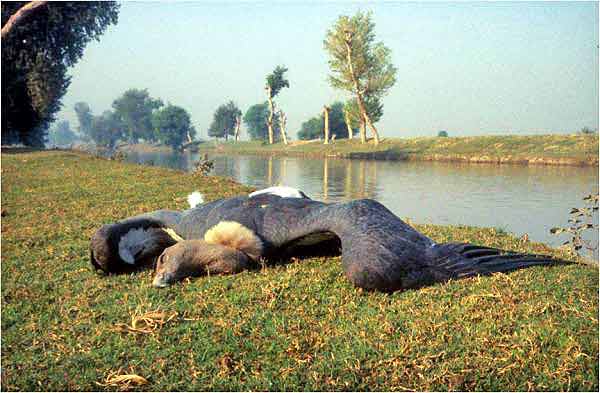
Dead Vulture in Pakistan - Photo © Munir Virani
The authors go on to discuss their efforts in 2004 to get the governments of India, Pakistan and Nepal to take note and act, faced with the irrefutable proof that diclofenac was responsible for the declining numbers of vultures at such a catastrophic rate. They demonstrate how solid science can facilitate a rapid regulatory response — with India, Nepal and Pakistan all banning the manufacture of veterinary diclofenac in 2006.
In spite of the researchers’ 10-year crusade and significant accomplishments, veterinary diclofenac continues to be used widely and illegally almost four years after the drug was banned, leaving the fate of wild Gyps vultures in doubt. The authors highlight a number of potential measures which could lead to a more effective implementation of the ban.
This forensic work and other scientific detective cases are featured in Wildlife Ecotoxicology — Forensic Approaches. The editors present case-by-case examinations of the science, describing the challenges biologists personally face while doing their research and bringing these issues to the public and regulatory forum.
The above story is reprinted from materials provided by Springer Science+Business Media
Share this:

Julie Goyder – Guest
Julie Goyder is a retired lecturer in English and Creative Writing at her local university in Western Australia. She has been extremely kind to accept my invitation to be my guest at Avian101. Her contribution is a real life account of events concerning her three lovely Emus at her farm. Thank you Julie! 🙂
I am so worried. Son went to put him in the yard with the gang late this afternoon and he wasn’t around which is unusual.
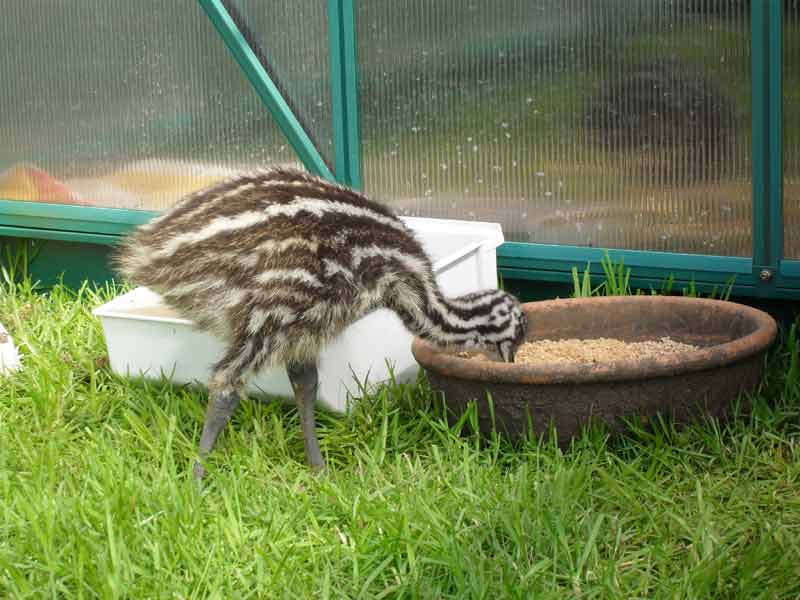
Emery is Missing!
It’s dark now so all we can do is wait and hope that he comes back later tonight or tomorrow morning for the breakfast lettuce treat.
Please come back Emery…
A few weeks ago I spotted an advertisement for two emu chicks and, thinking Emery might like a bit of emu company, I didn’t hesitate.
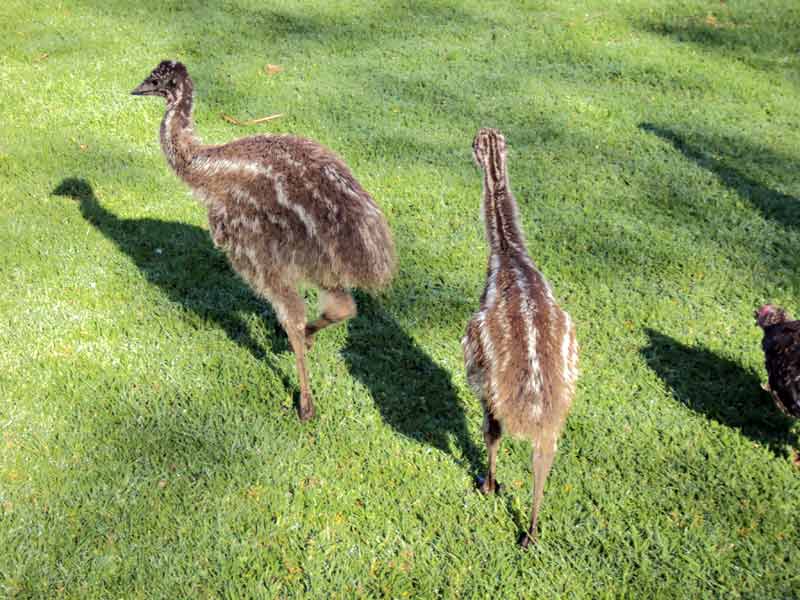
Emerytwo & Emerytwo
Well, Emery was intrigued and delighted. Apart from being a little bigger than the other two, they were all identical so I called the new chicks Emerytwo and Emerytoo; it seemed easier that way.
I didn’t mention them yesterday when I was so worried about Emery because, for some reason I thought if I put their disappearance into words, I would lose hope.
So, before losing hope, I will describe the delight of watching the three emus do laps around the garden. They are very fast, and sprint in a zig-zag fashion with their knees turned in, often bumping quite hard into things, including Godfrey, which doesn’t go down too well (but I think Emery does this on purpose!) If they lose each other even for a moment, they make this soft, whistling noise until they find each other again. After the sprinting they then plop down on the ground abruptly, legs stretched out the front, grab a bit of lettuce from my hand then they’re up and off again.
Maybe they’ve just decided to perfect their sprinting in a bigger area than our garden and have ventured into one of the paddocks surrounding us to practice for the Emu Olympics?
We have searched everywhere….
I realize that to many people grieving over the death of a bird may seem ridiculous or trivial and that, compared to losing a human companion – a child, friend, spouse, sibling, partner – it may even seem a little ‘wrong’.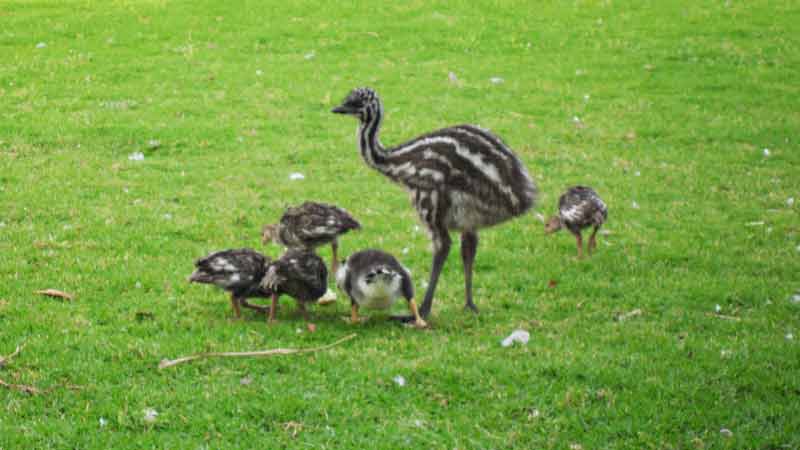
That, being said, the discovery of Emery’s corpse (fox attack) at the side of a lane-way in the back paddock today has been a terrible blow and the fact that Emerytwo and Emerytoo are still missing probably means that they are dead too. You see, unlike most of our other birds, emus can’t fly – they can’t fly to safety.
I will only post about the Emerys again if the latter two turn up, but I know they won’t because they would have by now. So, another lesson in loss.
One of the most beautiful gestures I have ever seen at a relative’s funeral was when the two adult sons, having delivered the eulogy, said goodbye to their father by leaving the podium and simulating flight; they raised their arms up and down, like wings, until they got back to their seats.
You can fly now, my three Emerys.
Story and photos are © Julie Goyder – Her blog: jmgoyder
Share this:

Cerulean Warbler – Video
Today’s video is the portrait of the Cerulean Warbler. One more excellent video © Carl Gerhardt
Share this:

Extra food and Black Friday
Between the excess eating for Thanksgiving and the early shopping on Black Friday I’m taking a short break today by posting only two photos from my files.
However for Sunday I have another beautiful video for you and on Monday I have a lady from Australia, Mrs. Julia Goyder as my guest. I assure you it will be a very interesting post.
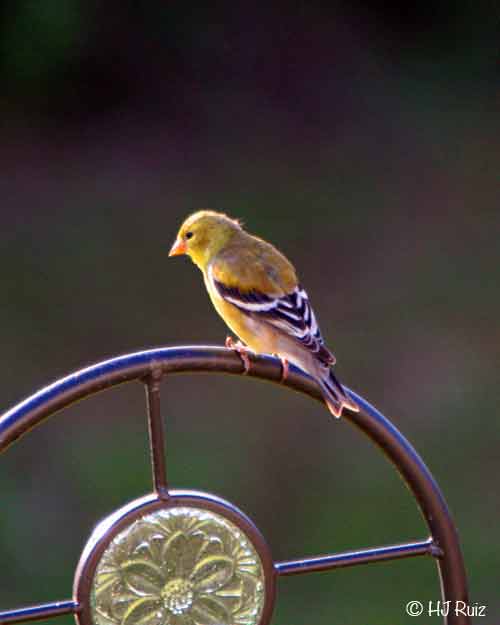
American Goldfinch (Female)
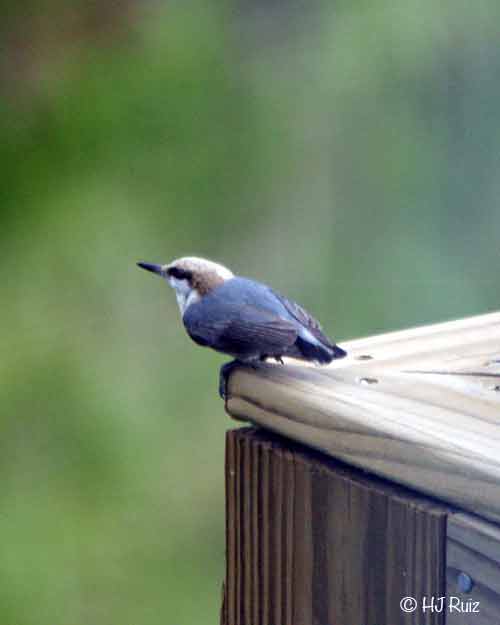
Brown-headed Nuthactch
All photographs are © H.J. Ruiz – Avian 101
Share this:


Read Past Reviews

Book # 69

Quote from the Author
“A good chuckle is healthy, it helps you break the monotony of a serious life.” ~ H.J. Ruiz


You must be logged in to post a comment.