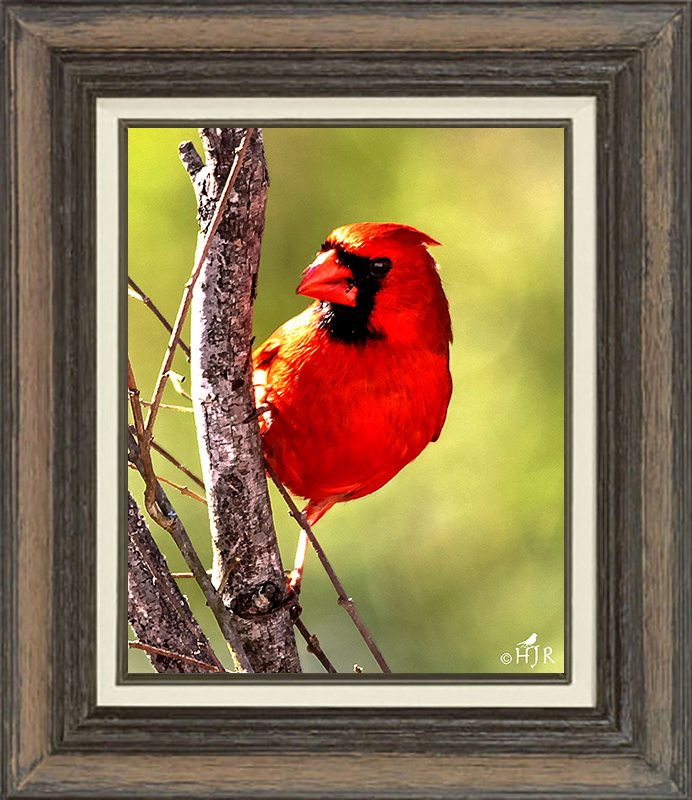
Red Art Gallery – Northern Cardinal # 43
Red Art Gallery
Photo Gallery

© HJ Ruiz – Avian101
Share this:

Birds of the Week # 17
Northern Flicker
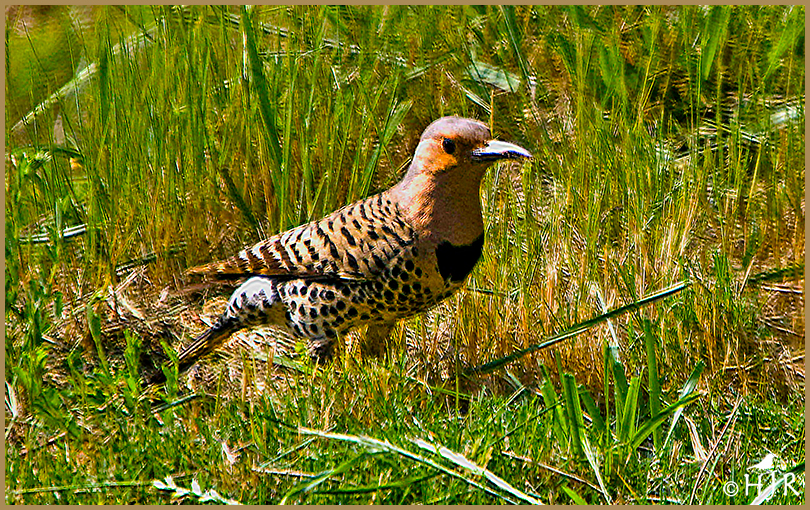
Northern Flickers are the only woodpeckers that frequently feed on the ground, probing with their beak, also sometimes catching insects in flight. Although they eat fruits, berries, seeds, and nuts, their primary food is insects. Ants alone can make up 45% of their diet. Other invertebrates eaten include flies, butterflies, moths, beetles, and snails. Flickers also eat berries and seeds, especially in winter, including poison oak and poison ivy, dogwood, sumac, wild cherry, grape, bayberries, hackberries, and elderberries, as well as sunflower and thistle seeds. Flickers often break into underground ant colonies to get at the nutritious larvae there, hammering at the soil the way other woodpeckers drill into wood. They have been observed breaking up cow dung to eat insects living within. Their tongues can dart out 50 mm (2.0 in) beyond the end of the bill to catch prey.
Red-headed Woodpecker

The Red-headed Woodpecker was historically a common species in southern Canada and the east-central United States. Consistent long-term population declines have resulted in red-headed woodpecker’s threatened status in Canada and several states in the US. Throughout most of its range it inhabits areas that have been heavily altered by humans. Factors suggested for red-headed woodpecker declines include: loss of overall habitat and, within habitats, standing dead wood required for nest sites, limitations of food supply, and possible nest-site competition with other cavity nesters such as European starlings or red-bellied woodpeckers.
Brown-headed Nuthatch
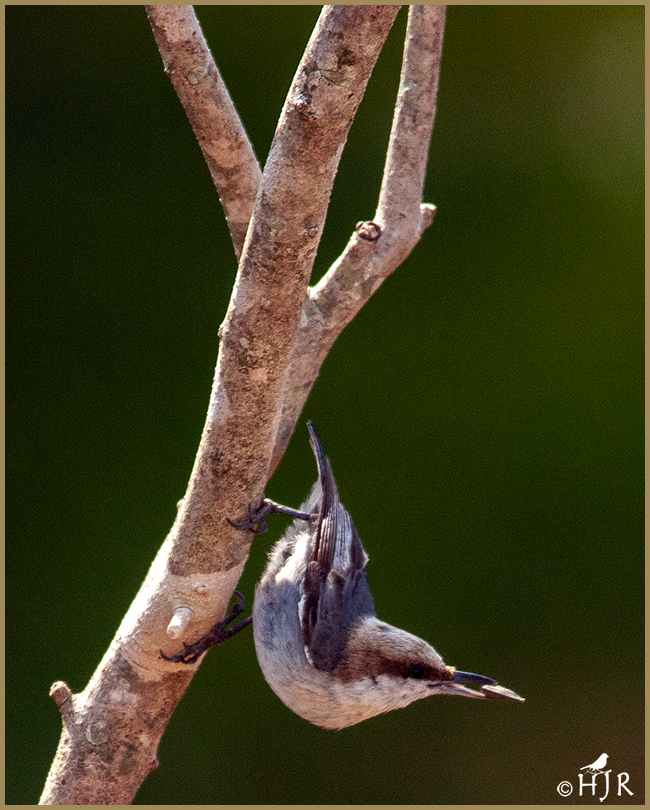
The Brown-headed Nuthatch (Sitta pusilla) is a small songbird found in pine forests throughout the Southeastern United States. Genetic analyses indicated low differentiation between northern and southern populations in Florida, but the study also found lower genetic diversity among south Florida populations that may be a result of the increased habitat fragmentation that was documented. A population on the Bahamas showed moderate to high differentiation compared with Florida populations.
Tufted Titmouse

The Tufted Titmouse gathers food from the ground and from tree branches. It eats berries, nuts, insects, small fruit, snails, and seeds. Caterpillars constitute a major part of its diet during the summer. Titmice will stash food for later use. The titmouse can demonstrate curiosity regarding humans, and sometimes will perch on a window ledge and seem to be peering into the house. It may cling to the windows and walls of buildings seeking prey in wasp and hornet nests. It is a regular visitor around bird feeders. Its normal pattern is to scout a feeder from cover, fly in to take a seed, then fly back to cover to eat it.
Downy Woodpecker

Adult Downy Woodpeckers are the smallest of North America’s woodpeckers, but there are many smaller species elsewhere, especially the piculets. The total length of the species ranges from 14 to 18 cm (5.5 to 7.1 in) and the wingspan from 25 to 31 cm (9.8 to 12.2 in). Body mass ranges from 20 to 33 g (0.71 to 1.16 oz). Standard measurements are as follows: the wing chord is 8.5–10 cm (3.3–3.9 in), the tail is 4–6 cm (1.6–2.4 in), the bill is 1–1.8 cm (0.39–0.71 in) and the tarsus is 1.1–1.7 cm (0.43–0.67 in). The downy woodpecker is mainly black on the upperparts and wings, with a white back, throat and belly and white spotting on the wings. There is one white bar above the eye, and one below. They have a black tail with white outer feathers barred with black. Adult males have a red patch on the back of the head whereas juvenile birds display a red cap.
White-breasted Nuthatch
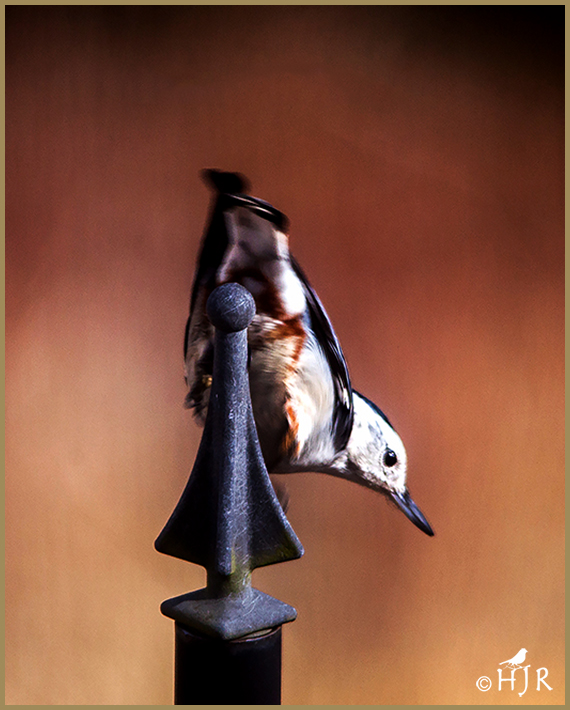
The adult male of the White-breasted Nuthatch (S. c. carolinensis), has pale blue-gray upperparts, a glossy black cap (crown of the head), and a black band on the upper back. The wing coverts and flight feathers are very dark gray with paler fringes, and the closed wing is pale gray and black, with a thin white wing bar. The face and the underparts are white. The outer tail feathers are black with broad diagonal white bands across the outer three feathers, a feature readily visible in flight.
© HJ Ruiz – Avian101
Share this:

Special Places # 33
Falls & Cascades


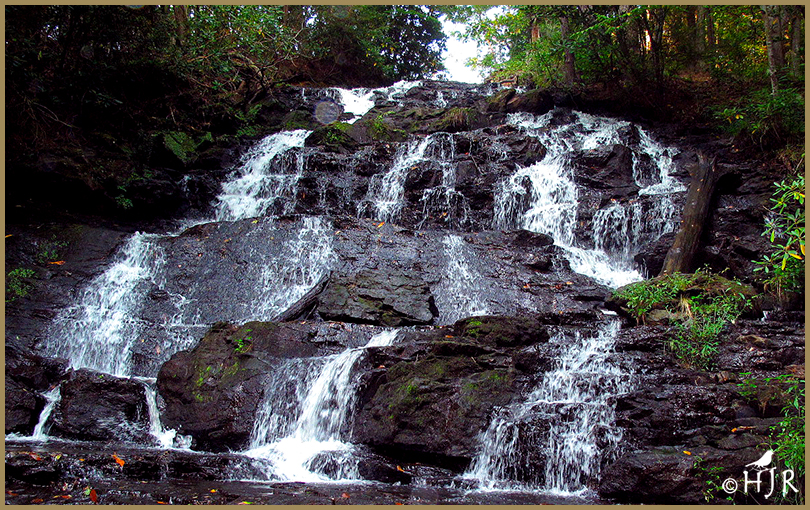
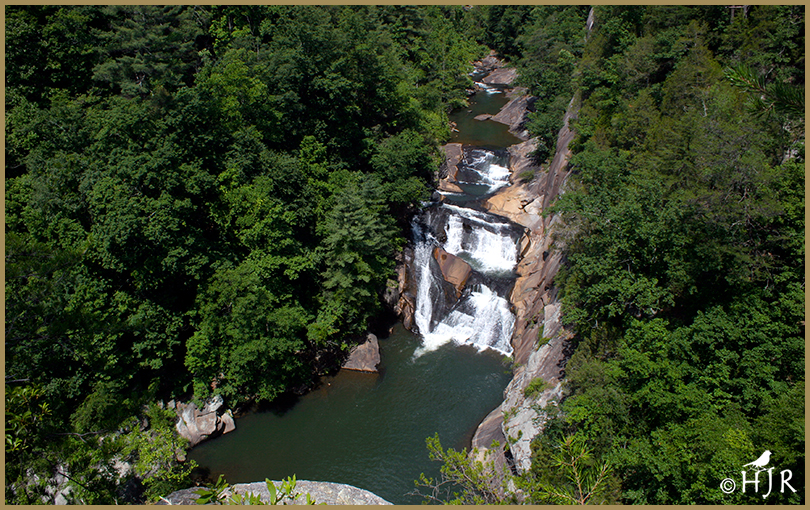
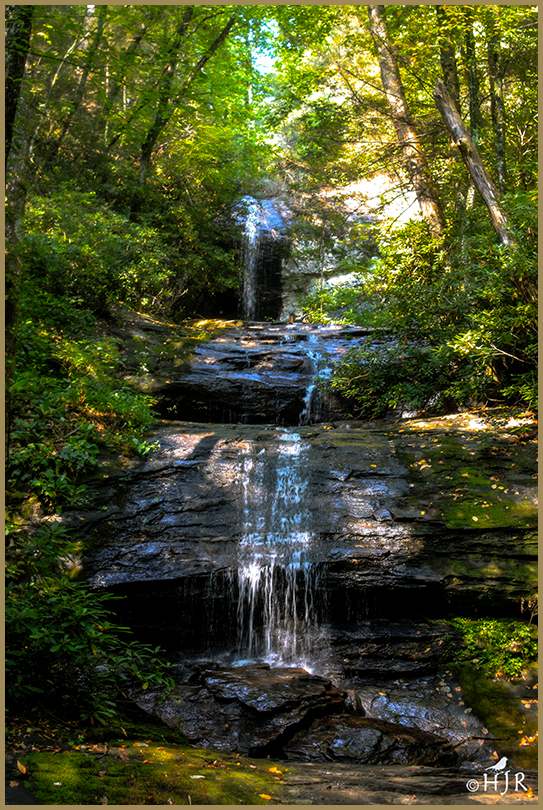
1 – Top Left: In 1905 the natural entrance to Lookout Mountain Cave was closed during the construction of a railway tunnel. In the 1920s a chemist and cave enthusiast named Leo Lambert thought that he could re-open the cave as a tourist attraction, and formed a company to do so. He planned to make an opening farther up the mountain than the original opening and transport tourists to the cave via an elevator. For this purpose, his company purchased land on the side of Lookout Mountain above Lookout Mountain Cave and in 1928 began to drill through the limestone. In doing so, they discovered a small passageway about 18 inches high and four feet wide. Exploring this opening, Lambert discovered the formerly hidden Ruby Falls Cave and its waterfall. On his next trip to visit the cave, Lambert took his wife Ruby, and told her that he would name the falls after her.
2 – Top Right – Upper Row: The mighty Niagara Falls between United States and Canada. Flowing north as part of the Niagara River, which drains Lake Erie into Lake Ontario, the combined falls have the highest flow rate of any waterfall in North America that has a vertical drop of more than 50 m (160 ft). During peak daytime tourist hours, more than 168,000 m3 (six million cubic feet) of water goes over the crest of the falls every minute. Horseshoe Falls is the most powerful waterfall in North America, as measured by flow rate. Niagara Falls is famed for its beauty and is a valuable source of hydroelectric power. Balancing recreational, commercial, and industrial uses has been a challenge for the stewards of the falls since the 19th century.
3 – Top Right – Middle Row: Vogel Falls located in Vogel State Park, established in 1931, is the second oldest state park in Georgia. Located at 2500 feet above sea level, Vogel sits at the base of Blood Mountain, the highest summit on the Appalachian Trail in Georgia, and is surrounded by Chattahoochee National Forest. The North Georgia Mountains around Vogel were linked to Native American people for generations before European settlement.
4 – Top Right – Bottom Row: Since the early 19th century, Tallulah Gorge and its waterfalls have been a tourist attraction. In 1882, Tallulah Falls Railway was built, increasing the accessibility of the area to tourists from Atlanta and south Georgia, and the gorge became North Georgia’s first tourist attraction. Resort hotels and bars sprang up to serve the tourist trade which, after the addition of the railway, swelled to as many as 2,000 people on any given Sunday. In 1883, tightrope walker Professor Bachman crossed the gorge as part of a publicity stunt for one hotel. On July 18, 1970, Karl Wallenda became the second man to walk across the gorge on a tightrope.
5 – Bottom Left: The DeSoto Falls of Georgia are located in Lumpkin County, Georgia along Frogtown Creek. There are actually three waterfalls on Frogtown Creek, called Upper DeSoto Falls, Middle Desoto Falls and Lower DeSoto Falls. The upper waterfall drops 200 feet (61 m), the middle waterfall drops 67 feet (20 m) and the lower waterfall drops 35 feet (11 m). The overall height of the falls, as measured inclusive of non-vertical falls, cascades and steep stream bed, is 480 feet (150 m). DeSoto Falls are located at an elevation of 3,560-foot (1,090 m) on Rocky Mountain.
The DeSoto Falls are named for Spanish explorer Hernando deSoto, who passed through Georgia around 1540. According to a sign posted on the DeSoto Falls Trail, a 2.4-mile (3.9 km) in and out hiking trail to the falls, a plate of armor was discovered at the base of the falls in the 1880s.
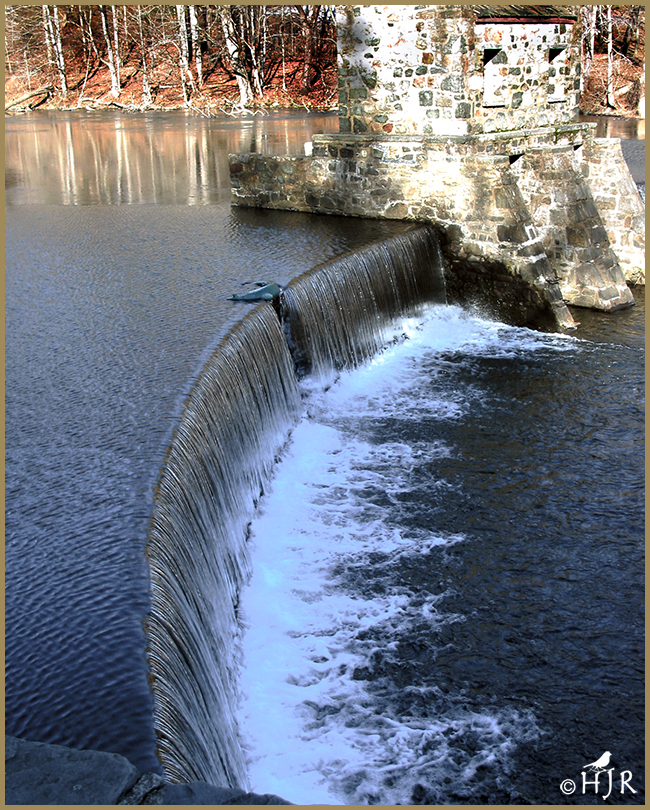
6 – Bottom Right: Arched cascade from damed lake drain in Morris County, New Jersey.
© HJ Ruiz – Avian101
Share this:

Red Art Gallery – Northern Cardinal # 42
Red Art Gallery
Photo Gallery


© HJ Ruiz – Avian101
Share this:

Read Past Reviews

Book # 69
Quote from the Author
“A good chuckle is healthy, it helps you break the monotony of a serious life.” ~ H.J. Ruiz
 H.J. Ruiz - Avian101
You must be logged in to post a comment.