Going through my photo files
When I get free time I usually go through files I keep of all my bird photographs, I do this because sometimes by taking a second look I might find a good shot that I overlooked the first time. You’d be surprise to know that I find this way many shots that become my favorites.
Sometimes they have a bit more message to tell, because they have captured a bit of the bird’s daily drama. It doesn’t have to be tragic but implies their instinctive actions.
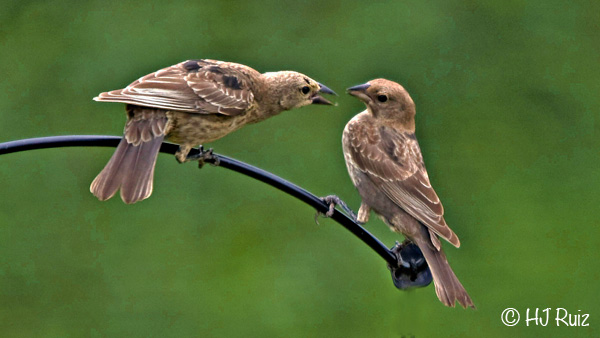
Argument between females cowbirds
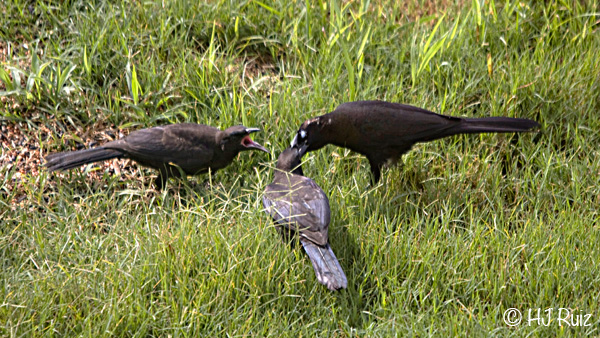
Male Grackle feeding immatures
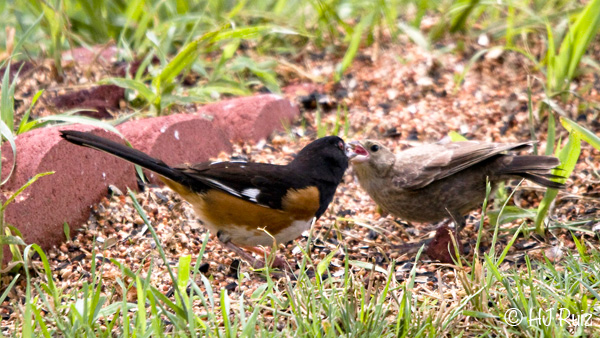
Male Towhee feeding adopted female cowbird (Parasitic bird)
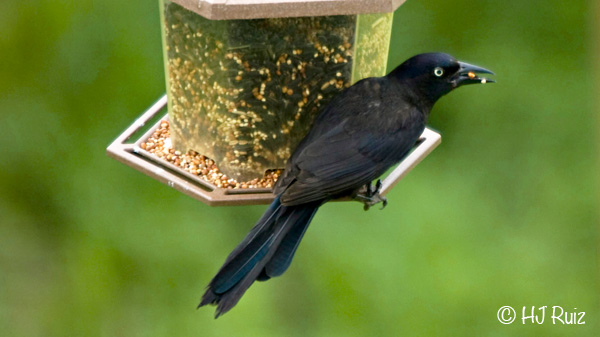
Male Grackle getting food for the family.
Photographs are © H.J. Ruiz – Avian 101
Share this:

Bluebird Impressions – Video
Let’s take a look at Blue Birds today, video courtesy of © Lang Elliott
Share this:

Spring here yet?
I’m counting the days to Spring anxiously, today we had a balmy 60’s and I was outdoors for a while looking for ant hills (Fire ants) and spreading bait to eradicate them. All through the Spring, Summer and Fall I get stung by fire ants, wasps, bees and all bugs around the backyard! I really don’t care much about it I do not have a bad reaction to them. Not like other people I’ve seen. I’m just waiting to hear the Canada Geese honking and flying north_ That and seeing a cowbird are the best indicators that the Winter is gone! 🙂
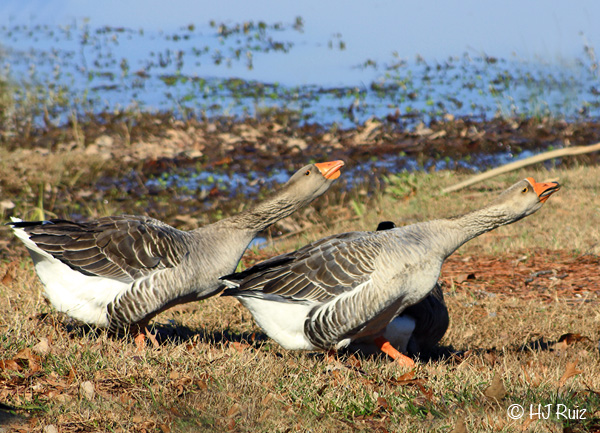
Hybrid Geese
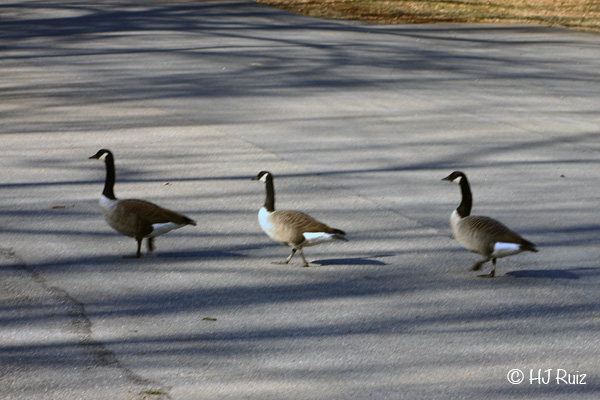
Why the Canada Geese cross the road?
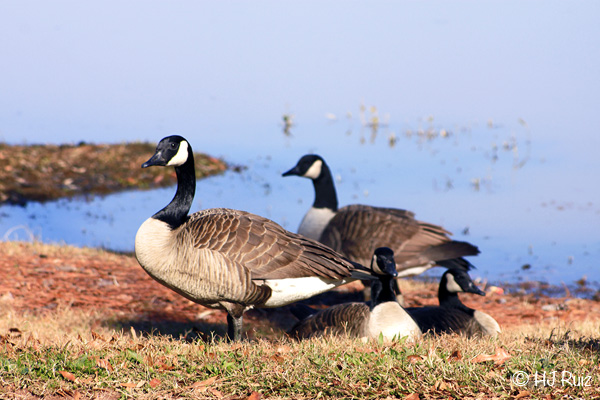
I can't believe that I miss Canada Geese!
Photographs are © H.J. Ruiz – Avian 101
Share this:

American Bird Conservancy
Black-cheeked Ant-Tanager
 |
|||

|
Share this:


Read Past Reviews

Book # 69

Quote from the Author
“A good chuckle is healthy, it helps you break the monotony of a serious life.” ~ H.J. Ruiz


You must be logged in to post a comment.