Cooper’s Hawk
There’s always a predator among harmless creatures in their habitat and that’s how Nature has set the wilderness laws.
Today I’m posting a few words of information about the Cooper’s Hawk. First, I should say that this species of hawks are the most assiduous predators of small birds, rodents and snakes in Georgia.
Perhaps I should tell you a short story of how I became more interested in birds. I had recently moved to Georgia had to travel to other locations for business reasons. One day I was driving along a road when something moving from a high tree called my attention, it was a hawk, that later I learned it was a Cooper’s Hawk. It flew across the road, landed in a ditch at the side of the road and then flew off again, only this time it had a garden snake gripped in its talons. I was very impressed to have witnessed that scene.
From that moment on I kept my eyes alert to see any kind of birds flying around. Little by little I got more involved with birds, I think you know the rest of the story by now!
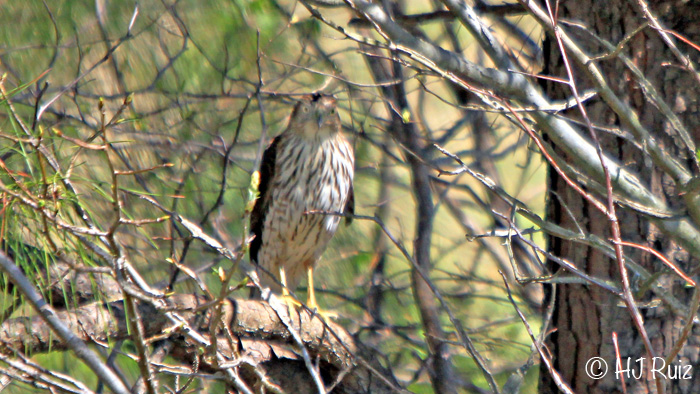
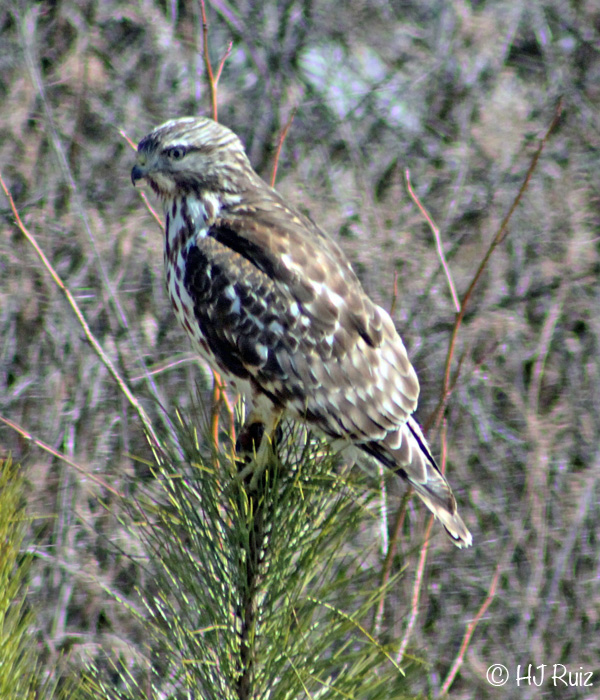
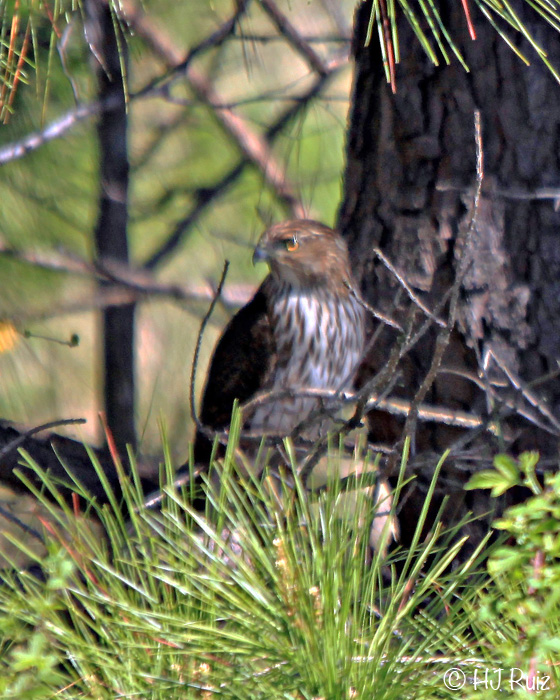
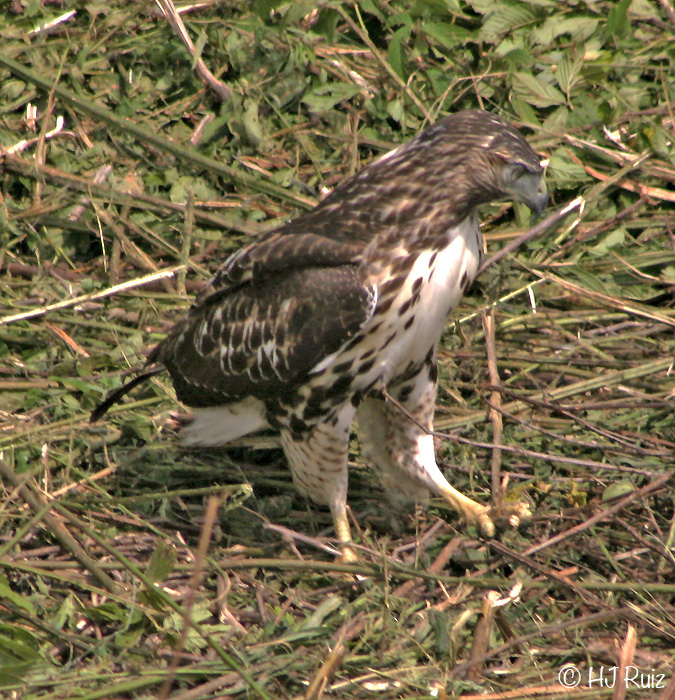
Click on the images to see enlargements
Text and photographs © H.J. Ruiz – Avian 101
Share this:

Blue Jay
Since we are in the blue streak, let’s do this post about the Blue Jays. They are part of the family of the Blackbirds. They usually hang out in the same flock with other blackbirds such as Cowbirds, Red-winged Blackbirds, Grackles. Blue Jays are medium size birds, with an outstanding plumage. They feed mostly from the ground, they forage the grassy areas for insects, grubs, seeds etc.
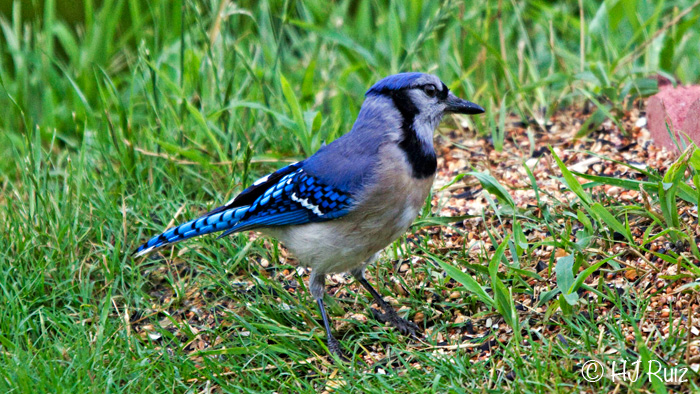

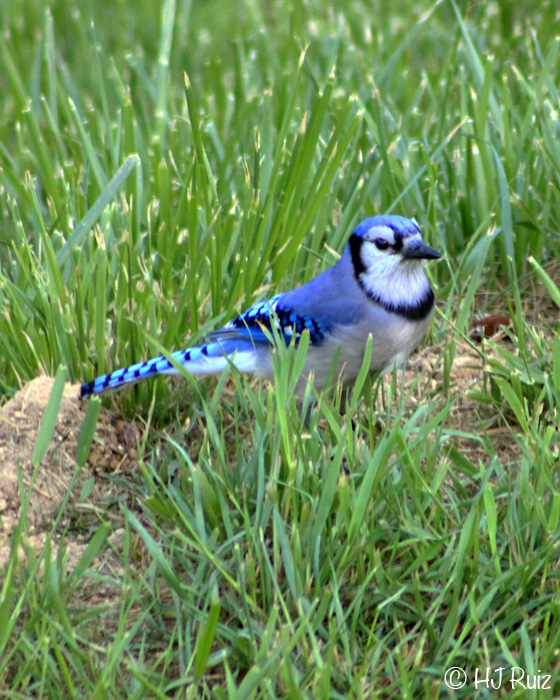
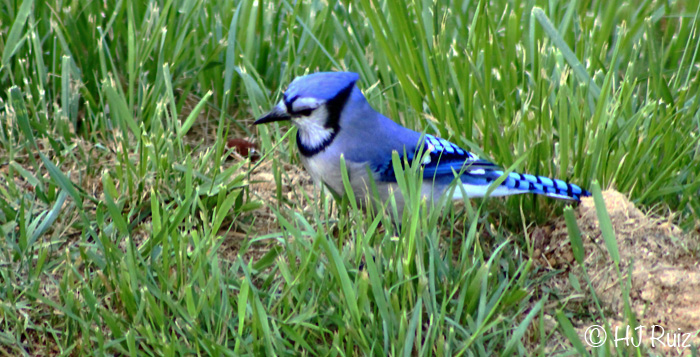
Click on image for enlargement
Text and photographs © H.J. Ruiz – Avian 101
Share this:

We Need Some Rain
Days go by and we haven’t had any rain for over a week. My plants and grass need water badly. I hope we get some rain soon because otherwise it will be costly for us. If we use tap water for spraying the lawn and all our plants, it’d cost us a fortune, the water bills are bad as they are now; In the other hand if the plants are not watered they most likely would die! We have Bermuda grass all around our house which is treated on a monthly basis for weeds, insects,etc. That cost too! All that would be going to waste without water. My last alternative is googling the internet for: Learning how to do the Rain Dance!
LAST MINUTE NEWS: It rained all night!!! 🙂
I have some pictures for you, pano type:
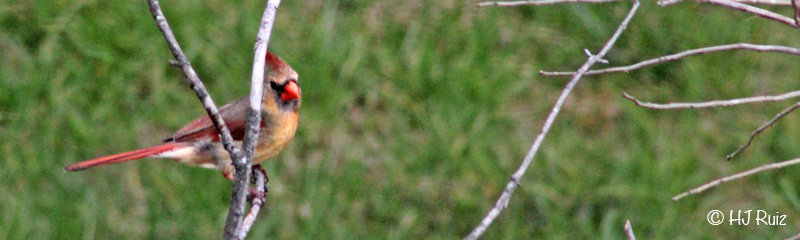
Northern Cardinal (F)
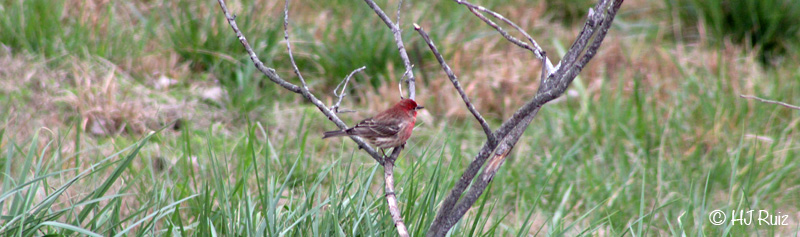
House Finch (M)
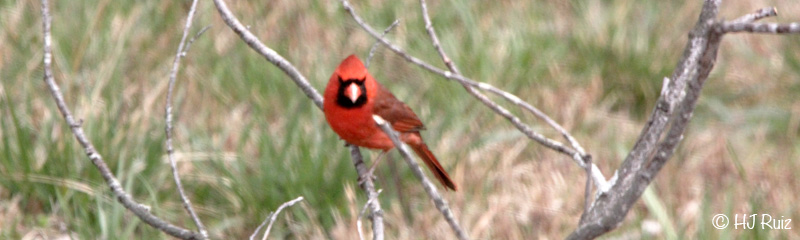
Northern Cardinal (M)
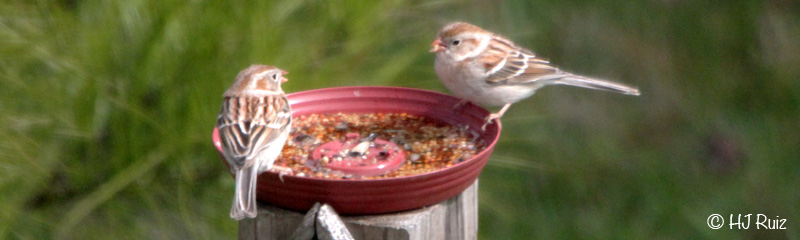
Field Sparrows
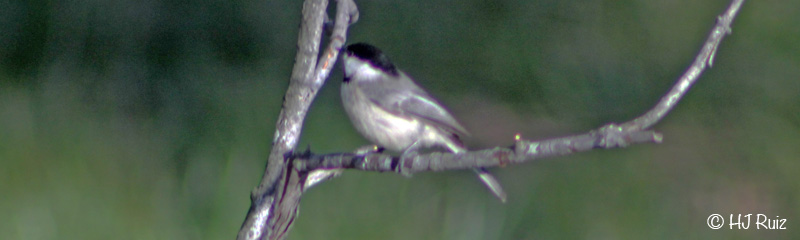
Carolina Chickadee
Click on images to see enlargements
Text and photographs © H.J. Ruiz – Avian 101
Share this:

Indigo Bunting
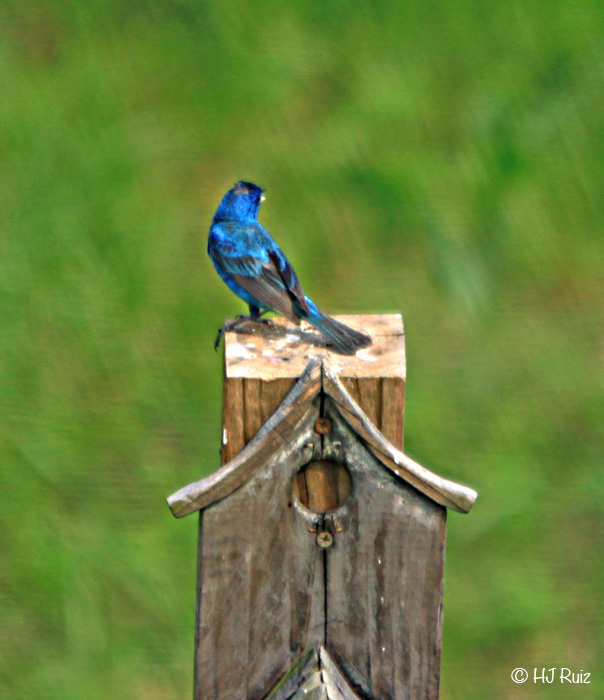
The Indigo Bunting is small bird with very similar features to the Blue Grosbeak at first look but they do have size and features that are different. Indigo Buntings are smaller, their color is bright blue mainly, with some dark
brown or black at the edge of wings, tail and head. Do not sport a black mask as the Blue Grosbeak. It’s a very pretty bird. When is flying looks darker that when is standing, it’s caused by the light reflecting on their feathers.



Text and photographs © H.J. Ruiz – Avian 101
Share this:


Read Past Reviews

Book # 69

Quote from the Author
“A good chuckle is healthy, it helps you break the monotony of a serious life.” ~ H.J. Ruiz


You must be logged in to post a comment.