Eastern Phoebe
Eastern Phoebe is not a common bird in the area where I live. They’re small birds that are not easy to spot if they are on trees. Their basic colors make a great camouflage.
These birds have a gentle face with a small flatten bill.
E. Phoebe feed mostly on insects which they catch in flight. It is a migratory passerine bird, they do their wintering on the southern end of USA and as far as central America.
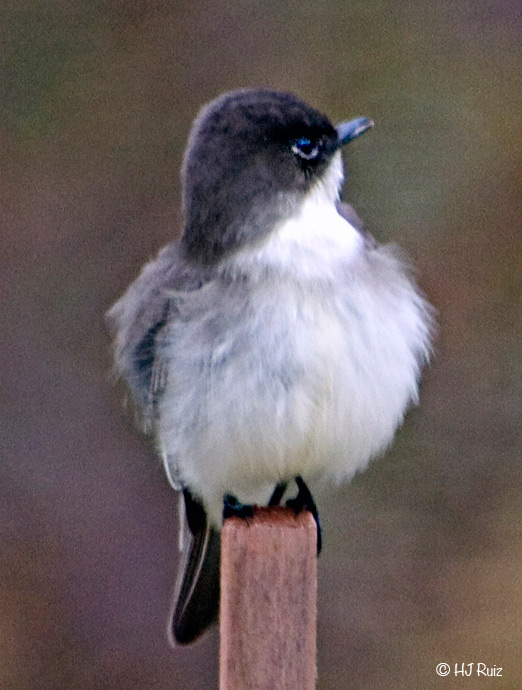
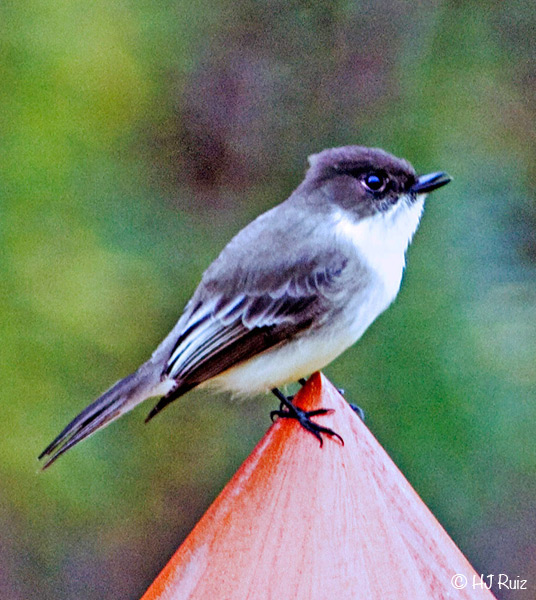
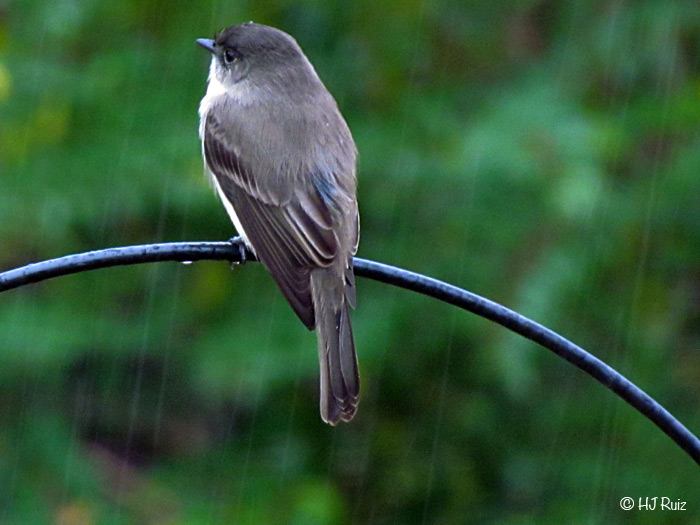
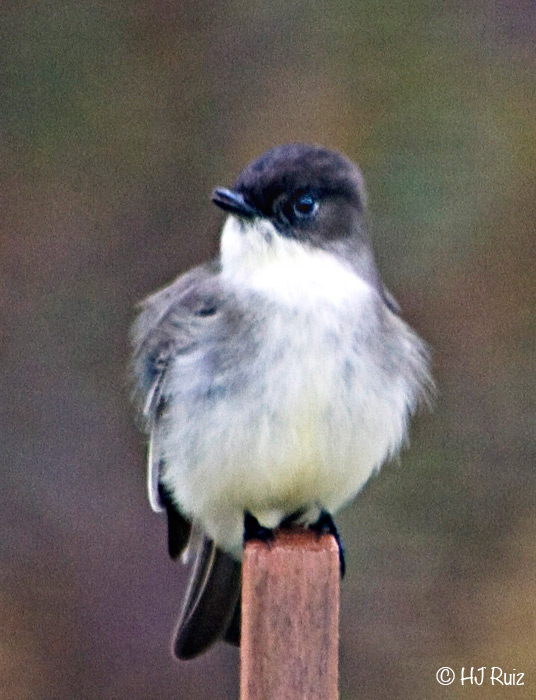
Click on images to see enlargements
Text and photographs © H.J. Ruiz – Avian 101
Share this:

Eastern Towhee
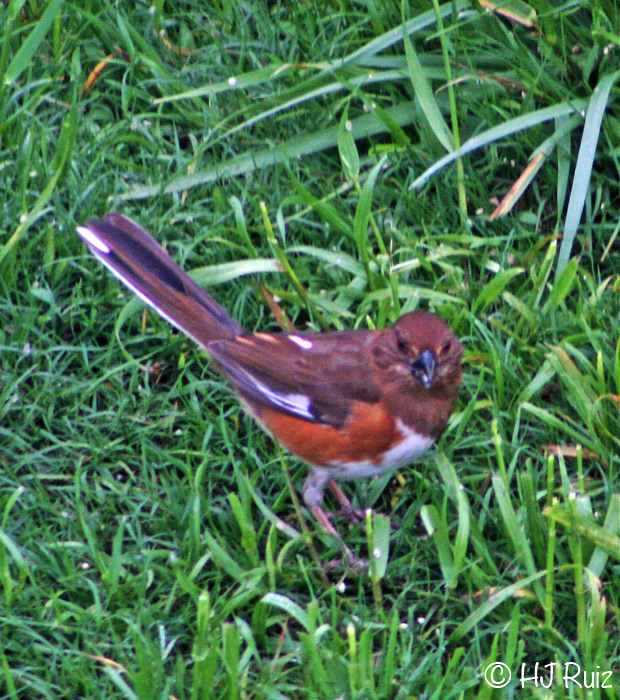
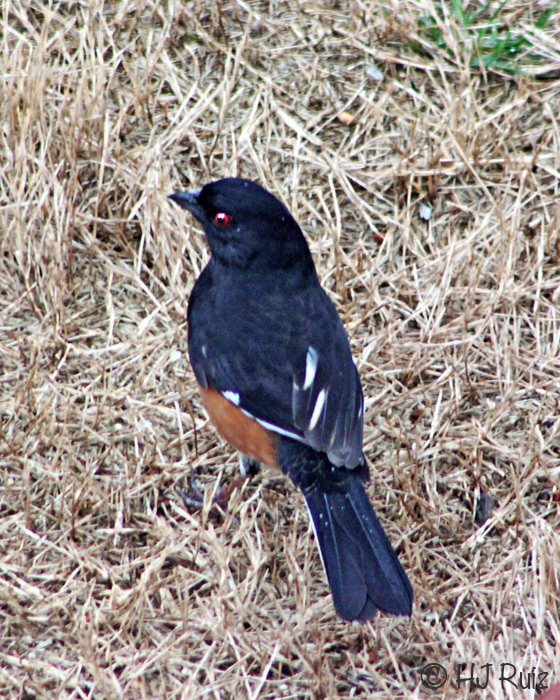
Eastern Towhees have been in my backyard from day one. They are active birds, ground feeders, they live an independent life around the area where they have their nests, deep into the bushes. Male and female once they have built a nest as a couple, they go everywhere together.
These birds are dimorphic, being the male the one with the black body and the female has brown body.
Their tails are long which they fan it on and off flashing the white under tail feathers.
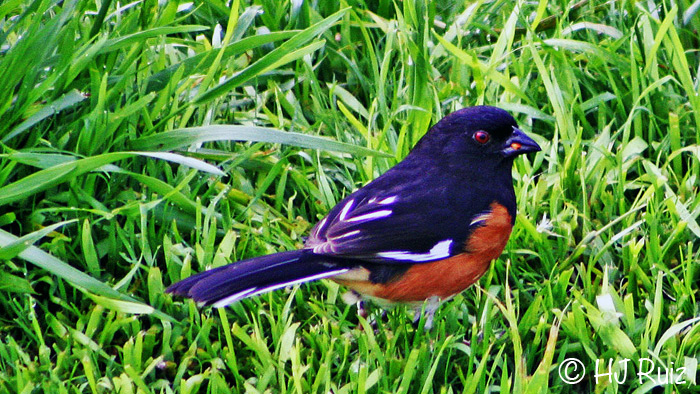
Eastern Towhee (M)
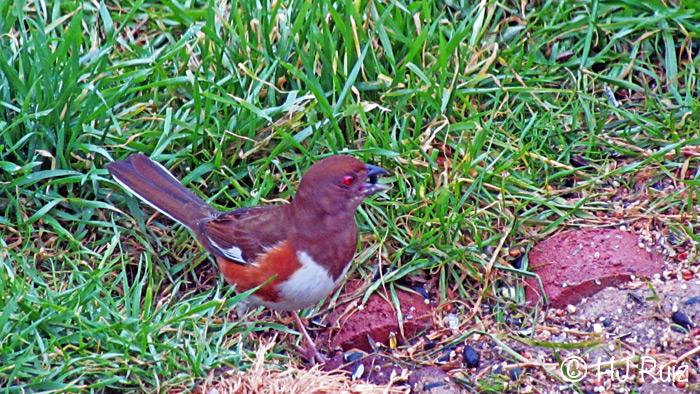
Eastern Towhee (F)
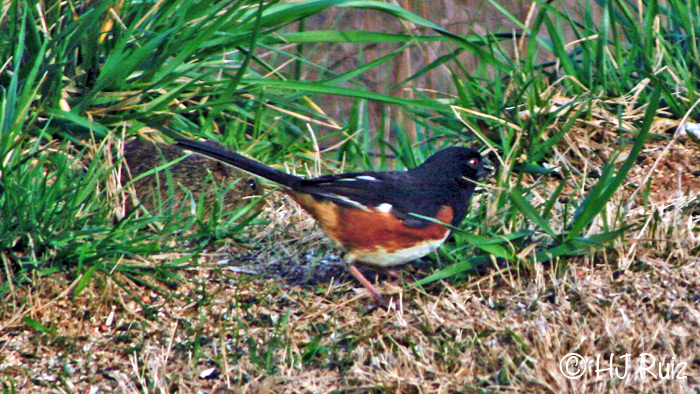
Eastern Towhee (M)
Eastern Towhee (F)
Eastern Towhee (M)
Click on images to see enlargements
Text and photographs © H.J. Ruiz – Avian 101
Share this:

Blue Grosbeak
A few days ago I wrote and posted about the Indigo Bunting and I mentioned the similarities with another bird; this bird is the Blue Grosbeak.
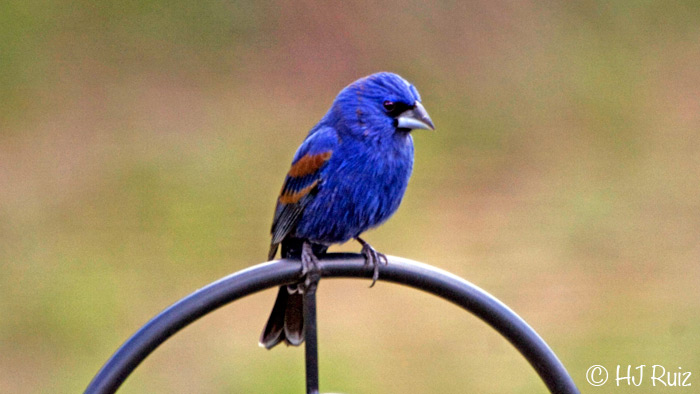
Approximately the size of a Northern Cardinal, it has a bright blue color and brownish wings and parts of the body, depending on the breeding plumage. Blue Grosbeaks are dimorphic (visual difference between male and female).
The female is not blue but cinnamon brown, and in rare cases it might have specks of blue on her body.
Both male and female have a black mask and a silvery lower mandible beak typical for this species. The reflection of the sun light at certain angles determines the bright blue or the darker hue.
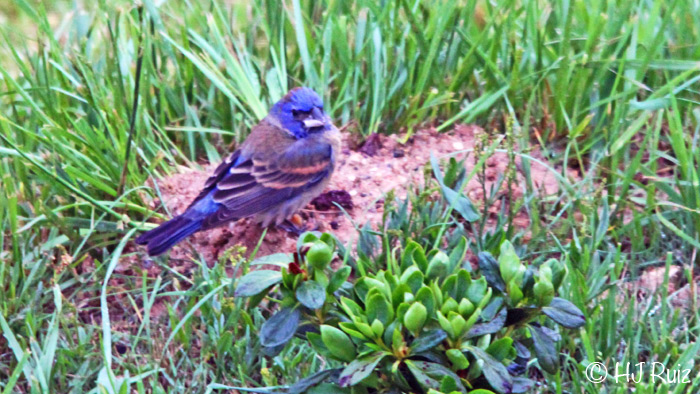
Blue Grosbeak (M)
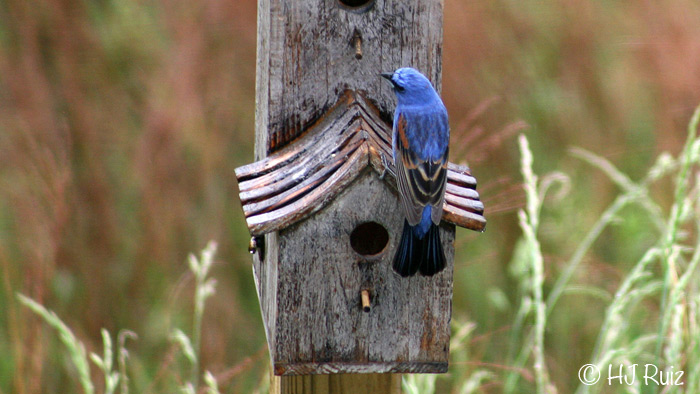
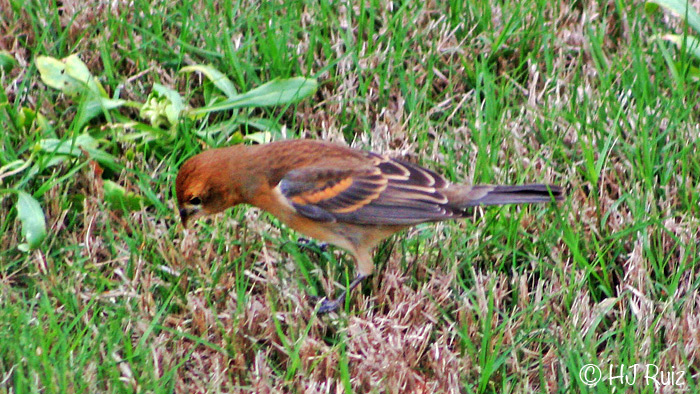
Blue Grosbeak (F)

Click on images to see enlargements
Text and photographs © H.J. Ruiz – Avian 101
Share this:

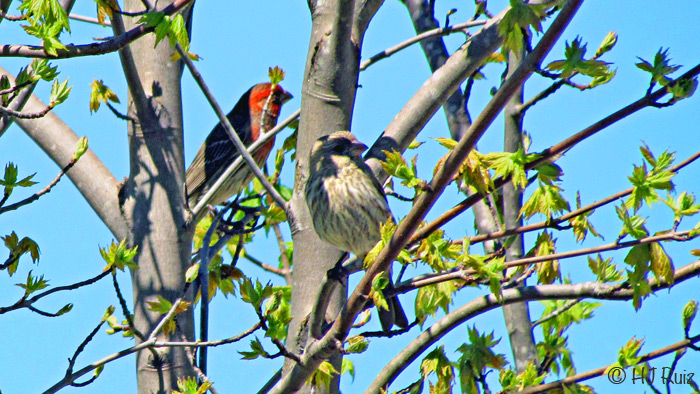
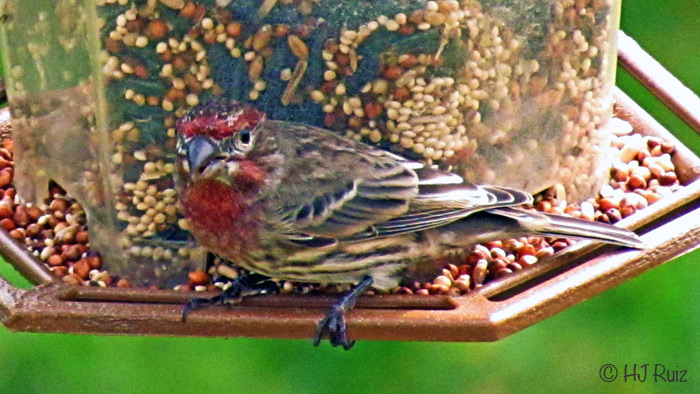
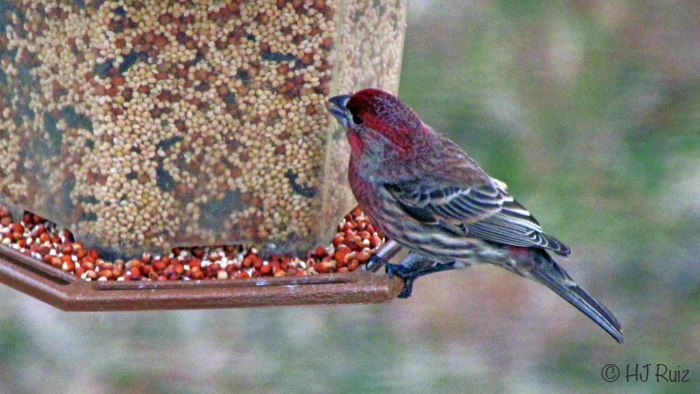
House Finch
House Finches are the “Other red birds” for many people, which always keep in mind the Cardinals when they see a bird with red feathers and find that they are not! That’s when they refer of House Finches as the other red birds!
I think it’s a bit unfair to them because these birds are very common and are seen in almost every backyard feeder. They mostly mind their own business. When they found their mate is a whole romantic story. They do things together and they are most of the time next to each other. When they nest and are incubating eggs they take turns to lay on the eggs.
I think this species are cool birds, very family oriented. They watch from a far high point when is time for the fledging of their young finches.
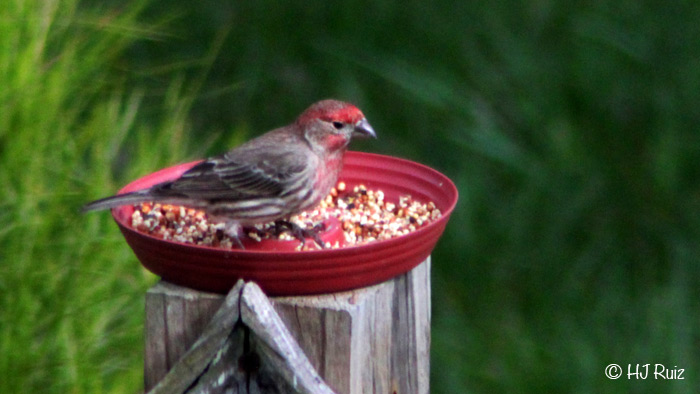
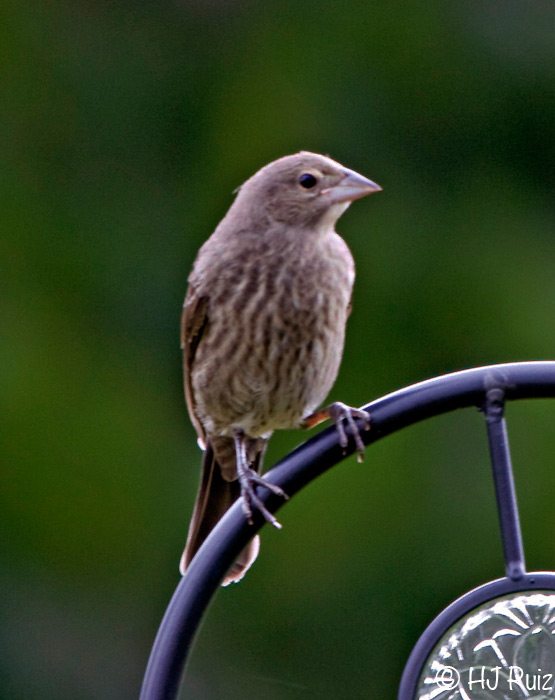
House Finch (F)
Click on images to see enlargements
Text and photographs © H.J. Ruiz – Avian 101
Share this:


Read Past Reviews

Book # 69

Quote from the Author
“A good chuckle is healthy, it helps you break the monotony of a serious life.” ~ H.J. Ruiz


You must be logged in to post a comment.