
Ruddy Turnstone
The photographs displayed on this post were shot at several locations of the coast of Georgia.
The Ruddy Turnstone is a fairly small and stocky bird. The dark, wedge-shaped bill slightly upturned. The legs are fairly short are bright orange.

Ruddy Turnstone
At all seasons, the plumage is dominated by a harlequin-like pattern of black and white. Breeding birds have reddish-brown upper parts with black markings. The head is mainly white with black streaks on the crown and a black pattern on the face. The breast is mainly black apart from a white patch on the sides. The rest of the underparts are white. In flight it reveals a white wingbar, white patch near the base of the wing and white lower back, rump and tail with dark bands on the uppertail-coverts and near the tip of the tail. The female is slightly duller than the male and has a browner head with more streaking.
The Ruddy Turnstone has a staccato, rattling call and also a chattering alarm-call which is mainly given during the breeding season.
The Ruddy Turnstone has a varied diet including carrion, eggs and plant material but it feeds mainly on invertebrates. Insects are particularly important in the breeding season. At other times it also takes crustaceans, mollusks and worms. It often flips over stones and other objects to get at prey items hiding underneath; this behavior is the origin of the name “turnstone”. It usually forages in flocks.
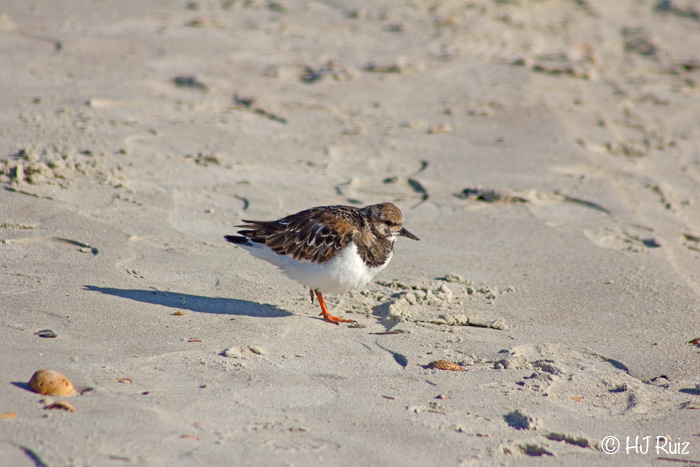
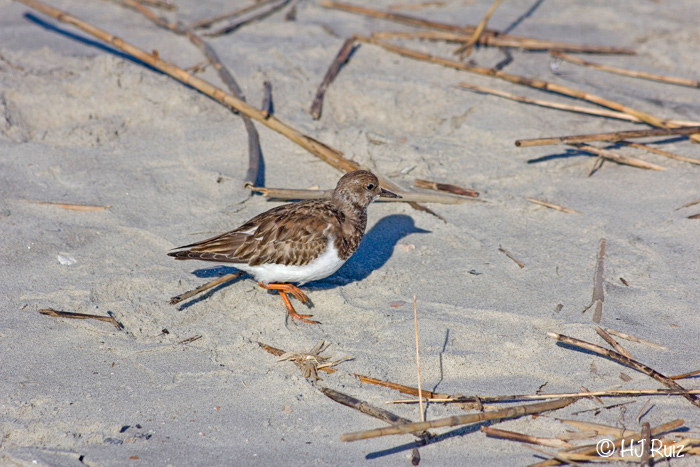
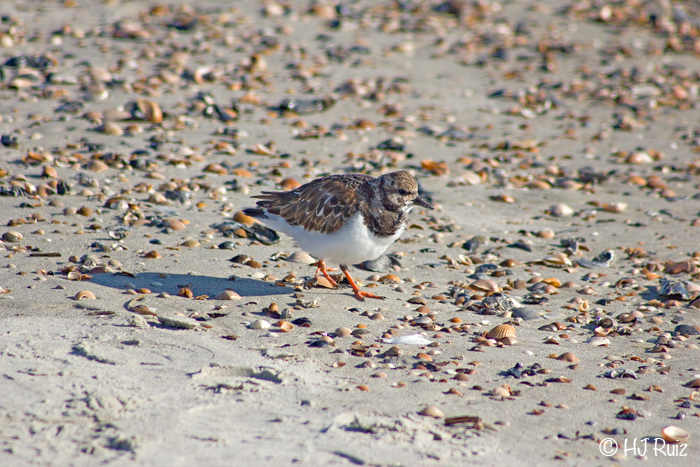
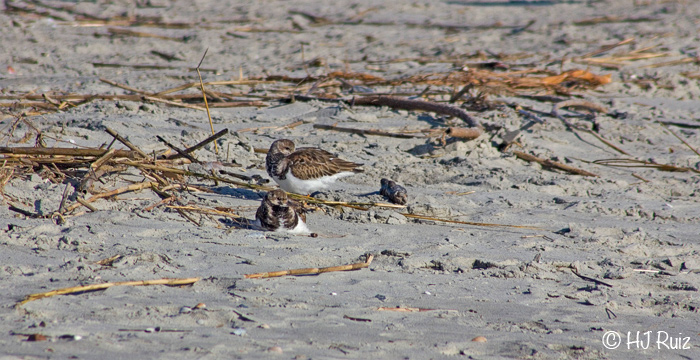
Text and photographs © H.J. Ruiz – Avian 101
Share this:

Odds and Ends
You must have figured by now that I take many photographs of birds. Yes I do and from every shooting session I usually pick a few of them for use on the blog and keep the rest for future postings. Among those pictures in file I also keep odds and ends which are shots that may have a potential for another post, just like the one I’m writing now.
These pictures are for simple entertainment nothing else. I’m not trying to teach anything of have any meaning at all.
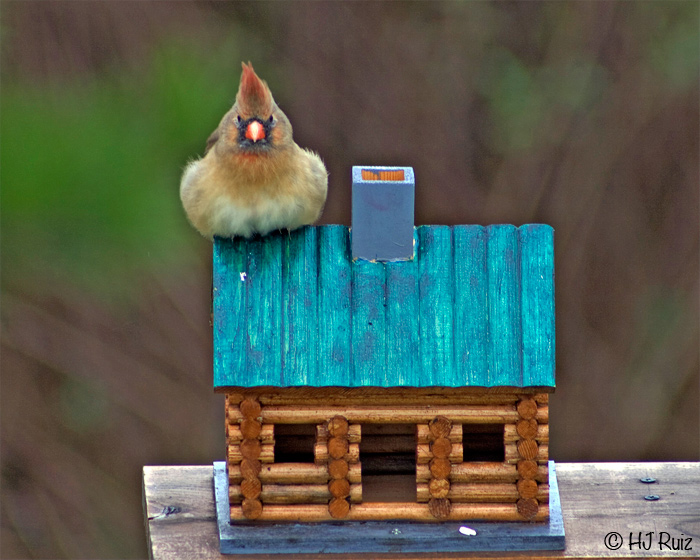
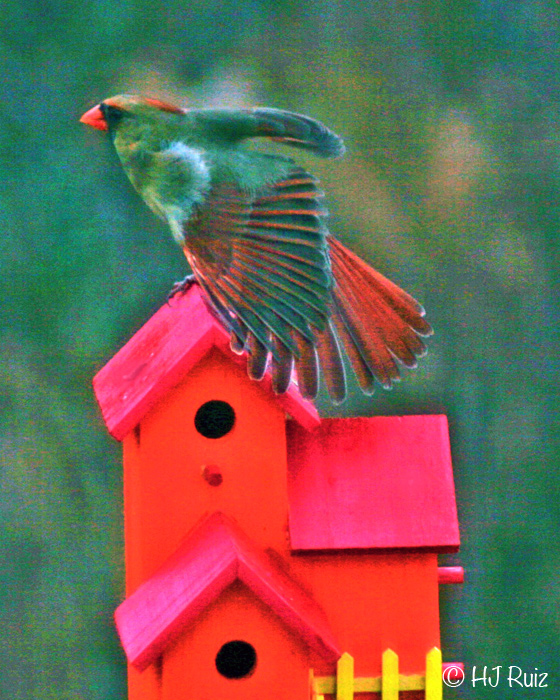
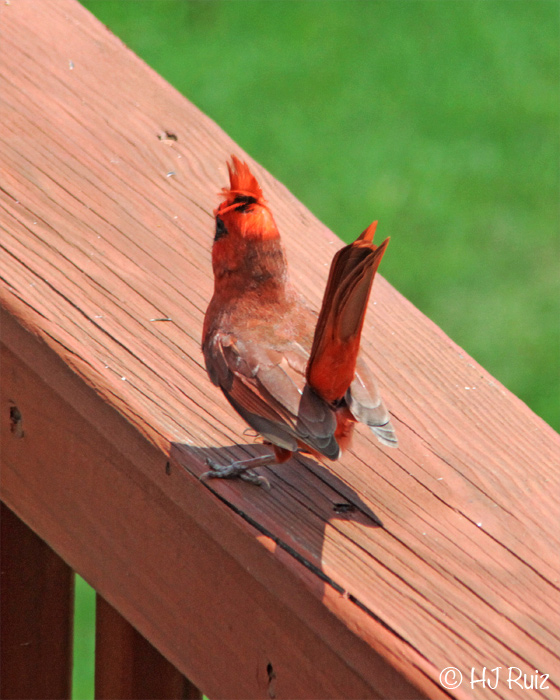

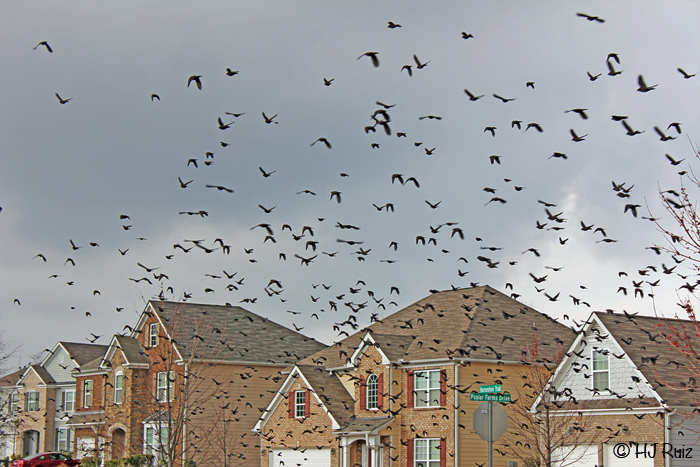

Text and photographs © H.J. Ruiz – Avian 101
Share this:

Wednesday’s Blues
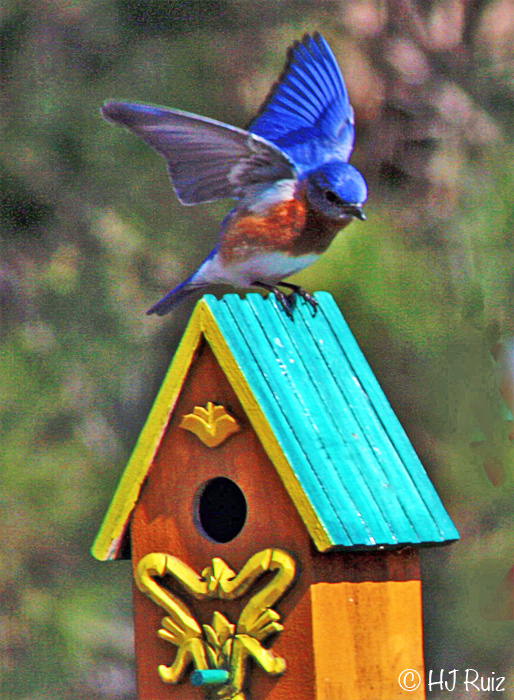
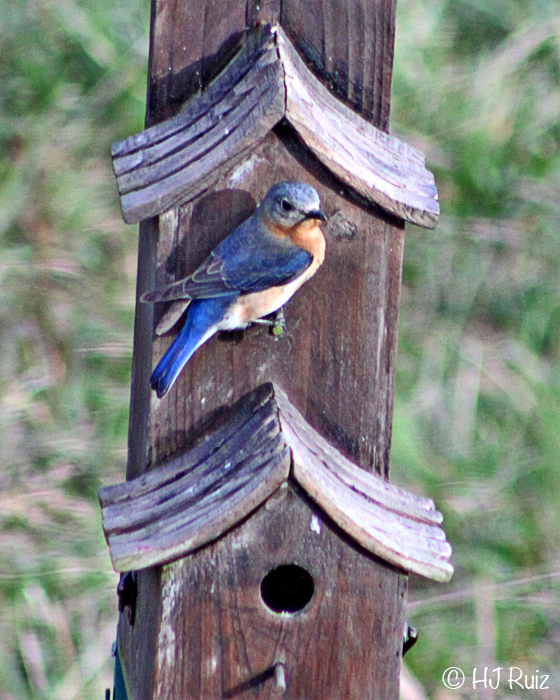
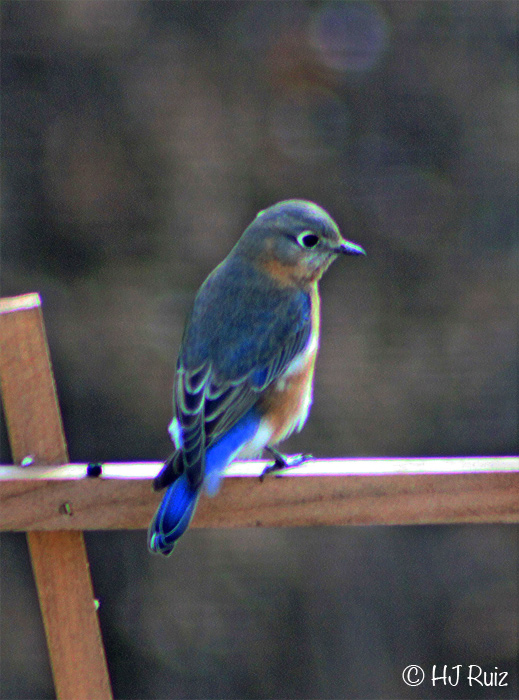
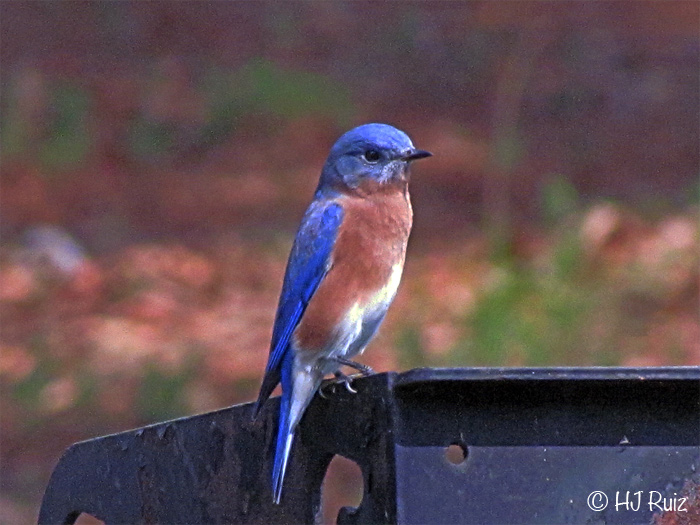
One of the most easily identifiable birds are the Eastern Bluebirds. Their color blue is very bright in contrast to the rusty color of their breasts. They are easy to spot unless they are in flight and have the sky as a background.
The brighter the day light the more brilliant they look in fact the seem to glow against a dark background. Of course they are very popular birds for they appearance. Although not very popular with other small birds because they love to invade their nests and eat their eggs. I like them because they are pretty birds but dislike their behavior.
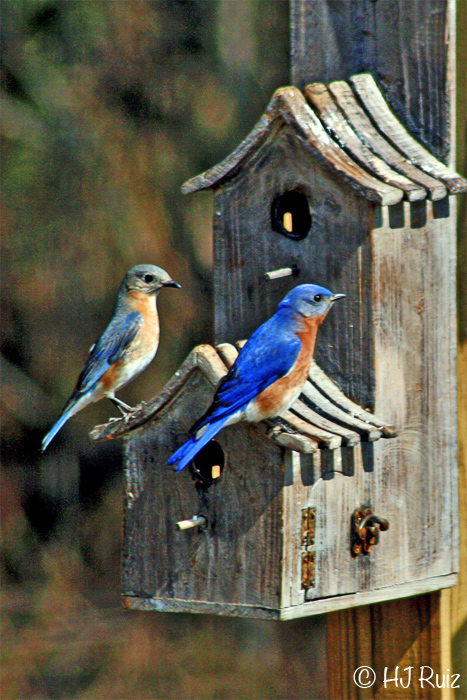
Eastern Bluebirds – Female left, Male right
Text and photographs © H.J. Ruiz – Avian 101
Share this:

Plumage Colors
I’ve been asked some questions before in reference to the plumage colors of all species of birds. Several people wanted to know what makes the feathers on birds have certain colorations and why the difference among them. I did some more searching about this subject and this is what I gathered.
“The colors in the feathers of a bird are formed in two different ways, from either pigments or from light refraction caused by the structure of the feather.
In some cases feather colors are the result of a combination of pigment and structural colors. The greens of some parrots are the result of yellow pigments overlaying the blue-reflecting characteristic of the feathers.
Pigmentation
Pigments are colored substances that can be found in both plants and animals. The coloration created by pigments is independent of the structure of the feather. Pigment colorization in birds comes from three different groups:
- melanins
- carotenoids
- porphyrines.
Melanins occur as tiny granules of color in both the skin and feathers of birds. Depending on their concentration and location, melanins can produce colors ranging from the darkest black to reddish browns and pale yellows.
Melanin provides more than just coloration. Feathers that contain melanin are stronger and more resistant to wear than feathers without melanin. Feathers without any pigmentation are the weakest of all. Many otherwise all white birds have black feathers on their wings or black wingtips. These flight feathers are the ones most subject to wear and tear. The melanin causing the tips to appear black also provides extra strength.
The red of the Northern Cardinal comes from a class of pigments called carotenoids. Carotenoids are produced by plants, and are acquired by eating plants or by eating something that has eaten a plant. Carotenoids are responsible for the bright yellows seen in goldfinches and Yellow Warblers as well as the brilliant orangish yellow of the male Blackburnian Warbler. Carotenoids can interact with melanins to produce colors like the olive-green of the female Scarlet Tanager.
Porphyrins, the third pigment group, are produced by modifying amino acids. Although the exact chemical structure of each porphyrin differs, they all share a common trait. They fluoresce a bright red when exposed to ultraviolet light, much the way certain rocks and minerals are known to do. Porphyrins produce a range of colors, including pink, browns, reds, and greens. Porphyrins are found in some owls, pigeons and gallinaceous species. They can also produce the brilliant greens and reds of turacos.
Structural Colors
Adding to the diversity of avian colors are colors produced by the structure of the feather. The best known example is the gorget (throat feathers) of many hummingbird species. The iridescent colors of the gorget are the result of the refraction of incident light caused by the microscopic structure of the feathers. The refraction works like a prism, splitting the light into rich, component colors. At certain angles little or no light is reflected back to the viewer and the gorget can appear black. As the viewing angle changes, the refracted light becomes visible in a glowing, shimmering iridescent display.
Many species of birds have feathers that exhibit iridescent colors, including the Purple Gallinule and Tricolored Heron pictured at the top of this page.
Not all structural colors are iridescent. Tiny air pockets in the barbs of feathers can scatter incoming light, resulting in a specific, non-iridescent color. Blue colors in feathers are almost always produced in this manner. Examples include the blue feathers of bluebirds, Indigo Buntings, Blue Jay’s
If you find the feather of a Blue Jay you can see for yourself how this works. First, observe the feather in normal lighting conditions and you will see the expected blue color. Next, try back-lighting the feather. When light is transmitted through the feather it will look brown. The blues are lost because the light is no longer being reflected back and the brown shows up because of the melanin in the feathers.
The feather structures of many species also reflect light in the ultraviolet range. Some birds can see into the UV range so they may appear quite different to each other than they do to us.”
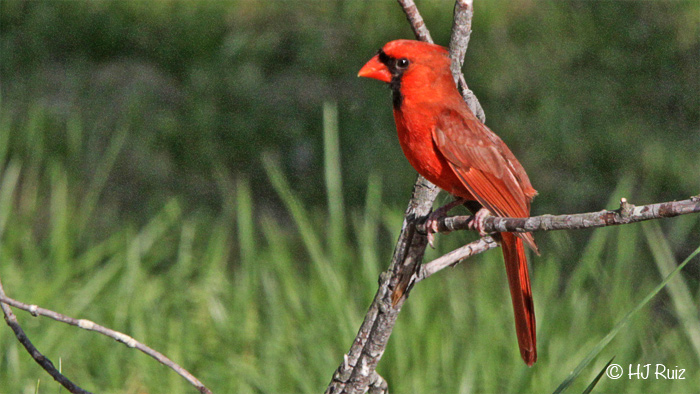
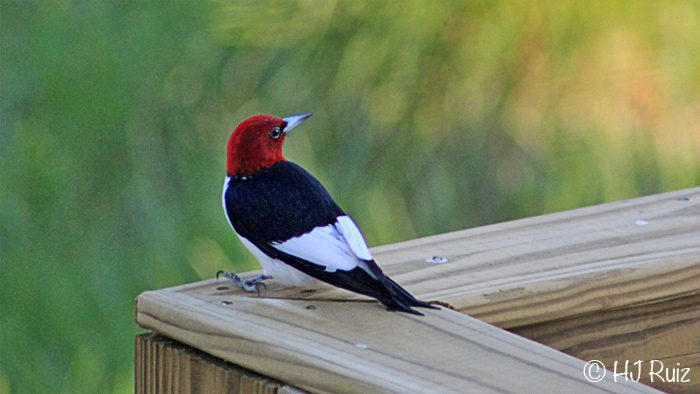

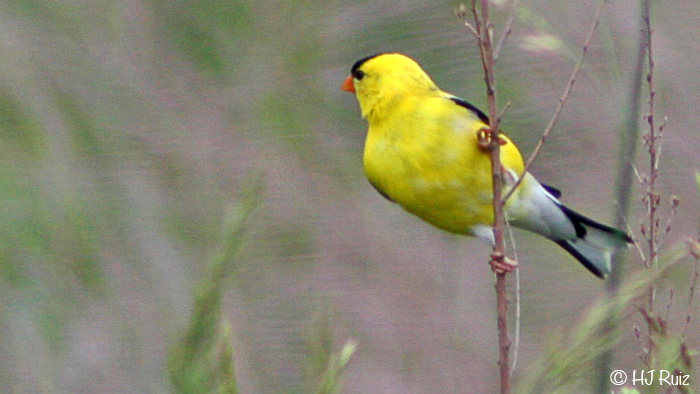
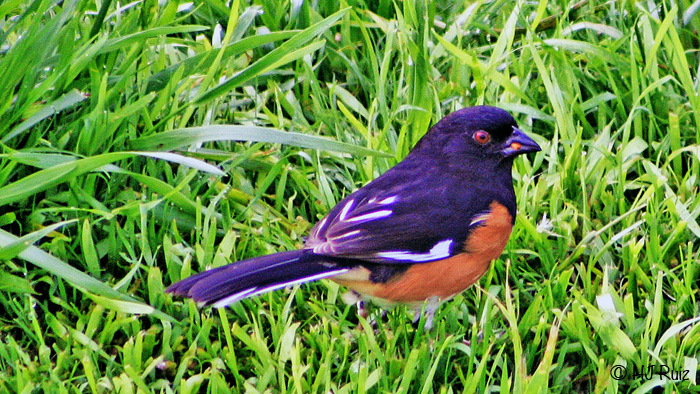
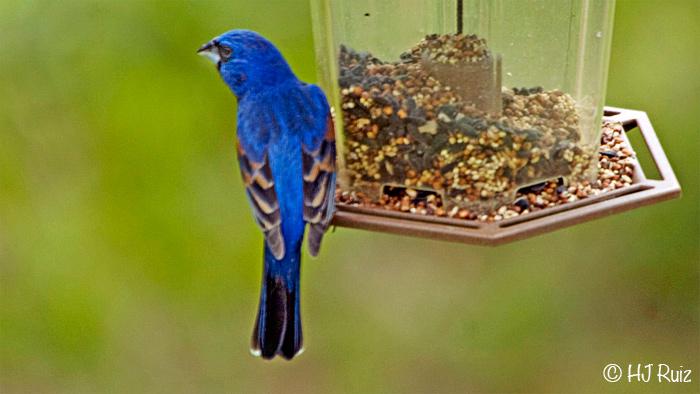
Click on images to see enlargements
Text and photographs © H.J. Ruiz – Avian 101
Share this:


Read Past Reviews

Book # 69

Quote from the Author
“A good chuckle is healthy, it helps you break the monotony of a serious life.” ~ H.J. Ruiz


You must be logged in to post a comment.