House Finches are Here Too
We got some rain for a couple of days but not a lot, the heat however is here to stay but not so severe as it was a few days back. The amount of birds in my backyard has increased because the additional family fledglings.
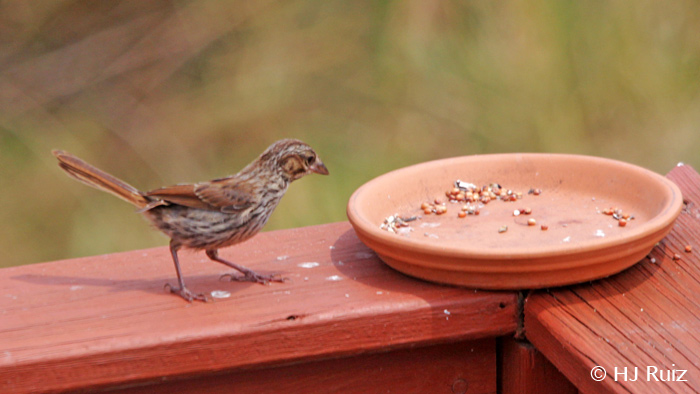
Today I’ll be referring to the House Finches, they are nice birds that they mind their own business, they have their disputes but among themselves and not with other species. I have observed that their sense of responsibility as couples and parents work instinctively well. They are good providers and tend their nests equally, couples are most of times together and hardly separate from each other.
Perhaps they are much less flamboyant than the Northern Cardinals but I give them credit for their exemplary behavior in the avian kingdom.
NOTE: Written captions on pictures also describes the following: (M) = Male, (F) = Female, (J) = Juvenile, (I) = Immature
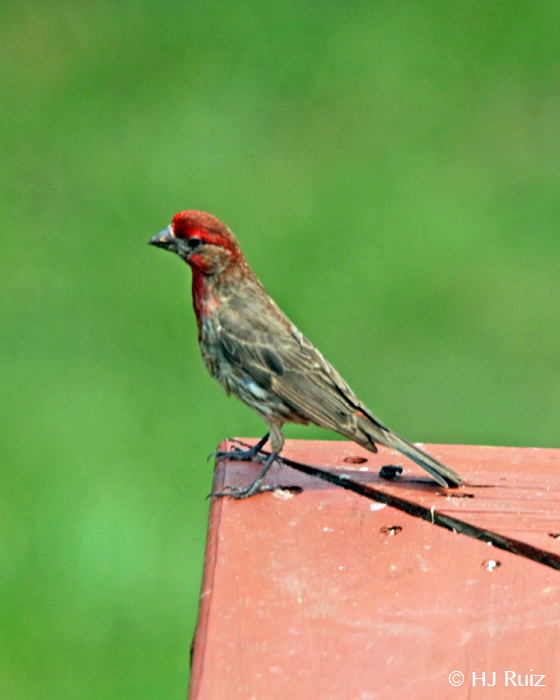
House Finch (M)
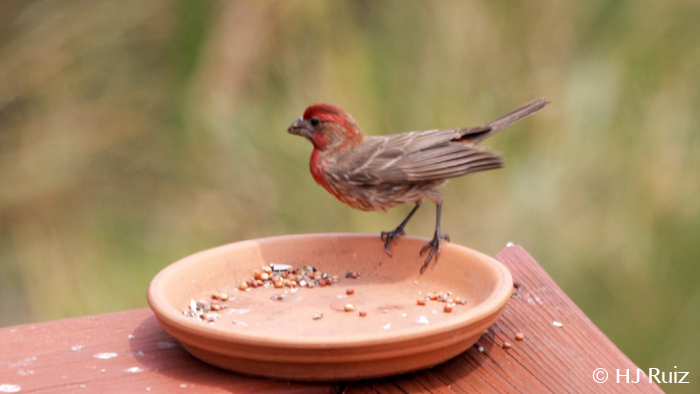
House Finch (F)
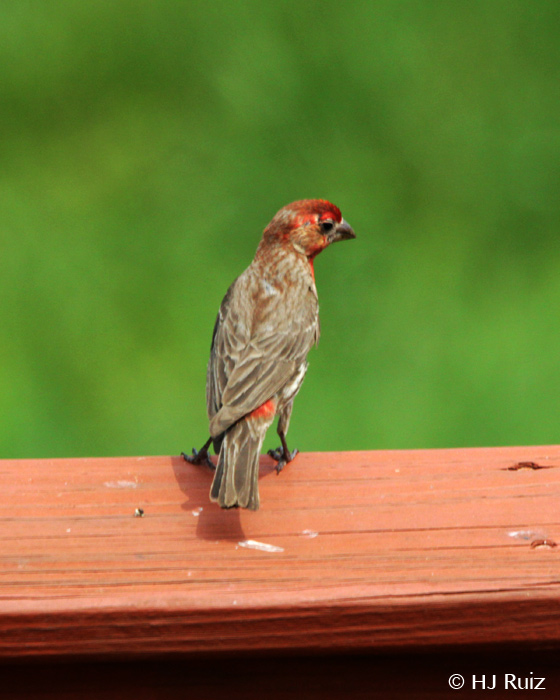


House Finch (F)
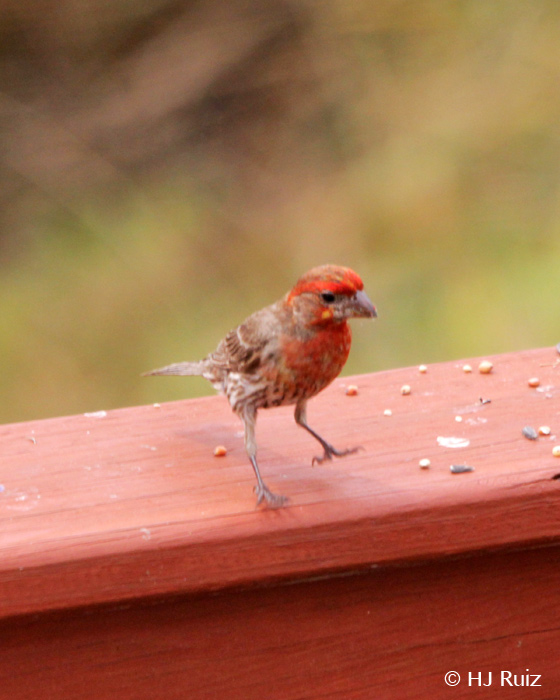
House Finch (M) (J)

House Finch (F) (I)
UPDATE REPORT
This is a photo of the bald headed N. Cardinal (F) taken 6 days after the last photo I posted. There’s absolutely no change at all, zero feather growth!
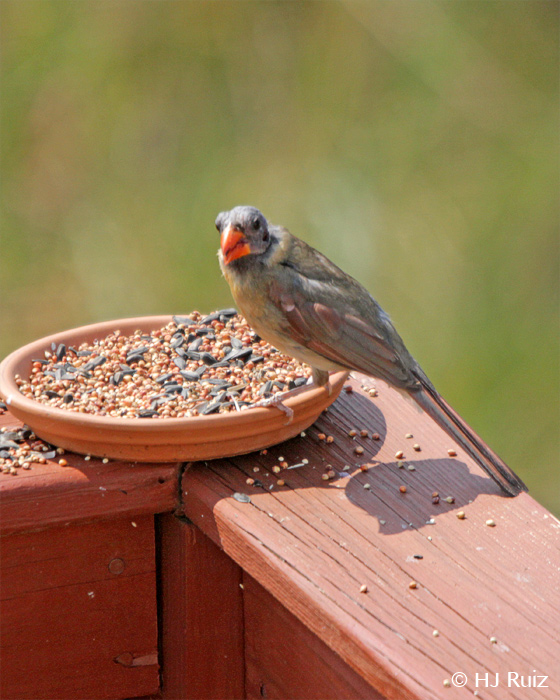
Bald headed Northern Cardinal (F)
Click on images to see enlargements
Text and photographs © H.J. Ruiz – Avian 101
Share this:

Pigeons – Video
This wonderful video courtesy of Sandra Püttner, Franzizka Miller, Johannes Englert and Phil Röger.
Share this:

Bird Humor # 5
“Laughter is like an aspirin, it doesn’t cure but gives you temporary relief.”

SOMETIMES YOU SHOULDN’T TRUST THE GPS!
Text, editing and photograph © H.J. Ruiz
Share this:

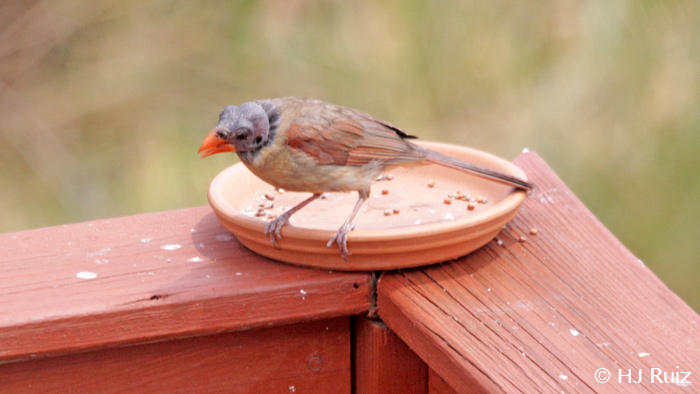
Bald-headed Songbird?
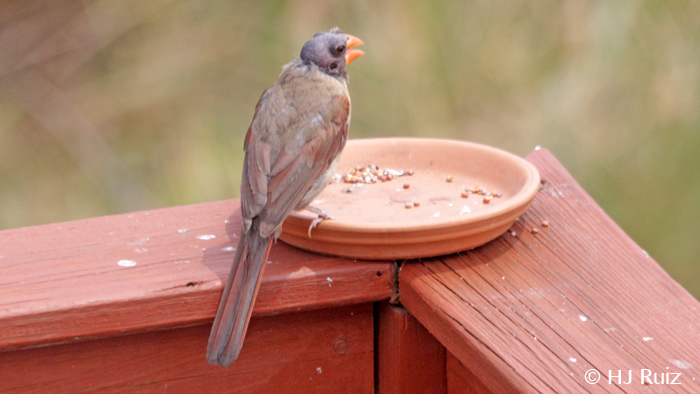
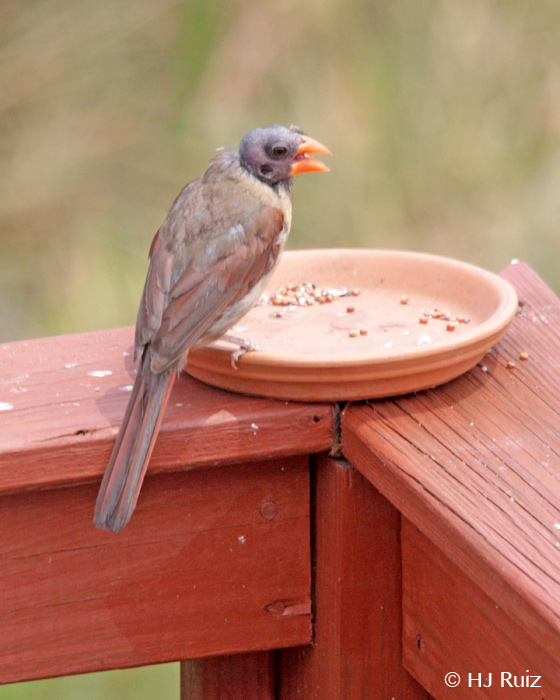
Among the birds that are my assiduous visitors this season is a female Northern Cardinal that happens to be bald.
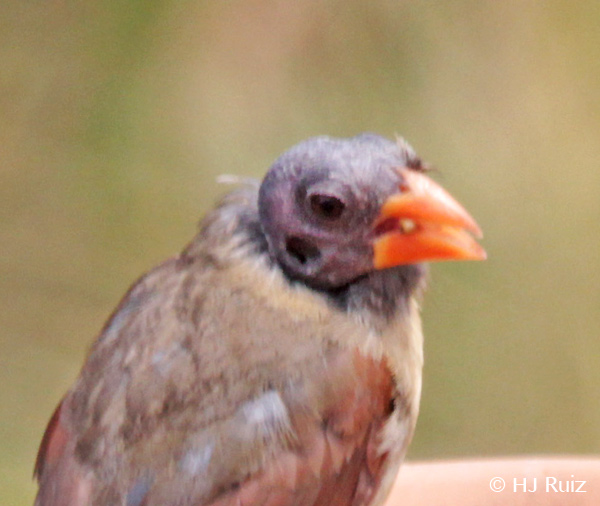
Bald-headed female Northern Cardinal
It’s not the first time I see this happen in past years. But this one is singularly different.
There are several so call reasons for this baldness to happen in certain birds:
- It is attributed to molting partially, not all at same time and eventually the feathers will grow, I agree because I’ve seen it before, but you see traces or patches of fuzzy down on it.
- Another is that it’s caused by mite infestation that produces the fall of the head feathers. I’ve seen that too, but it shows scared areas or scabs.
My Observation – This baldness is complete only the head, no scars, no patches, the bird looks healthy and body is completely cover with normal plumage. The coloration of bill is paler that the normal specie, molting or not molting! I believe this is a genetic mutation or morphing.
What do you think about this?
Text and photographs © H.J. Ruiz – Avian 101
Share this:


Read Past Reviews

Book # 69

Quote from the Author
“A good chuckle is healthy, it helps you break the monotony of a serious life.” ~ H.J. Ruiz


You must be logged in to post a comment.