If you Install them, They will Come!
Watching the Ruby-throated Hummingbirds coming to eat to my feeder very day is just a treat. Such a small bird that weighs most likely 1/2 the weight of your wedding ring! They are beautiful creatures, amazingly agile and fast flying.
They must be nesting in the nearby pine trees by the creek because they go in that direction after they feed.
I’m so happy that this year I decided to install a hummingbird feeder, now I’m very pleased to have these beautiful birds.
Click on images to see enlargements
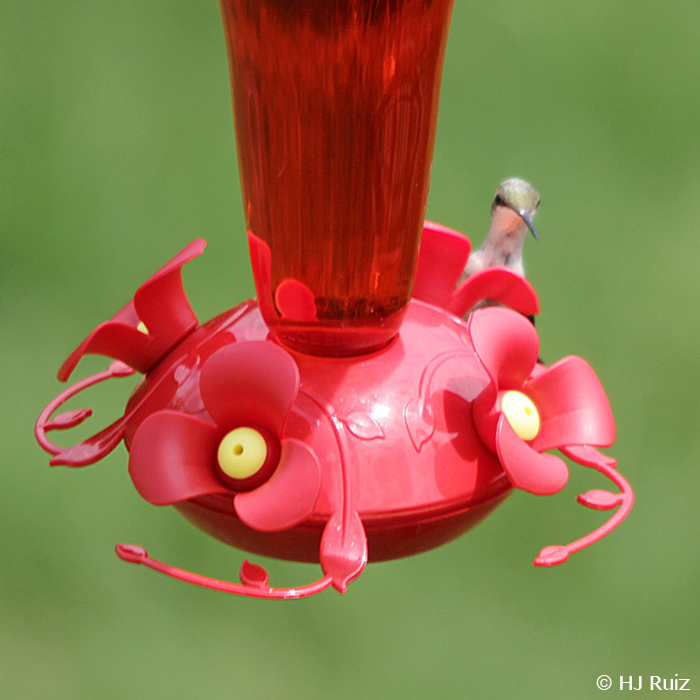
Peek-a-Boo!
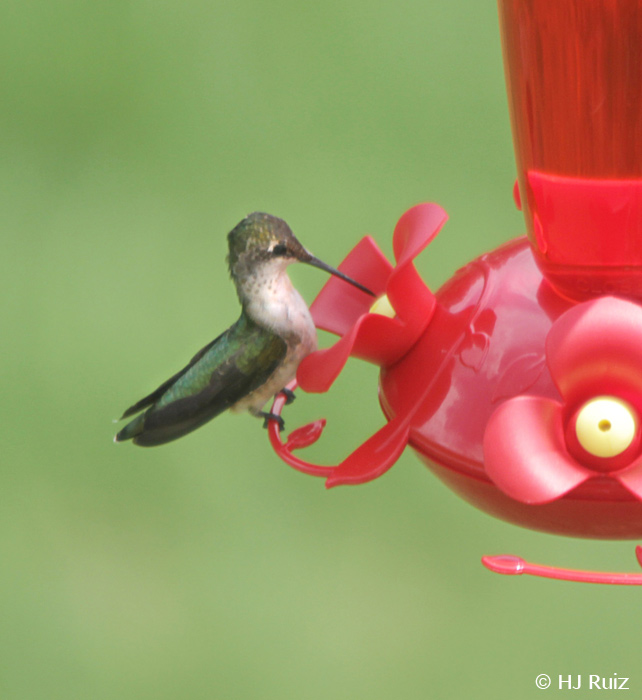
Yummy!
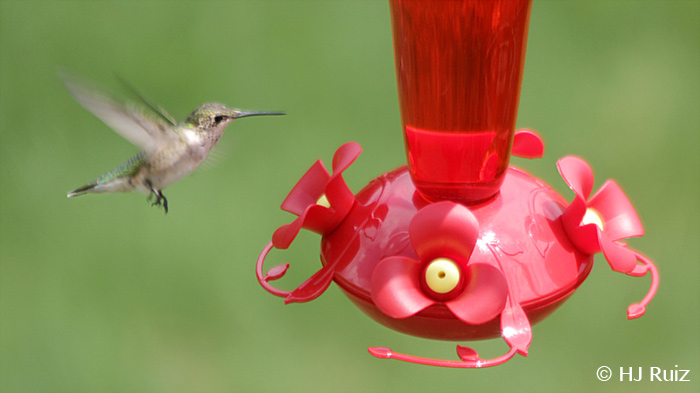
La-la-la!
Text and photographs © H.J. Ruiz – Avian 101
Share this:

Bird Art # 3
I have some drawings to she today.
Click on images to see enlargements
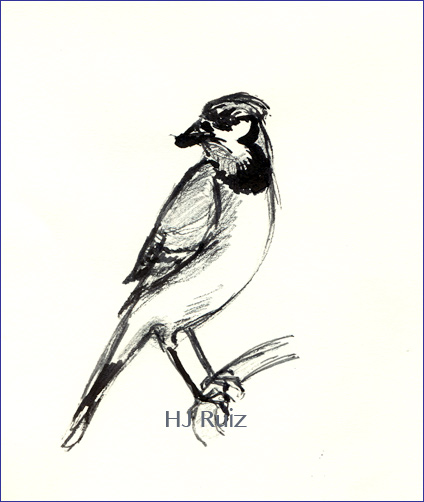
“Blue Jay” Black ink, bamboo reed pen, 6×8 on drawing paper
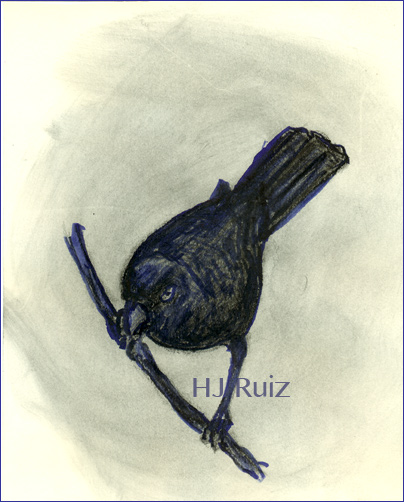
“Common Grackle” Mixed medium, blue ink, graphite, charcoal, 6×8, on drawing paper
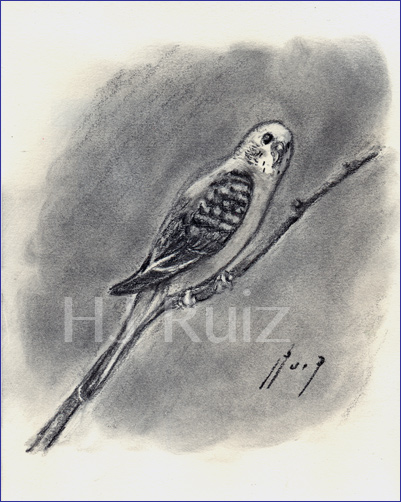
“Budgie” Complete drawing, charcoal on drawing paper, 6×8
Art work is © H.J. Ruiz – Do not copy or download
Share this:

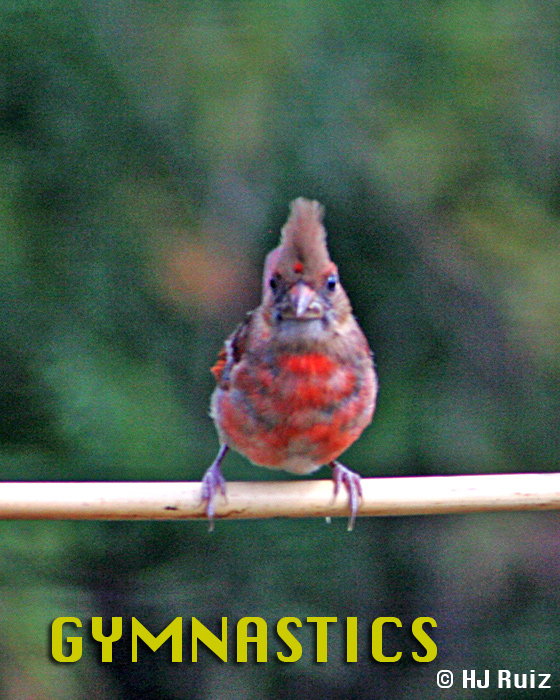
Avian Olympix 2012
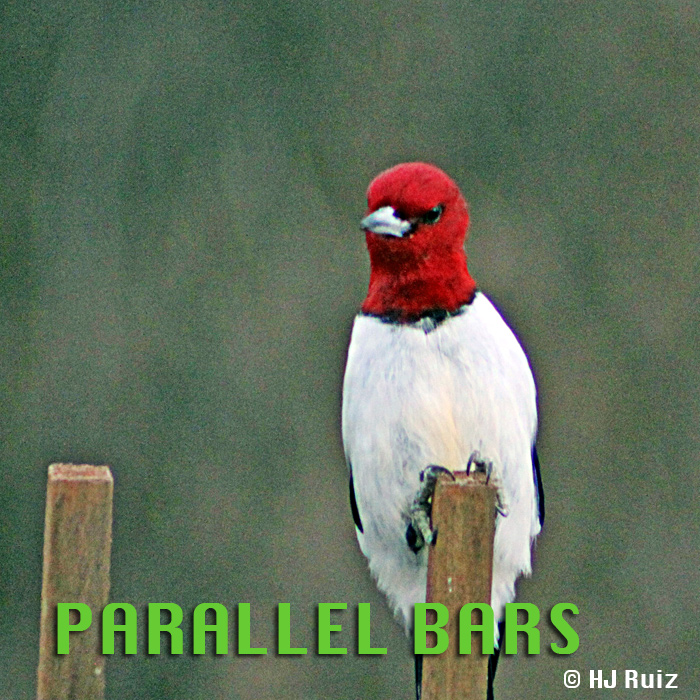
Now that the whole world is full of excitement about the London Olympics 2012, I decided to follow the lead by creating my own Avian Olympix 2012 spoof.
My gallery will show you what sports are for competition having the representatives from my backyard. No pictures have been doctored or manipulated other than the titles.
I hope that you like this gallery.
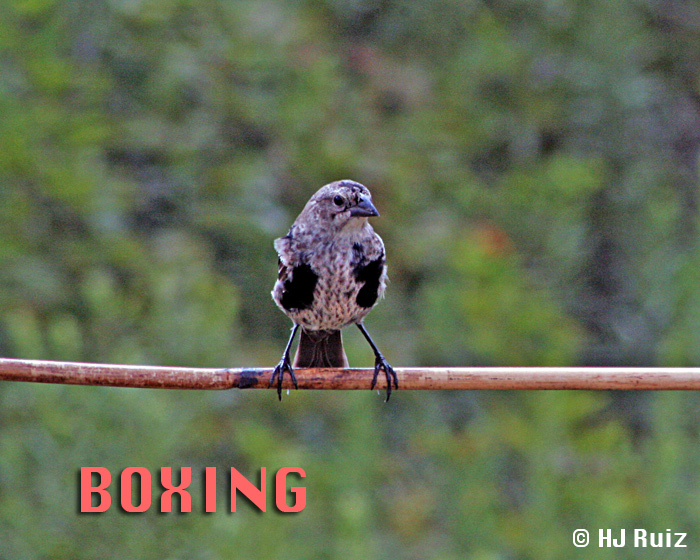
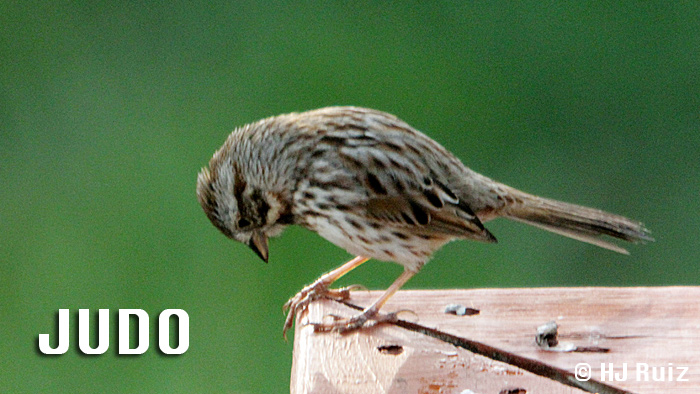
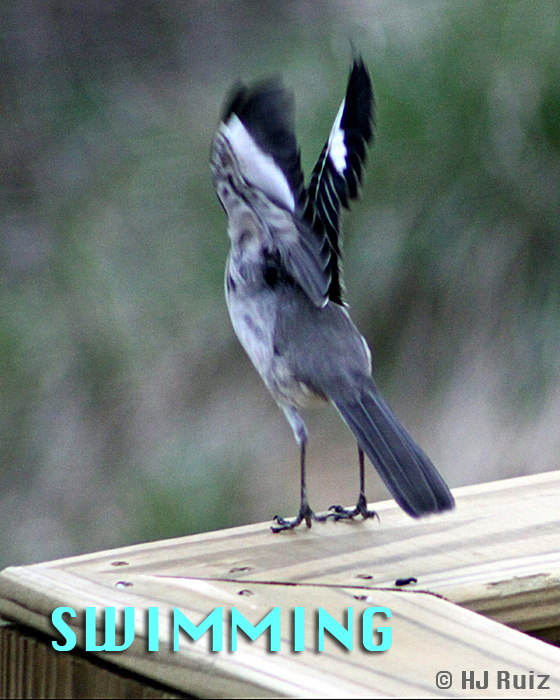
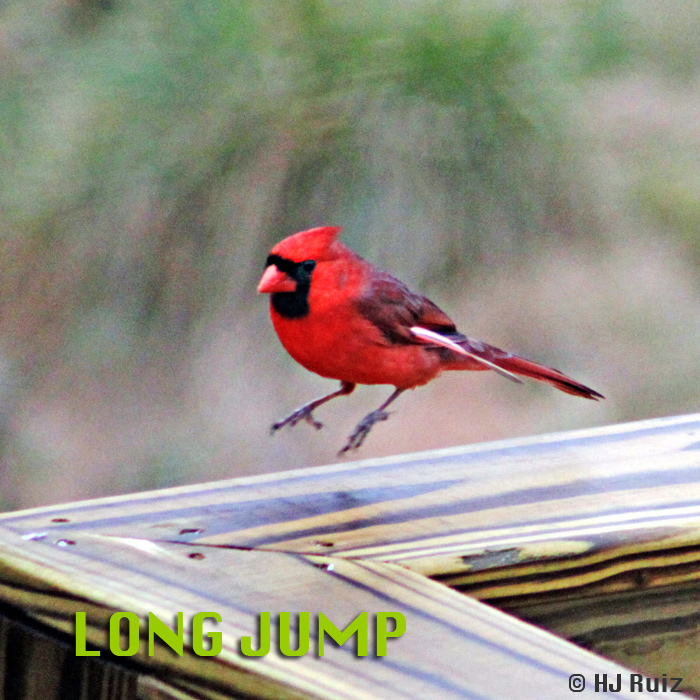
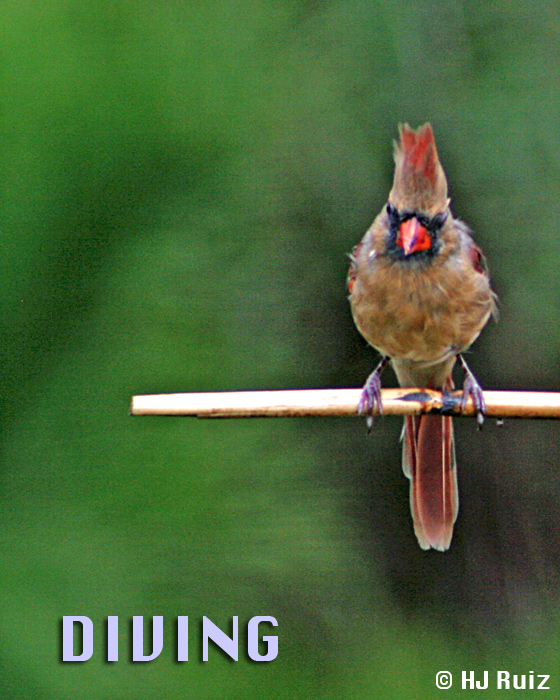
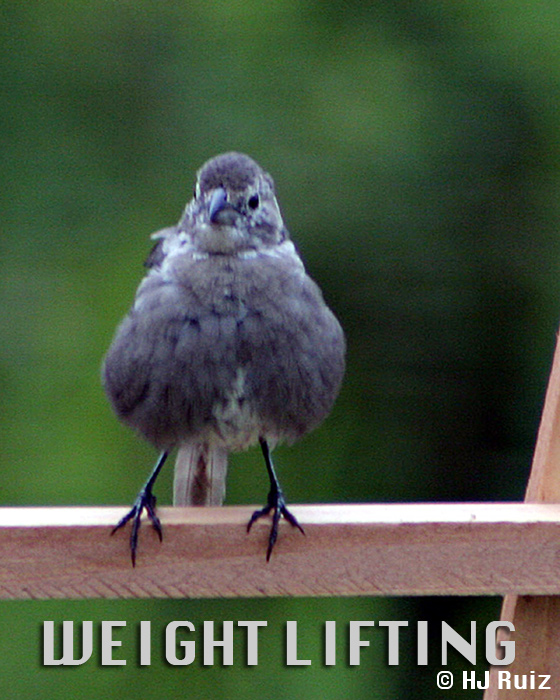
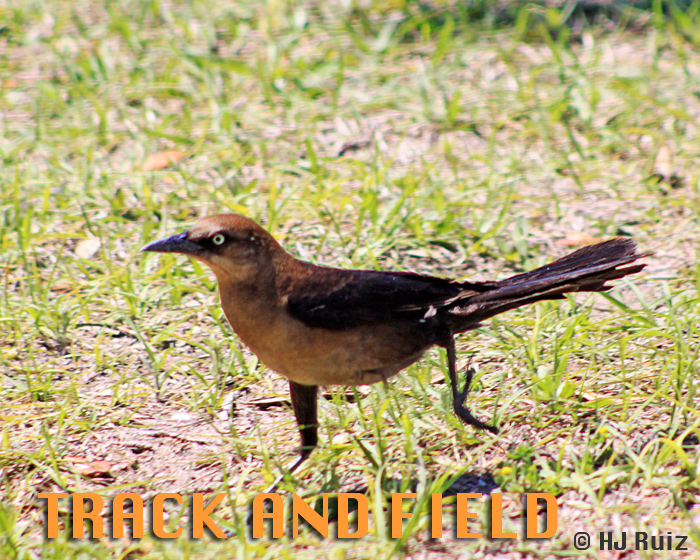
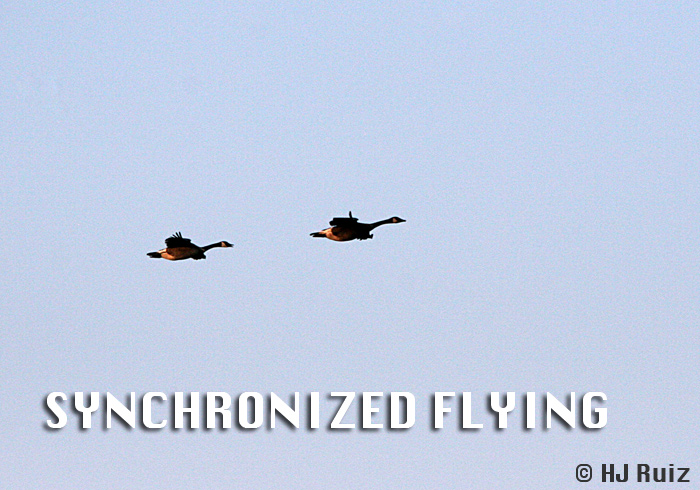
Share this:

Molting in Birds
Molting or Moulting in Birds
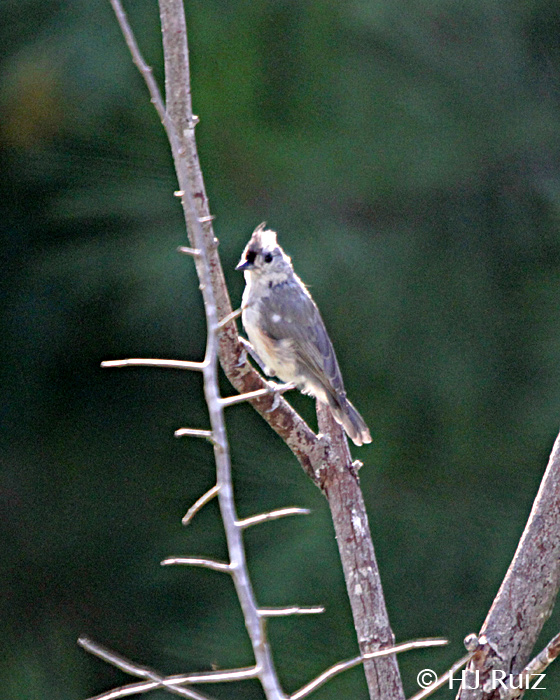
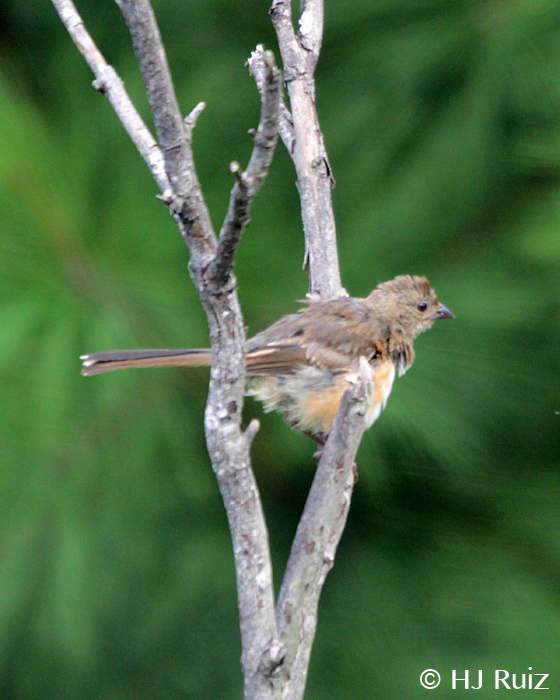
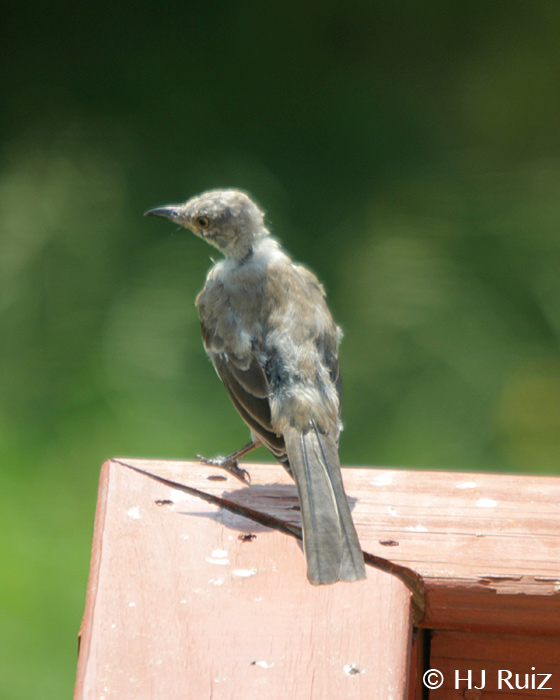
In birds, molting is the periodic replacement of feathers by shedding old feathers while producing new ones. Feathers are dead structures at maturity, and they become gradually worn down and need to be replaced. Adult birds molt at least once a year, though many molt twice, and a few three times. It is a comparatively slow process, as a bird never sheds all its feathers at once; it must keep enough of its feathers to regulate its body temperature and repel moisture. The amount of shed feathers varies. In some molting periods, a bird may renew only the feathers on the head and body, shedding the wing and tail feathers during a later molting period.
Note: I’ve observed that molting had happened more that once in a short period of time and it might have been triggered by the intense heat of the actual hot summer. The molt process can be altered by changes on dietary ingestion, temperature or presence of molds or mites invasion.
All the photos were taken on the same day August 2nd, 2012
Click on first image to see enlargements
-
- Tufted Titmouse
-
- Song Sparrow
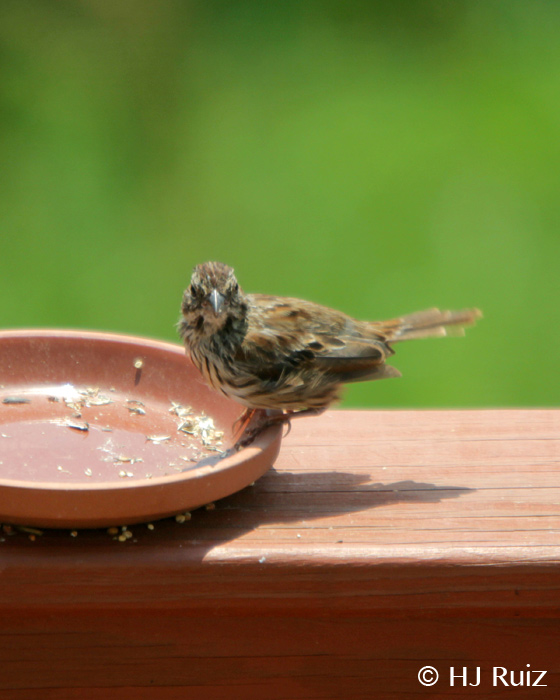
-
- Northern Cardinal (F)

-
- Common Grackle (M)
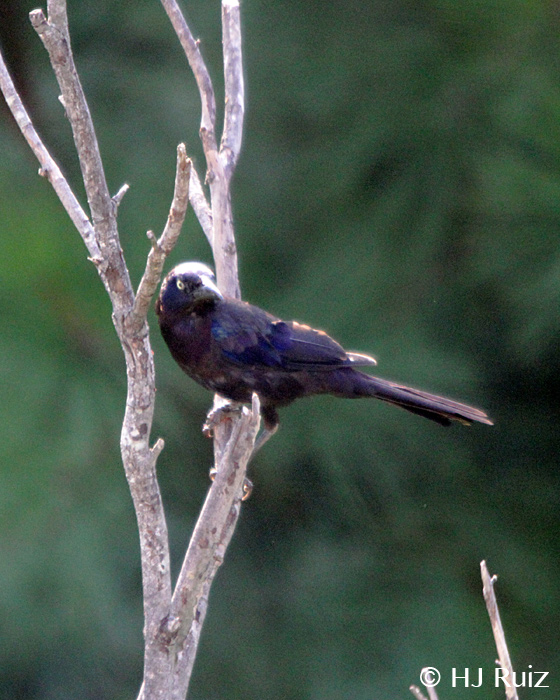
-

- Eastern Towhee (F)
-
- Northern Mockingbird
Text and photographs are © H.J. Ruiz – Avian 101
Share this:


Read Past Reviews

Book # 69

Quote from the Author
“A good chuckle is healthy, it helps you break the monotony of a serious life.” ~ H.J. Ruiz


You must be logged in to post a comment.