
Birds of the Week # 24
Cooper’s Hawk
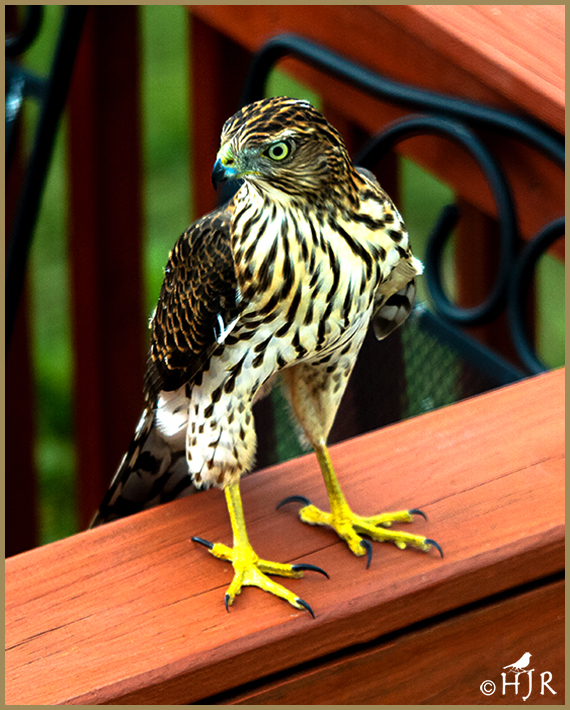
Cooper’s Hawk (Accipiter cooperii) is a medium-sized hawk native to the North American continent and found from southern Canada to Mexico.Cooper’s hawks are known as bold and aggressive predators. Given their dietary habits, these hawks bore a poor reputation well into the 20th century, with one account describing the species as “noxious,” an “avian outlaw” and “a relentless tyrant and murderer of small birds.” Another describes the species as a “bloodthirsty villain”.
House Finch

The House Finch (Haemorhous mexicanus) is a bird in the finch family Fringillidae. It is native to western North America and has been introduced to the eastern half of the continent and Hawaii. These birds are mainly permanent residents throughout their range; some northern and eastern birds migrate south. Their breeding habitat is urban and suburban areas across North America, as well as various semi-open areas in the west from southern Canada to the Mexican state of Oaxaca; the population in central Chiapas may be descended from escaped cagebirds. Analyses of nest records from House Finches in California spanning more than a century found that egg‐laying occurred significantly earlier in warmer springs.
Reddish Egret
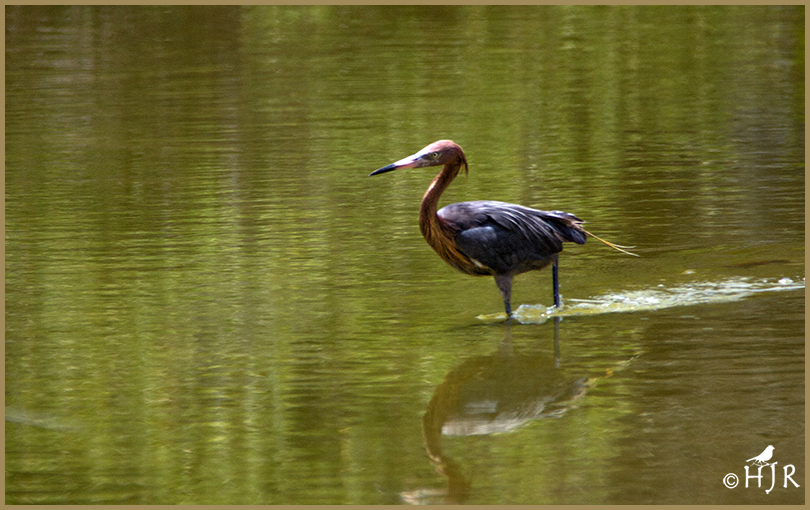
The Reddish Egret (Egretta rufescens) is a medium-sized heron. It is a resident breeder in Central America, The Bahamas, the Caribbean, the Gulf Coast of the United States, and Mexico. Reddish egrets’ breeding habitat is tropical swamps. It nests in colonies, often with other herons, usually on platforms of sticks in trees or shrubs. These colonies are usually located on coastal islands. These birds have raucous courtship displays. They generally involve shaking of the head during the greeting ceremony, followed by chases and circle flights. They also involve raising of the neck, back and crest feathers, accompanied by bill clacking, similar to the tricolored heron.
American White Ibis

The American White Ibis (Eudocimus albus) is a species of bird in the ibis family, Threskiornithidae. It is found from Virginia via the Gulf Coast of the United States south through most of the coastal New World tropics Remains similar to the American white ibis have been found in Middle Pliocene deposits of the Bone Valley formation in central Florida, and Lower Pliocene deposits of the Yorktown Formation at Lee Creek in North Carolina. Two species, one living and one extinct, have been recovered from the Talara Tar Seeps in northern coastal Peru. Eudocimus peruvianus was described from a tarsometatarsus that differed slightly from E. albus, whose remains were also found there. Remains of neither species are common in the beds. The tar seeps have been dated at 13,900 years old. The American white ibis is still found in Peru.
Great Blue Heron

The Great Blue Heron (Ardea herodias) is a large wading bird in the heron family Ardeidae, common near the shores of open water and in wetlands over most of North America and Central America, as well as the Caribbean and the Galápagos Islands. It is a rare vagrant to coastal Spain, the Azores, and areas of far southern Europe. Great blue herons rarely venture far from bodies of water, but are occasionally seen flying over upland areas. They usually nest in trees or bushes near water’s edge, often on islands (which minimizes the potential for predation) or partially isolated spots.
Little Blue Heron
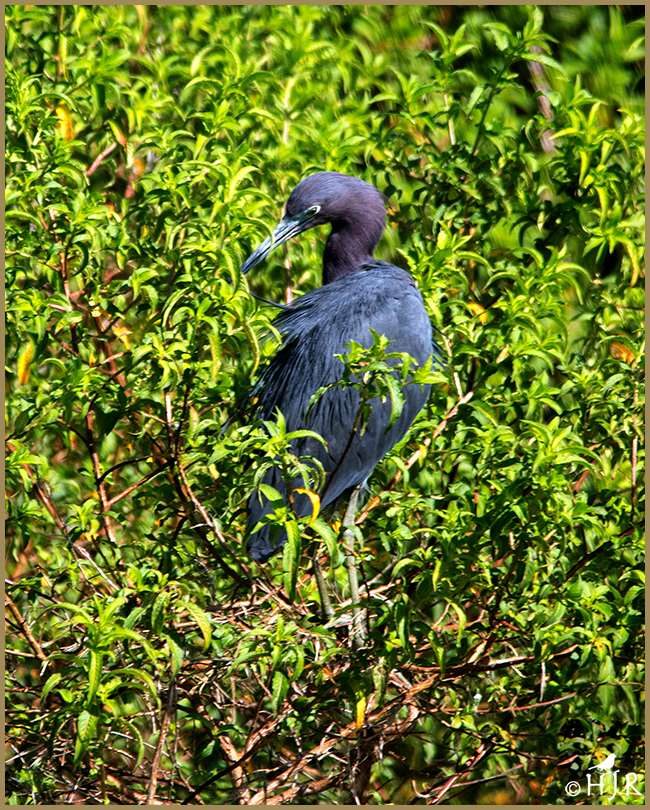
The Little Blue Heron (Egretta caerulea) is a small heron belonging to the family Ardeidae. These herons prefer freshwater swamps and lagoons in the South, while on islands in the North they inhabit coastal thickets. They breed in sub-tropical and tropical swamps with mangrove vegetation, wetlands (bogs, fens, peatlands, etc.) and marine intertidal salt marshes.
Great Egret
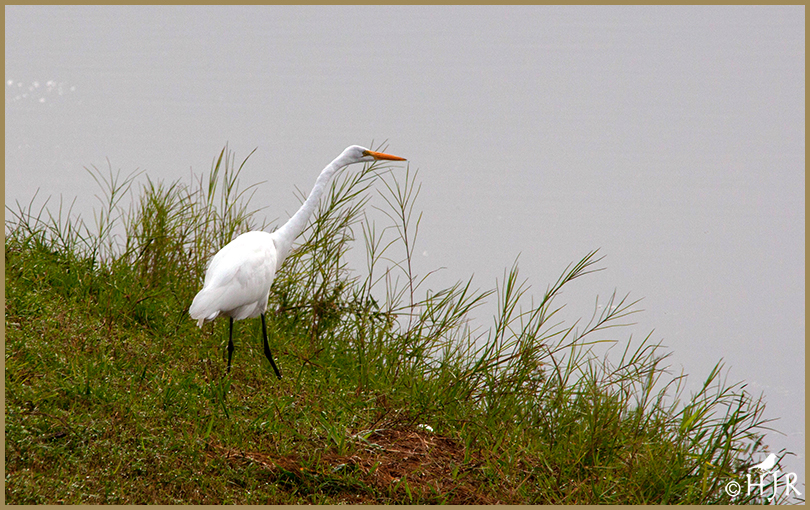
The Great Egret (Ardea alba), also known as the common egret, large egret, or (in the Old World) great white egret or great white heron is a large, widely distributed egret, with four subspecies found in Asia, Africa, the Americas, and southern Europe. Distributed across most of the tropical and warmer temperate regions of the world, it builds tree nests in colonies close to water. The great egret is generally a very successful species with a large and expanding range, occurring worldwide in temperate and tropical habitats. It is ubiquitous across the Sun Belt of the United States and in the Neotropics.
Tricolored Heron

The Tricolored Heron (Egretta tricolor), formerly known as the Louisiana heron, is a small species of heron native to coastal parts of the Americas; in the Atlantic region, it ranges from the northeastern United States, south along the coast, through the Gulf of Mexico and the Caribbean, to northern South America as far south as Brazil. In the Pacific region, it ranges from Peru to California, but it is only a nonbreeding visitor to the far north. ricolored herons breed in swamps and other coastal habitats. They nest in colonies, often with other herons, usually on platforms of sticks in trees or shrubs. In each clutch, three to seven eggs are typically laid.
Brown Pelican

The Brown Pelican (Pelecanus occidentalis) is a bird of the pelican family, Pelecanidae, one of three species found in the Americas and one of two that feed by diving into water. It is found on the Atlantic Coast from New Jersey to the mouth of the Amazon River, and along the Pacific Coast from British Columbia to northern Chile, including the Galapagos Islands. The nominate subspecies in its breeding plumage has a white head with a yellowish wash on the crown. The nape and neck are dark maroon–brown.The brown pelican is a very gregarious bird; it lives in flocks of both sexes throughout the year. In level flight, brown pelicans fly in groups, with their heads held back on their shoulders and their bills resting on their folded necks. They may fly in a V formation, but usually in regular lines or single file, often low over the water’s surface. To exclude water from the nasal passage, they have narrower internal regions of the nostrils.
© HJ Ruiz – Avian101
Share this:

Special Places # 40
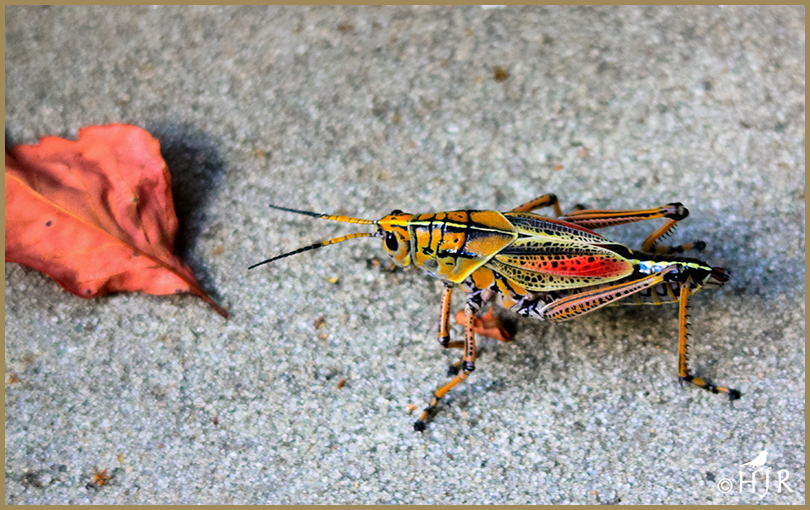
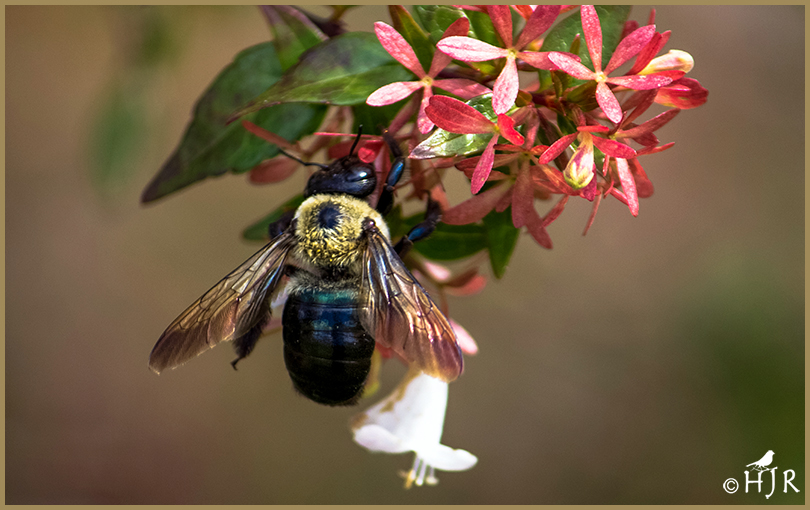
Insects – Butterflies
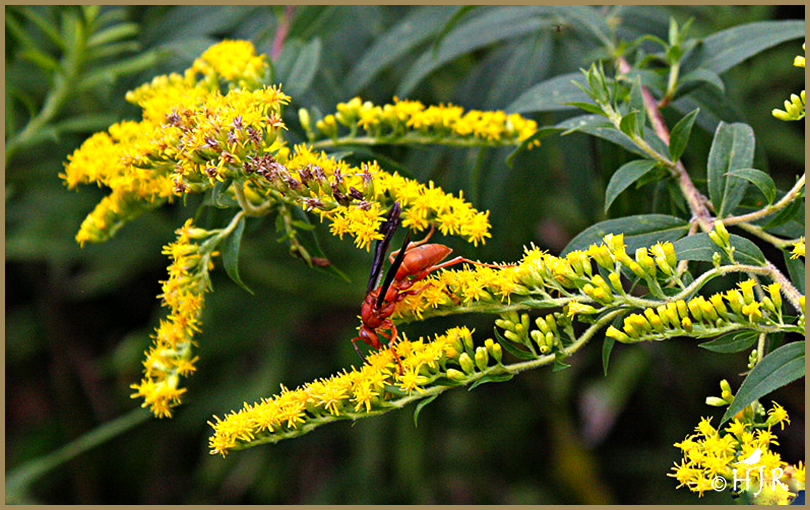


1 – Top Left: Red Wasp.
2 – Top Right – Upper row: Gollath Grasshopper.
3 – Top Right – Lower Row: Bumble Bee.
4 – Bottom Left – Upper Row: Meadow Grasshopper.
5 – Bottom Left – Lower Row: Paper Wasp.
6 – Bottom Right: Blue Dragonfly.
© HJ Ruiz – Avian101
Share this:

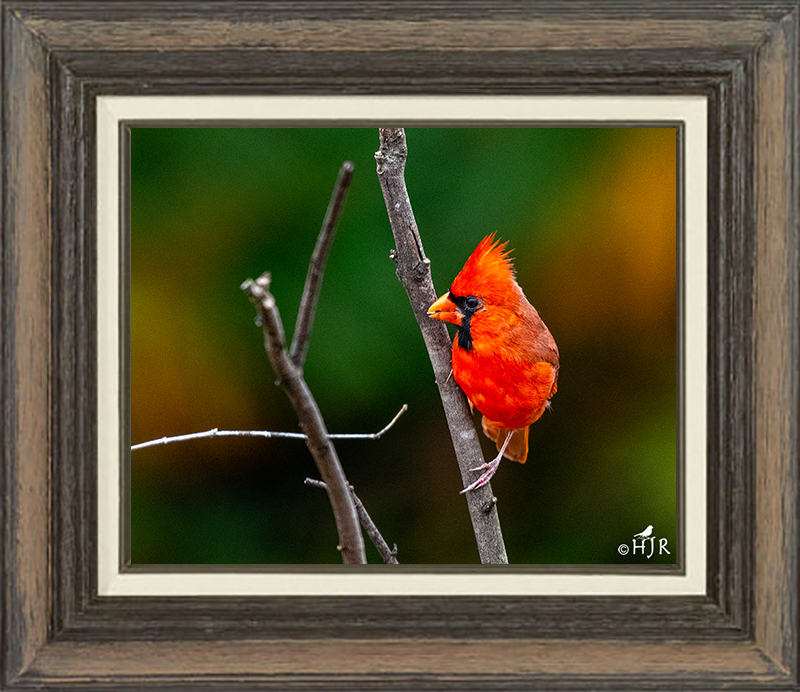
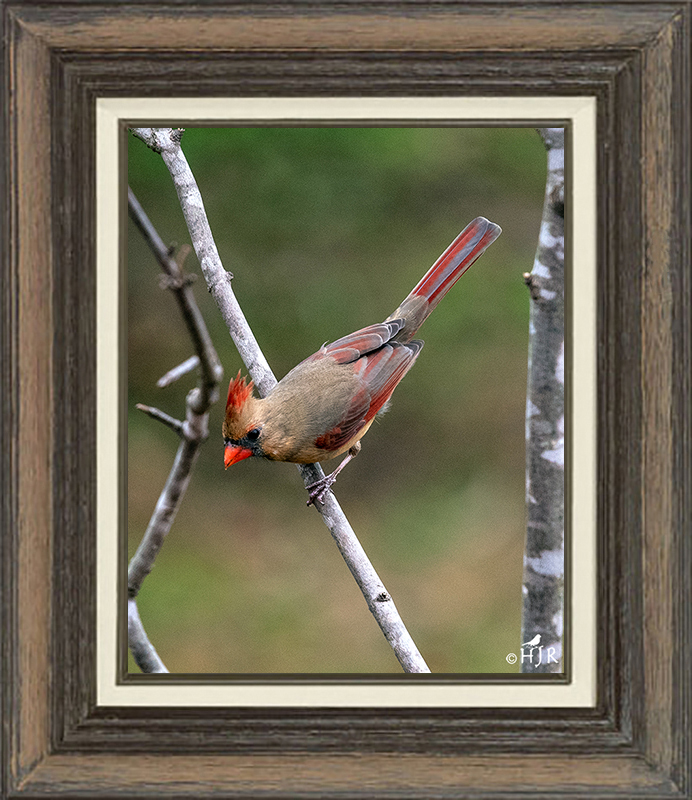
Red Art Gallery – Northern Cardinal # 49
Red Art Gallery
Photo Gallery
© HJ Ruiz – Avian101
Share this:

Birds of the Week # 23
Red-headed Woodpecker

The Red-headed Woodpecker (Melanerpes erythrocephalus) is a small or medium-sized woodpecker from temperate North America. Their breeding habitat is open country across southern Canada and the eastern-central United States. It is rated as least concern on the International Union for Conservation of Nature (IUCN)’s Red List of Endangered species, having been downlisted from near threatened in 2018. The red-bellied woodpecker also has its most prominent red part of its plumage on the head, but it looks quite different in other respects.
Eastern Kingbird

The Eastern Kingbird (Tyrannus tyrannus) is a large tyrant flycatcher native to the Americas. The bird is predominantly dark gray with white underbelly and pointed wings. Eastern kingbirds are conspicuous and are commonly found in open areas with scattered trees and bushes, where they perch while foraging for insects. The Eastern kingbird is migratory, with its breeding range spread across North America and its wintering range in Central and South America.
American Robin

The American Robin (Turdus migratorius) is a migratory songbird of the true thrush genus and Turdidae, the wider thrush family. It is named after the European robin because of its reddish-orange breast, though the two species are not closely related. The American robin is active mostly during the day, and on its winter grounds it assembles in large flocks at night to roost in trees in secluded swamps or dense vegetation. The flocks break up during the day when the birds feed on fruits and berries in smaller groups. During the summer, the American robin defends a breeding territory and is less social.
Carolina Wren

The Carolina Wren (Thryothorus ludovicianus) is a common species of wren that is a resident in the eastern half of the United States of America, the extreme south of Ontario, Canada, and the extreme northeast of Mexico. Female Carolina wrens possess song control regions that would appear to make them capable of singing with repertoires like the male. Due to vocalizations that they occasionally make with the male, it has been suggested that song perception plays a role and is of behavioral relevance.
Black Vulture

The Black Vulture (Coragyps atratus), also known as the American black vulture, is a bird in the New World vulture family whose range extends from the northeastern United States to Peru, Central Chile and Uruguay in South America.A leucistic Coragyps atratus brasiliensis was observed in Piñas, Ecuador in 2005. It had white plumage overall, with only the tarsus and tail as well as some undertail feathers being black. It was not an albino as its skin seemed to have had the normal, dark color and it was part of a flock of some twenty normally plumaged individuals.
House Finch

The House Finch (Haemorhous mexicanus) is a bird in the finch family Fringillidae. Contrary to the way most birds, even ones with herbivorous leanings as adults, tend to feed their nestlings animal matter in order to give them the protein necessary to grow, house finches are one of the few birds who feed their young only plant matter.
Blue Jay

The Blue Jay (Cyanocitta cristata) is a passerine bird in the family Corvidae, native to eastern North America The blue jay occupies a variety of habitats within its large range, from the pine woods of Florida to the spruce-fir forests of northern Ontario. It is less abundant in denser forests, preferring mixed woodlands with oaks and beeches. It has expertly adapted to human activity, occurring in parks and residential areas, and can adapt to wholesale deforestation with relative ease if human activity creates other means for the jays to get by.
Ruby-throated Hummingbird

The rRuby-throated Hummingbird (Archilochus colubris) is a species of hummingbird that generally spends the winter in Central America, Mexico, and Florida, and migrates to Canada and other parts of Eastern North America for the summer to breed. It is by far the most common hummingbird seen east of the Mississippi River in North America. The ruby-throated hummingbird is migratory, spending most of the winter in Florida, southern Mexico and Central America, as far south as extreme western Panama, and the West Indies. During migration, some birds embark on a nonstop 900-mile journey across the Gulf of Mexico and Caribbean from Panama or Mexico to the eastern United States. The bird breeds throughout the eastern United States, east of the 100th meridian, and in southern Canada, particularly Ontario, in eastern and mixed deciduous and broadleaved forest. In winter, it is seen mostly in Mexico and Florida.
Northern Mockingbird

The Northern Mockingbird (Mimus polyglottos) is a mockingbird commonly found in North America The northern mockingbird is an omnivore. The birds’ diet consists of arthropods, earthworms, berries, fruits, seeds, and occasionally lizards. Mockingbirds can drink from puddles, river and lake edges, or dew and rain droplets that amass onto plants. Adult mockingbirds also have been seen drinking sap from the cuts on recently pruned trees. Its diet heavily consists of animal prey during the breeding season, but takes a drastic shift to fruits during the fall and winter. The drive for fruits amid winter has been noted for the geographic expansion of the mockingbird, and in particular, the fruit of Rosa multiflora, a favorite of the birds, is a possible link. Mockingbirds also eat garden fruits such as tomatoes, apples, and berries.
© HJ Ruiz – Avian101ed
Share this:

Read Past Reviews

Book # 69
Quote from the Author
“A good chuckle is healthy, it helps you break the monotony of a serious life.” ~ H.J. Ruiz
 H.J. Ruiz - Avian101
You must be logged in to post a comment.