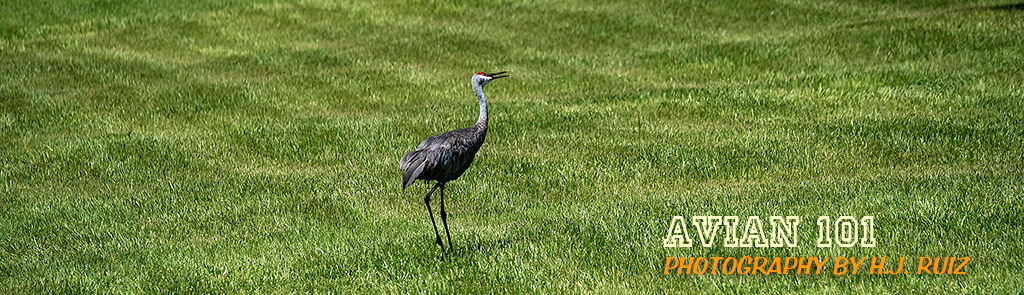
Red Art Gallery – Northern Cardinal # 51
Red Art Gallery
Photo Gallery


© HJ Ruiz _ Avian101
Share this:

Birds of the Week # 25
Eastern Towhee
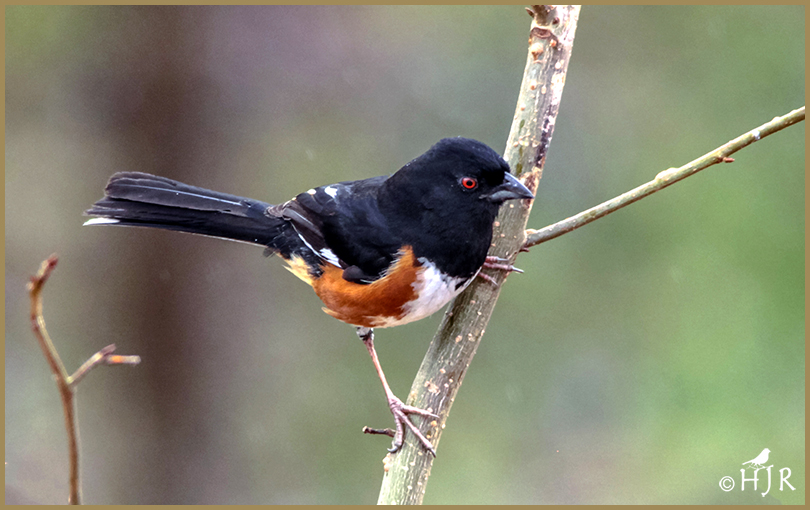
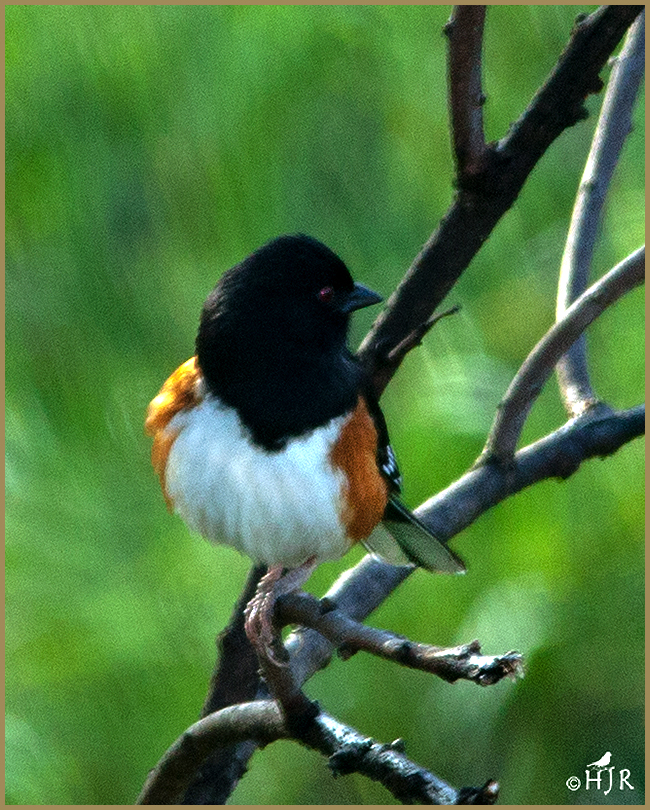

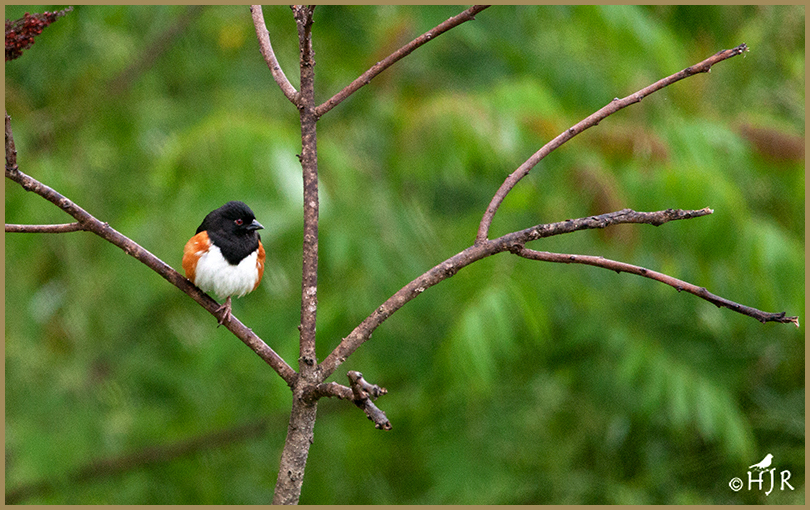
The Eastern Towhee (Pipilo erythrophthalmus) is a large New World sparrow. The taxonomy of the towhees has been under debate in recent decades, and formerly this bird and the spotted towhee were considered a single species, the rufous-sided towhee. Breeding begins in spring and continues to late summer. Reports of eastern towhees nesting as early as late March in Florida and Georgia, in mid- to late April in some midwestern states, and as late as mid-May in northern New England were summarized in a literature review. Literature reviews also report nest construction by the female, which takes about three to five days. Egg laying typically occurs until August. For example, a review of eastern towhees in Indiana notes nesting from 15 April to 20 August. However, a literature review of eastern towhees in Florida included a report of a nest observed on 2 September 1983 that contained two eggs. According to several literature reviews, eastern towhees may renest after failed nesting attempts and can raise two, and in the south sometimes three, broods per season.
Brown Thrasher
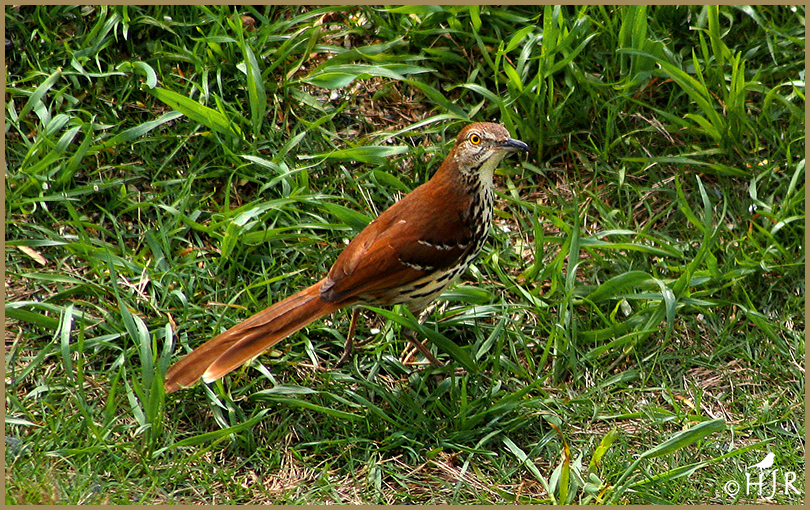


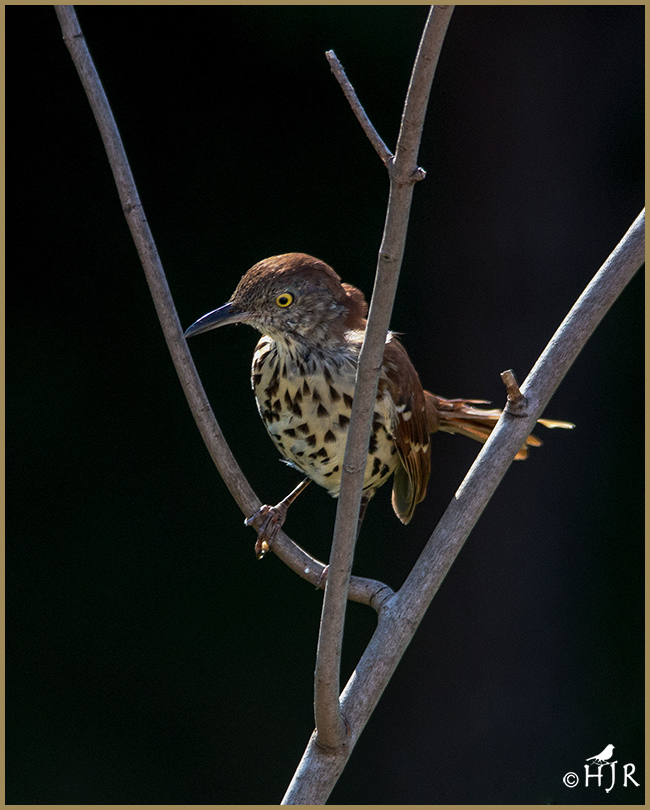
The Brown Thrasher (Toxostoma rufum) is a bird in the family Mimidae, which also includes the New World catbirds and mockingbirds. The brown thrasher is abundant throughout the eastern and central United States and southern and central Canada, and it is the only thrasher to live primarily east of the Rockies and central Texas. It is the state bird of Georgia.
The brown thrasher has been observed either solo or in pairs. The brown thrasher is usually an elusive bird, and maintains its evasiveness with low-level flying. When it feels bothered, it usually hides into thickets and gives cackling calls. Thrashers spend most of their time on ground level or near it. When seen, it is commonly the males that are singing from unadorned branches. The brown thrasher has been noted for having an aggressive behavior, and is a staunch defender of its nest. However, the name does not come from attacking perceived threats, but is believed to have come from the thrashing sound the bird makes when digging through ground debris. It is also thought that the name comes from the thrashing sound that is made while it is smashing large insects to kill and eventually eat.
© HJ Ruiz – Avian101
Share this:

Special Places # 41
Falls & Cascades
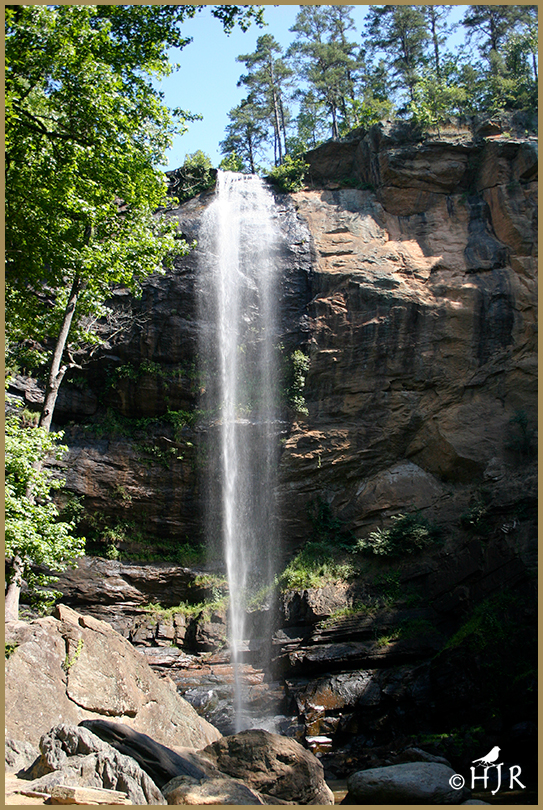
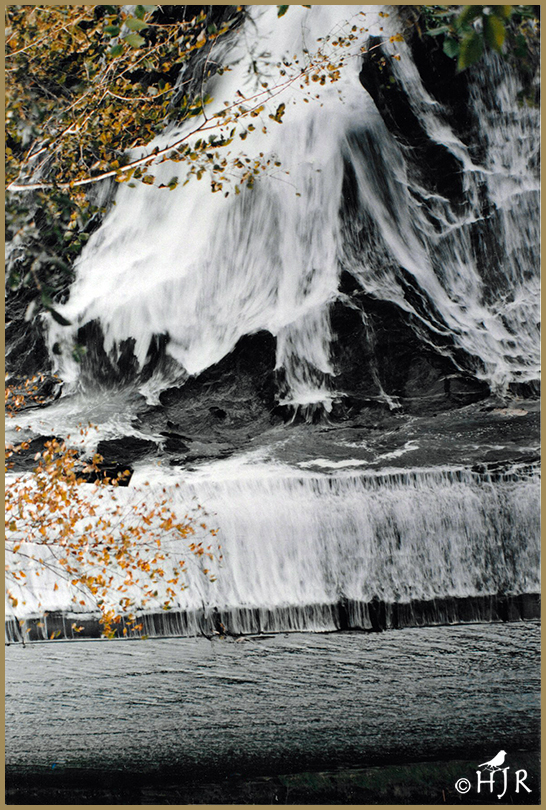
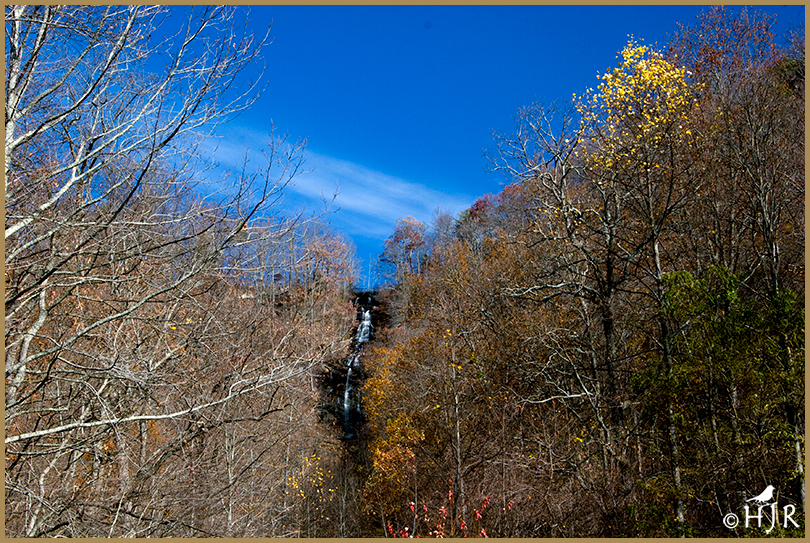
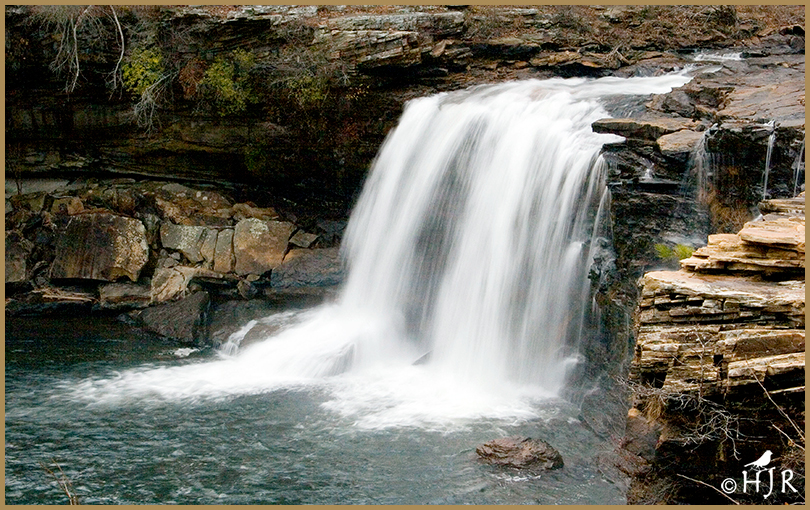
1 – Top Left: Toccoa Falls is a waterfall with a vertical drop of 186 feet, on the campus of Toccoa Falls College in Stephens County, Georgia. Toccoa comes from the Cherokee word “Tagwâ′hĭ”, meaning “Catawba place” or “beautiful”
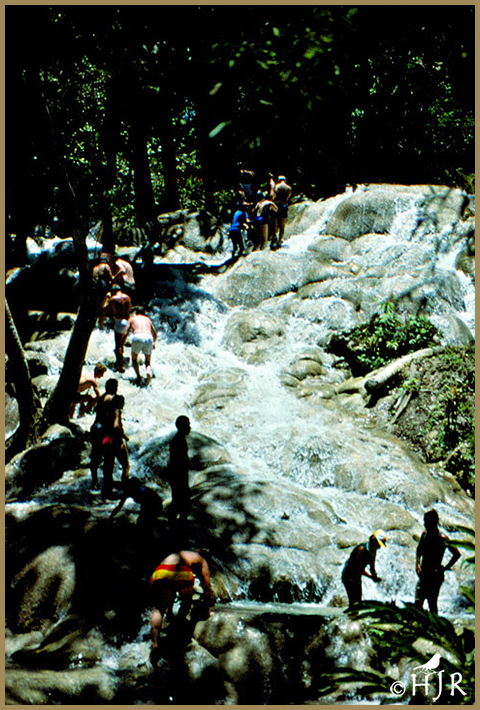
2 – Top Middle: Dunn’s River Falls. At about 180 feet (55 m) high and 600 feet (180 m) long, the waterfalls are terraced like giant natural stairs though some incorporate man-made improvements. Several small lagoons are interspersed among the vertical sections of the falls.
3 – Top Right: Falls are in the The Quechee Gorge is located in Quechee, Vermont along U.S. Route 4. The gorge is 165 feet deep and is the deepest gorge in Vermont.
4 – Bottom Left: Spectacular scenery and hiking trails make Amicalola Falls State Park & Lodge one of Georgia’s most popular state parks. At 729 feet, Amicalola Falls is the tallest cascading waterfall in the Southeast. Visitors have choices on how to best view the tumbling waters, ranging from an accessible pathway to a challenging trail with staircases.
5 – Bottom Right: Little River Falls is located within the Little River Canyon National Preserve in Alabama, United States. It marks the beginning of the Little River Canyon.
© HJ Ruiz – Avian101 – Wikipedia Info.
Share this:

Red Art Gallery – Northern Cardinal #50
Red Art Gallery
Photo Gallery

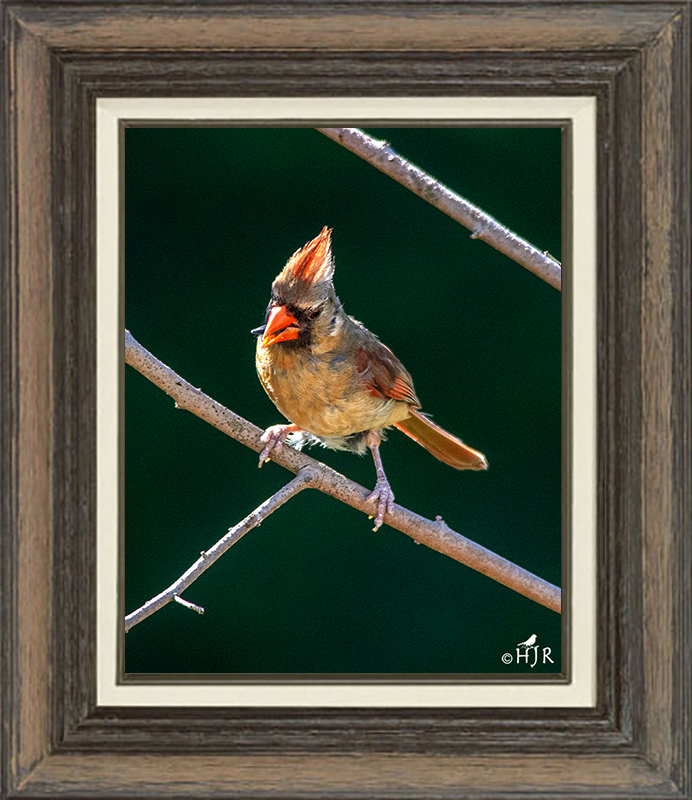
© HJ Ruiz – Avian101
Share this:

Read Past Reviews

Book # 69
Quote from the Author
“A good chuckle is healthy, it helps you break the monotony of a serious life.” ~ H.J. Ruiz
 H.J. Ruiz - Avian101
You must be logged in to post a comment.