
Bird Art # 21
BIRD ART # 21
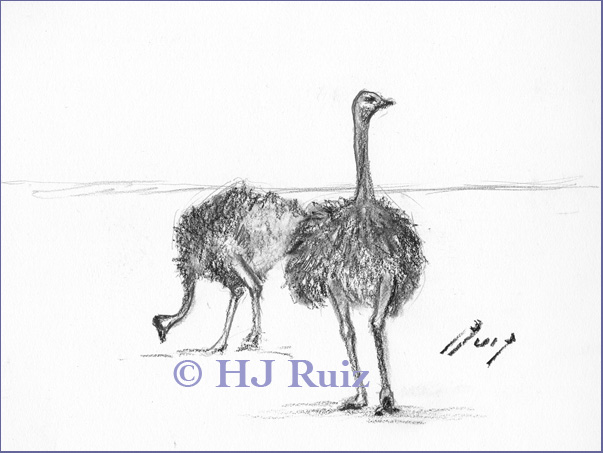
“Ostriches” Sketch- Graphite and charcoal on drawing paper- 6×8″
Artwork © H.J. Ruiz – Do not copy or download
Share this:

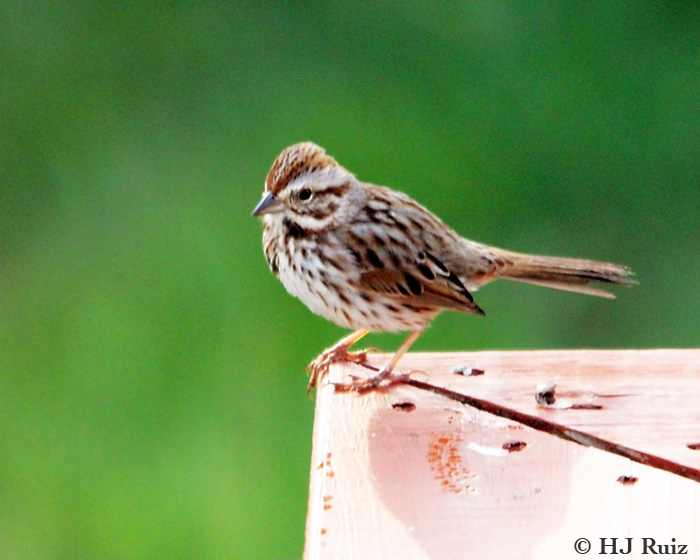
Song Sparrow
The Song Sparrow, is a medium-sized American sparrow. Among the native sparrows in North America, it is easily one of the most abundant, variable and adaptable species.
Adult song sparrows have brown upper-parts with dark streaks on the back and are white underneath with dark streaking and a dark brown spot in the middle of the breast. They have a brown cap and a long brown rounded tail. Their face is grey with a streak through the eye.
Although they are a habitat generalist, their favorite habitat is brushy areas and marshes, including salt marshes, across most of Canada and the United States. They also thrive in human areas, such as in suburbs, along edges in agricultural areas, and along roadsides. In southern locations, they are permanent residents. Northern birds migrate to the southern United States or Mexico, where there is also a local population resident all year round. The Song Sparrow is a very rare vagrant to western Europe, with a few recorded in Great Britain and Norway.
These birds forage on the ground, in shrubs or in very shallow water. They mainly eat insects and seeds. Birds in salt marshes may also eat small crustaceans. They nest either in a sheltered location on the ground or in trees or shrubs.
Click on images to see enlargements
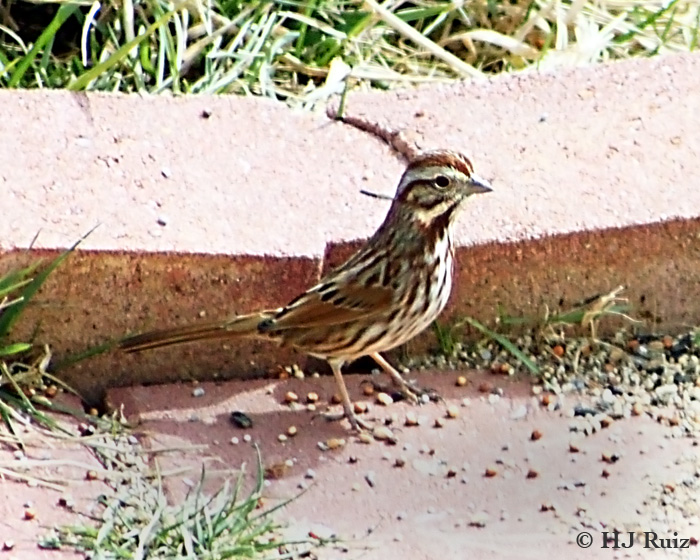
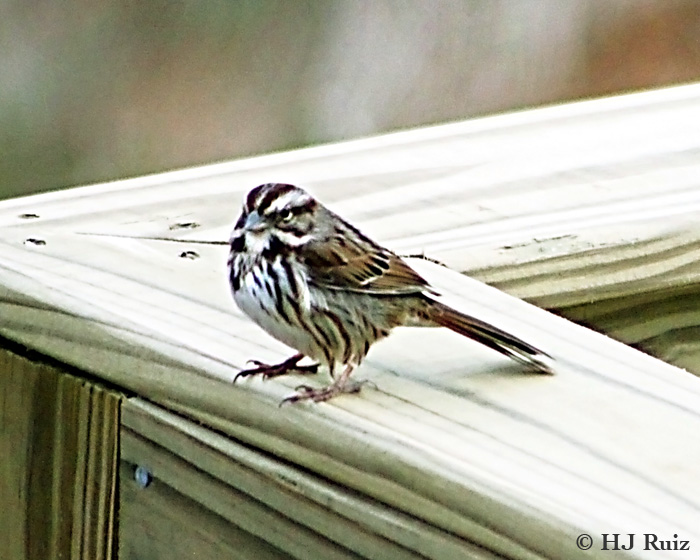
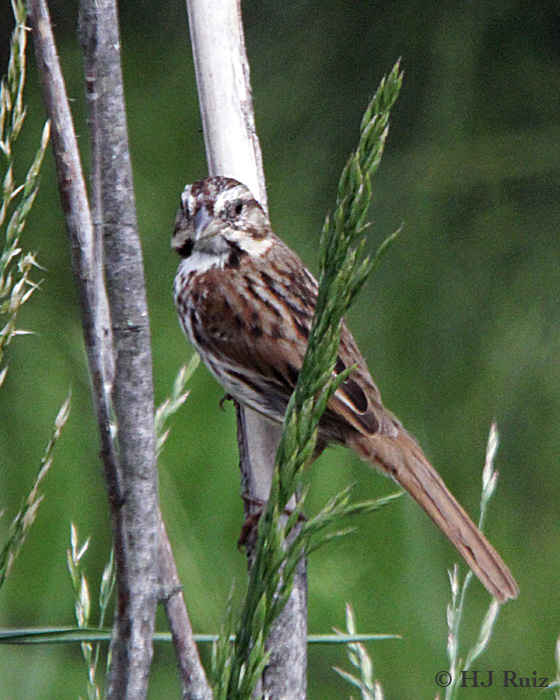
Text excerpts © Wikipedia – Photographs © H.J. Ruiz – Avian 101
Share this:

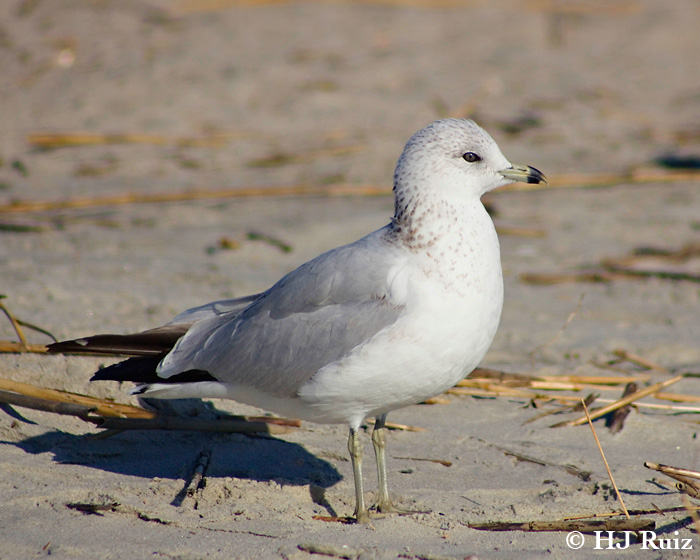
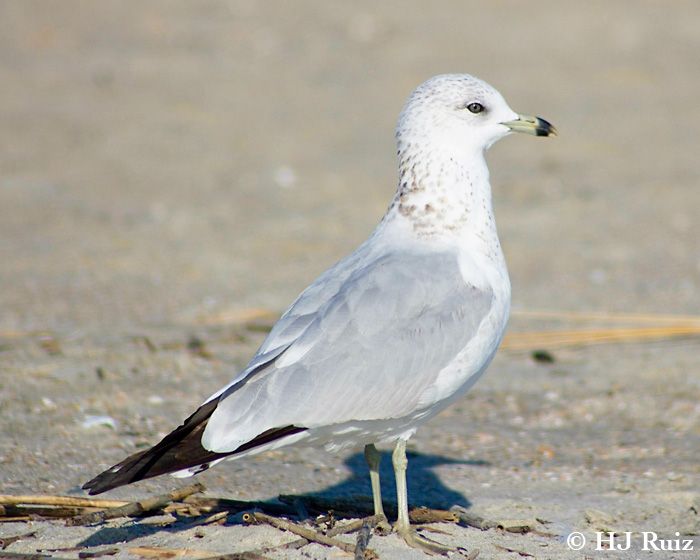
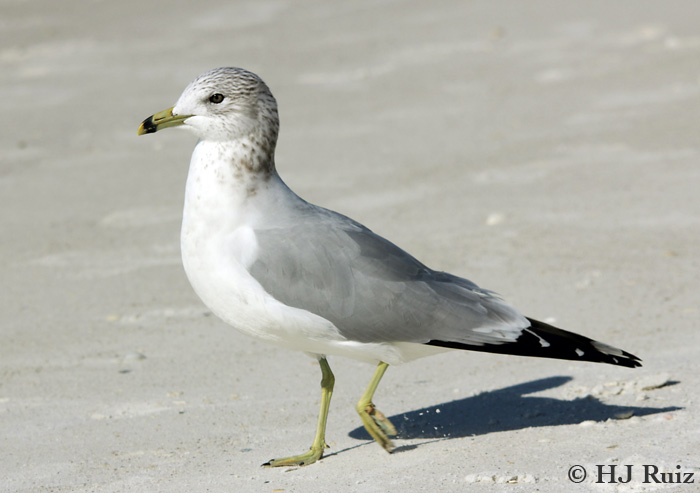
Ring-billed Gull
The Ring-billed Gull is a medium-sized gull.
The head, neck and underparts are white; the relatively short bill is yellow with a dark ring; the back and wings are silver gray; and the legs are yellow. The eyes are yellow with red rims. This gull takes three years to reach its breeding plumage; its appearance changes with each fall molt.
Their breeding habitat is near lakes, rivers or the coast in Canada and the northern United States. They nest colonially on the ground, often on islands. This bird tends to be faithful to its nesting site, if not its mate, from year to year.
They are migratory and most move south to the Gulf of Mexico and the Atlantic and Pacific coasts of North America, also the Great Lakes.
This gull is a regular wanderer to western Europe. In Ireland and Great Britain it is no longer classed as a rarity, with several birds regularly wintering in these countries.
These birds forage in flight or pick up objects while swimming, walking or wading. They also steal food from other birds and frequently scavenge. They are omnivorous; their diet may include insects, fish, grain, eggs, earthworms and rodents. These birds are opportunistic and have adapted well to taking food discarded or even left unattended by people. It is regarded as a pest by many beach-goers because of its willingness to steal unguarded food on highly crowded beaches.
Click on images to see enlargements
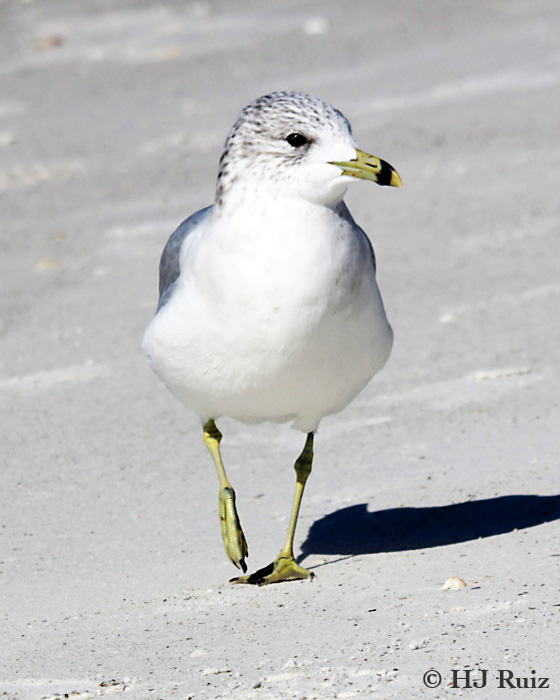
Text excerpts © Wikipedia – Photographs © H.J. Ruiz – Avian 101
Share this:

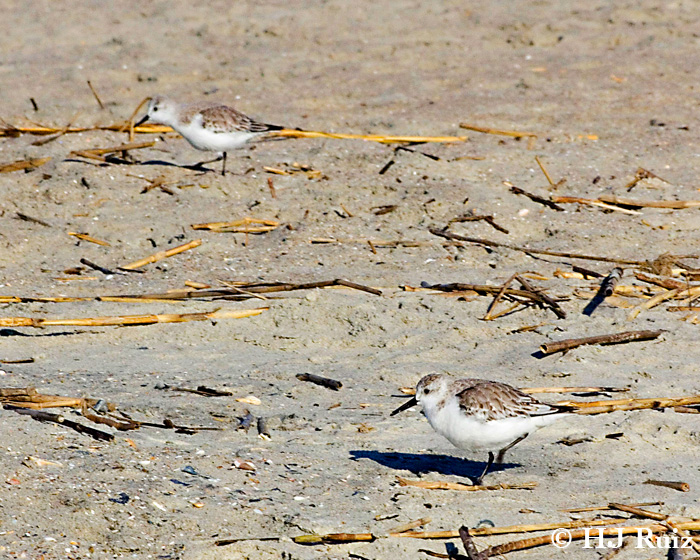
Sanderling
The Sanderling, is a small wader. It is a circumpolar Arctic breeder, and is a long-distance migrant, wintering south to South America, South Europe, Africa, and Australia. It is highly gregarious in winter, sometimes forming large flocks on coastal mudflats or sandy beaches.
Sanderlings feed on invertebrate prey buried in the sand in the upper intertidal. In North America this largely consists of the isopods, Excirolana linguifrons and Excirolana kincaidii, and the mole crab, Emerita analoga. When the tide is out these crustaceans live in burrows some way beneath the surface. When the tide comes in, they move into the upper layers of sand so as to be able to feed on the plankton and detritus that washes over them with each wave.
The Sanderling breeds in the High Arctic areas of North America, Europe and Asia. In North America it breeds in the Canadian Arctic Archipelago, Nunavut, Greenland (and to a lesser extent Alaska), in Eurasia it breeds Spitsbergen, and areas of northern Russia from the Taymyr Peninsula to the New Siberian Islands. In the northern winter it has a nearly cosmopolitan distribution across the world’s marine coasts. It is a complete migrant, traveling between 3,000 to 10,000 km from its breeding grounds to its wintering sites. Birds that travel further also arrive later and leave sooner. The majority of adults leave the breeding grounds in July and early August, whereas juvenile birds leave in late August and early September. The northward migration begins in March at the southern end of their winter distribution.
Click on images to see enlargements
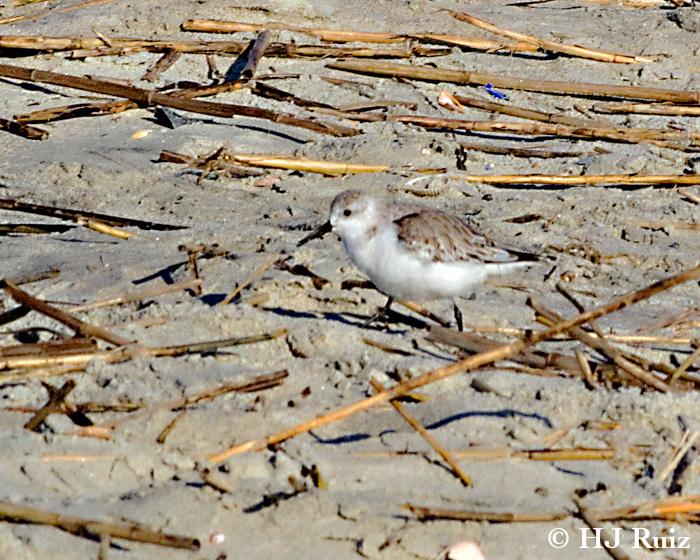
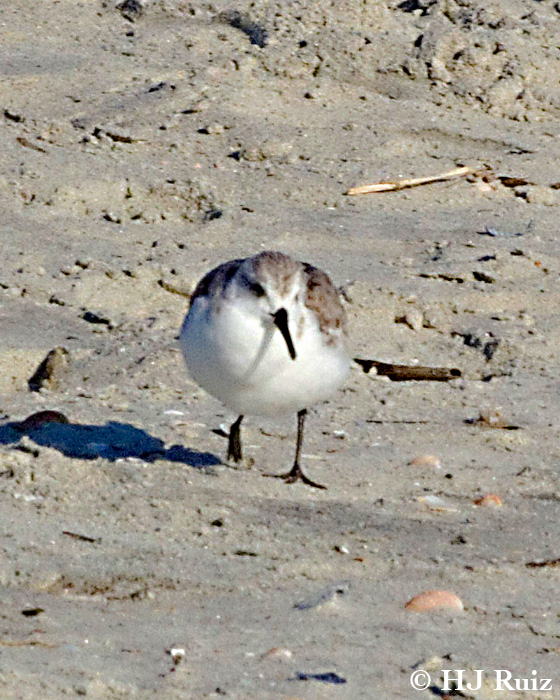
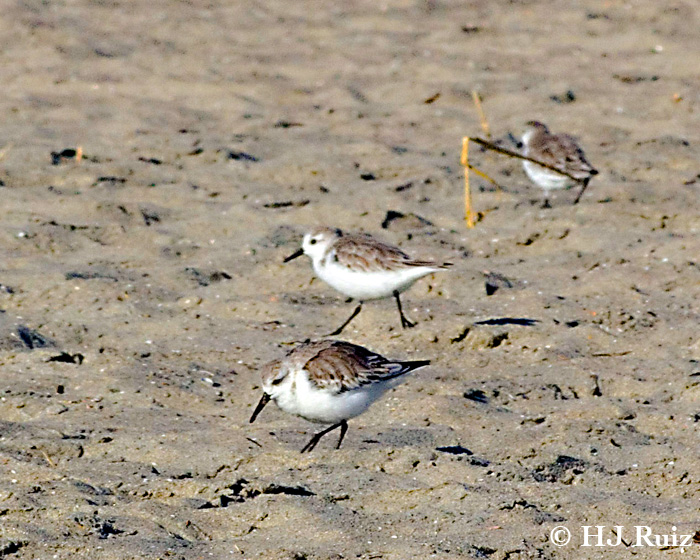
Text excerpts © Wikipedia – Photographs © H.J. Ruiz – Avian 101
Share this:


Read Past Reviews

Book # 69

Quote from the Author
“A good chuckle is healthy, it helps you break the monotony of a serious life.” ~ H.J. Ruiz


You must be logged in to post a comment.