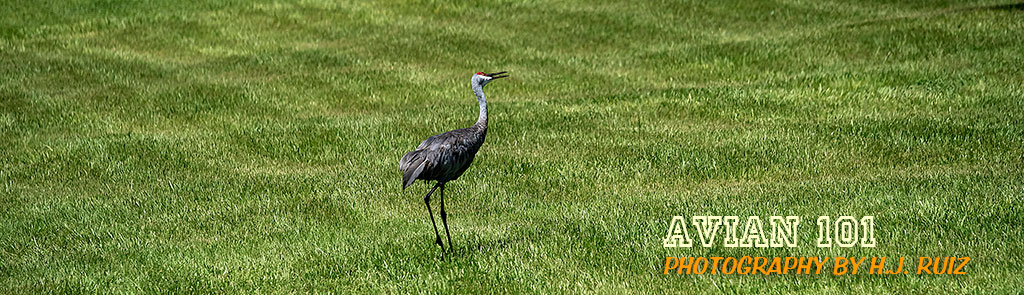
Panoramic View of Birds


Northern Cardinal (M) — Click image to see enlargement
© H.J. Ruiz – Avian 101
Share this:

Cowbirds are Here! – Part Two
This post is the second part of the Brown-headed Cowbirds!
I did it this way because I have a lot of photographs of them since they are coming to my backyard quite often to devour all seeds from the feeders. They always manage to be very hungry and eat like there’s no day tomorrow! If you ever had these cowbirds in your feeders you must know well what I’m referring to.
Don’t take me wrong I like all birds, is just that my feeders are there for all birds not only for cowbirds!
Here I have a nice bunch of pictures for you! Enjoy!


Text and photographs © H.J. Ruiz -Avian 101
Share this:

Brown-headed Nuthatch- Part One
Put kidding aside, when people that read and see my photographs from my backyard write comments such as “how do you manage to get so many birds by you?” or “What’s your secret to get the variety of birds that visit your backyard?Of course I could mention some other comments alike those.
I wonder about that also, is it that I’m so “lucky”? or maybe I’m doing something right and I just don’t know what!
I have the feeling that it has to do mainly with the terrain and topographic set up.
When I bought my house in Georgia, I picked the location of my house to be close to a 250 years old oak tree which is about 100 yards from my house, this beautiful tree sits next to a small creek that runs across my backyard, I can not see the stream because it’s bordered by lines of pine trees and all kinds of plants and bushes. This environment makes the perfect habitat for any kind of birds. My belief is also that most birds in this case follow the creek as guide or stop over when they do local migration or distant migration.
Thus, when I added feeders with variety of seeds, birds learn where to stop for food.
I want you to know that I see birds that I have never photographed but for not having my camera ready or any other reason I miss them and I keep hoping that they’ll come back so I can add them to my list of birds.
This small creek serves as a safe corridor for avians and I just happen to be located next to it! Yes, I’m lucky!
By the way I had a little visitor a couple of days ago, you know him, it’s the Brown-headed Nuthatch!


Text and photographs © H.J. Ruiz – Avian 101
Share this:

My Job is Done!
You read on my post that I had contacted Atlanta Audubon Society via email, today’s post will show the way of how this issue transpired… You get your own opinion!
– I wrote an email reporting the presence of a Red-crested Cardinal in my backyard in Hiram, Ga. described a few things and attached a nice photograph which showed clearly the red band on the bird’s leg. Please read the Audubon reply next:
Hi HJ,
Thank you for the report. We have received similar notes regarding Red-crested Cardinals. In most cases they are released pets, which may explain the band as well. I’ve copied the GA IBA coordinator who may be able to speak to the color band.
Atlanta Audubon does not process bird reports itself. We encourage people to suit sightings to http://www.ebird.org.
Thank you,
Nikki
– Soon after I received an email from the GA IBA coordinator, read next:
Hi,
I am actually concerned about the number of reports of these guys. As neat as they are, I hope they do not become established. The band was used to ID the individual when it was captive.
Charlie
– I replied his email with a few pertinent questions, read next:
Hi Charlie,
Thank you very much for the information about the Red-crested Cardinal that I photographed in my backyard. Why is it that you hope they don’t become established in the mainland.however, they were introduced to Puerto Rico and Hawaii?
What make you think that have been banded locally and not in some other Country? Were all the reports you mention of birds with the same color band? Or were not banded at all.
I’m sorry to be so inquisitive about this matter, I’d like to get to the bottom of this rare occurrence. Who would release a bunch of banded precious birds?
I’d appreciate it very much if you could answer my questions.
Sincerely,
H.J. Ruiz
Avian101.wordpress.com
– Read what his response was next:
Hi Henry,
Anytime exotic species become established, it is always to the detriment of native species. While this is a really cool bird, it is more important that our natives are able to survive.
Banders do not typically apply just plastic bands without numbered metal bands to wild birds. That is typically done for captive birds. Most likely, an aviary was damaged, allowing several birds to escape.
Cheers,
Charlie
– I wasn’t very impressed with his reply or the way they all handled this matter. My disappointment with these societies has grown considerably.
As a person that gives a lot of his time to the welfare of birds I felt that I had to make a report and I did. My job is done!
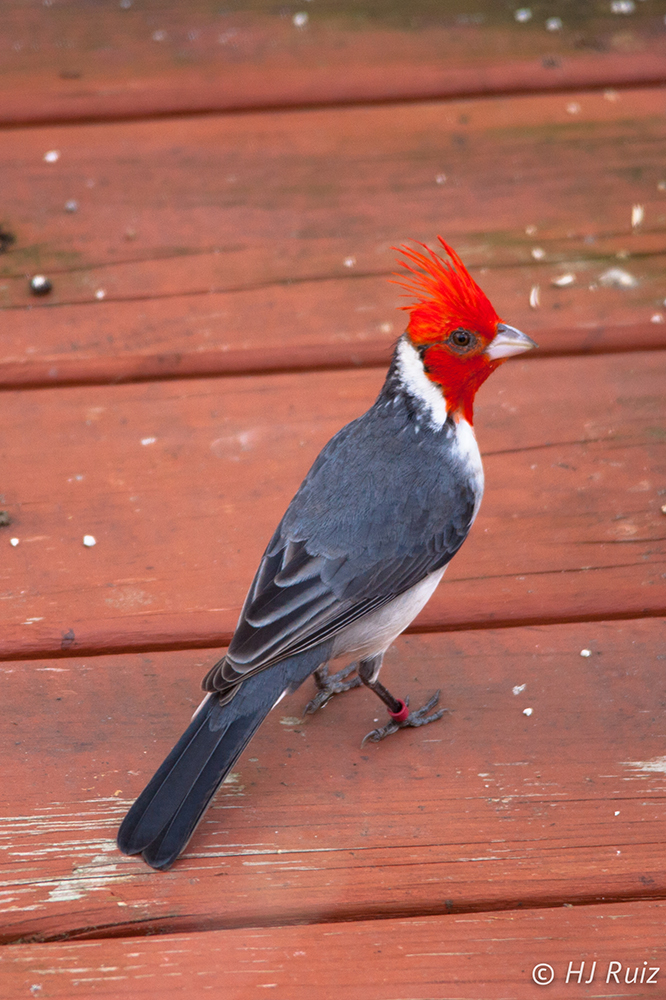
Red-crested Cardinal
Share this:


Read Past Reviews

Book # 69

Quote from the Author
“A good chuckle is healthy, it helps you break the monotony of a serious life.” ~ H.J. Ruiz


You must be logged in to post a comment.