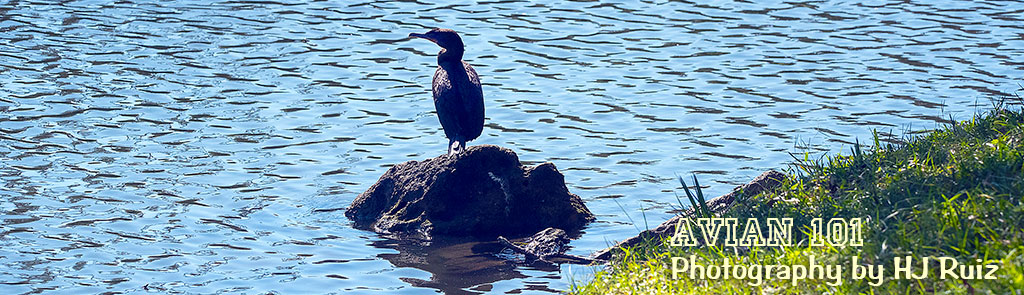
Reddish Egret
On my post from October 26th,2013 I featured the Reddish Egret but I left some pictures for another day, that day is here now.
One thing I can say again is that the Reddish Egret is a great looking bird with a peculiar plumage. My shooting was done in several locations such a water reservoir, a swamp and at the sea shore. I was happy and quite satisfied to be able to increase my archives with some more pictures of this bird.
Next I got some pictures for you. Enjoy!


© HJ Ruiz -Avian101
Share this:

One Who Searches, Finds
As I wrote on previous posts, the best way to find birds is by asking people about any spots where they have seen birds more often… any birds, doesn’t matter the species, the person doesn’t have to be a birder or expert ornithologist . Then you take it from there. Once you are at the mentioned area you walk round the place carefully scanning with your eyes and get closer if you detect any kind of movement on the ground , trees, bushes, water etc. Do not discount the possibility of the obvious, that the bird in plain sight!
In the case when I spotted the bird featured today, the Limpkin, I was in the area for some time looking at other birds without realizing that the Limpkin was there. It was with the corner of my eye that I detected some movement and aimed my attention to that, then after a few minutes I swathe Limpkin come out to the open grass, that made things easy for me! I was lucky this time.
Limpkin – Latin name: Aramus guarauna
This a bird that looks like a large rail but is skeletally closer to cranes. It is the only extant species in the genus Aramus and the family Aramidae. It is found mostly in wetlands in warm parts of the Americas, from Florida to northern Argentina. It feeds on mollusks, with the diet dominated by apple snails of the genus Pomacea. Its name derives from its seeming limp when it walks.
The Limpkin is a somewhat large bird, 25–29 inches long, with a wingspan of 40–42 inches. Body mass ranges from (2.0 to 2.9 lb), averaging (2.38 lb). The males are slightly larger than the females in size, but there is no difference in plumage. Its plumage is drab—dark brown with an olive luster above. The feathers of the head, neck, wing coverts, and much of the back and underparts (except the rear) are marked with white, making the body look streaked and the head and neck light gray. It has long, dark-gray legs and a long neck. Its bill is long, heavy, and down-curved, yellowish bill with a darker tip.The bill is slightly open near but not at the end to give it a tweezers-like action in removing snails from their shells, and in many individuals the tip curves slightly to the right, like the apple snails’ shells. The white markings are slightly less conspicuous in first-year birds. Its wings are broad and rounded and its tail is short. It is often confused with the immature American White Ibis.
NOTE: The Limpkin is a new addition to my List of Birds as # 197


Text excerpts © Wikipedia – All photographs © HJ Ruiz – Avian101
Share this:

Pterosaurs – Book Review
“I picked this book out of curiosity, mostly because of my fascination with animals that roamed on Earth millions of years ago. 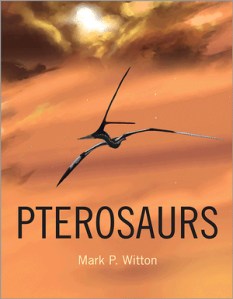 The kicker was that the author Mr. Mark P. Witton has superbly aimed his attention entirely to Pterosaurus, earliest vertebrates known to have evolved powered flight. For me this book was like candy to a child because I’ve been always a believer of birds being descendants of these ancient formidable creatures. The illustrations as well as the paintings and photographs are top notch quality. Every fossil depicted has an interesting scientific description and intelligent explanation of what the species look like, how their bodie’s bone structures worked in relation to their flying function. All the various scientific paleontologic new techniques are explained in a comprehensive and down to earth language. Read this book and let your mind run wild, your imagination will show you a different view of life on planet Earth millions of years ago!”
“If reading about dinosaurs intrigued me a great deal, now, reading about Pterosaurs is bewildering amazing!”
Book review made by H.J. Ruiz – Avian101 – Nov. 2013
Princeton University Press -Publisher
Share this:

Panoramic View of Birds

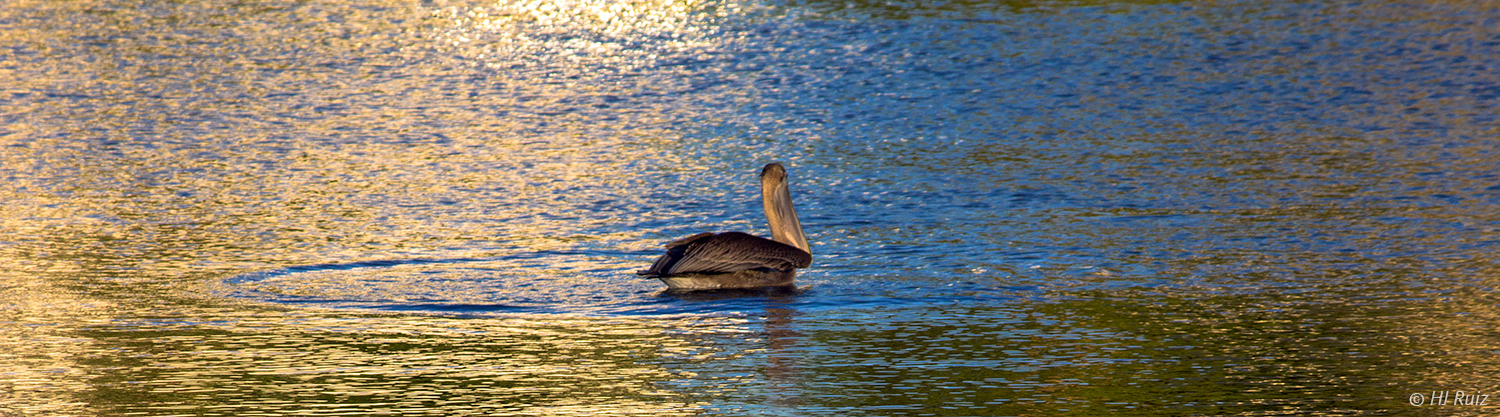
Brown Pelican — Click on image to see enlargement —
© HJ Ruiz – Avian101
Share this:


Read Past Reviews

Book # 69

Quote from the Author
“A good chuckle is healthy, it helps you break the monotony of a serious life.” ~ H.J. Ruiz


You must be logged in to post a comment.