
One Day at a Time
The weeding, trimming, cutting of a great deal of shrubs and bushes is about 90% done in my backyard. It really look different and looks larger now after the clearing of the brush. I still have a bit more to do and I can be set until Spring next year.
Many trees are still half way green and many more leaves will have to fall yet.
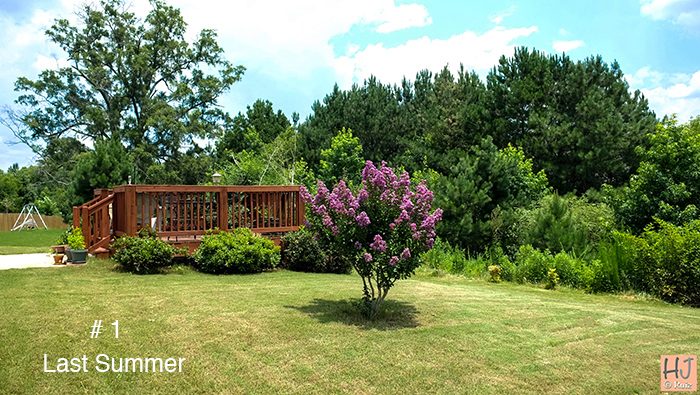
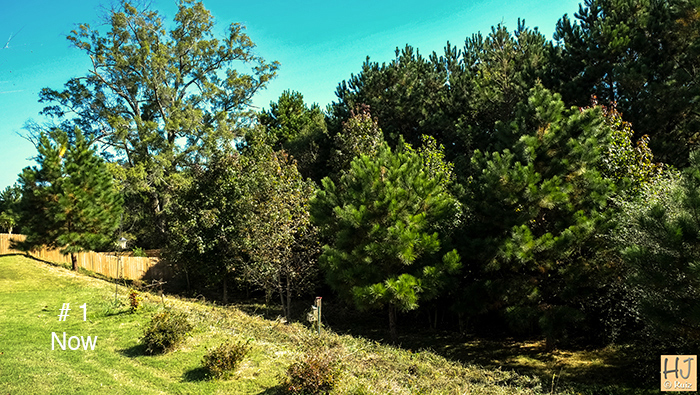
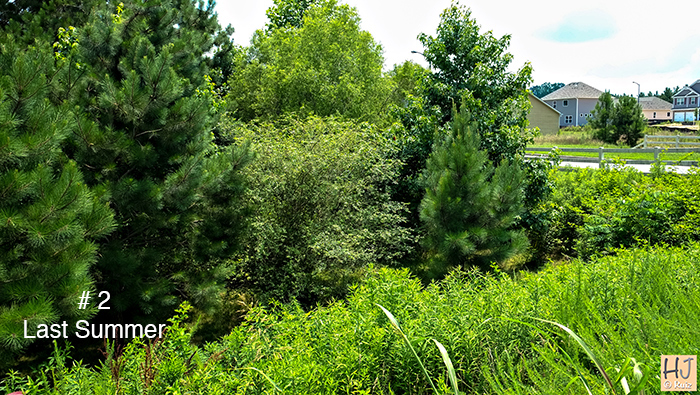
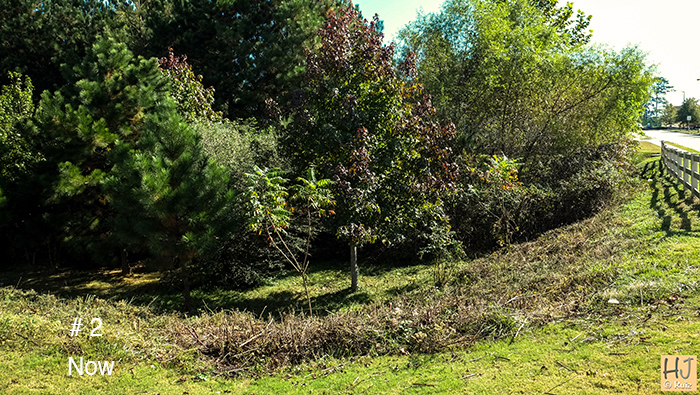
These kind of changes I do almost every year and by next Spring I will get another batch of nice variety of plants. Birds that stay through the Autumn and Winter still show up daily.
Here are some of them. Enjoy!


Text and photographs © HJ Ruiz – Avian101
Share this:

My Local Friend – IV
When I think of this other bird, a permanent resident in my backyard I see it as a mouse that goes around the deck pecking at everything, I’m referring to the Song Sparrow, he goes in and out of bushes, plants, flower pots you name it. They feel very comfortable eating on the ground.
Here are some more interesting information to help you get acquainted with this terrific bird.
The song sparrow (Melospiza melodia) is a medium-sized American sparrow. Among the native sparrows in North America, it is easily one of the most abundant, variable and adaptable species.
Adult song sparrows have brown upperparts with dark streaks on the back and are white underneath with dark streaking and a dark brown spot in the middle of the breast. They have a brown cap and a long brown rounded tail. Their face is gray with a streak through the eye.
In the field, they are most easily confused with its congener the Lincoln’s sparrow, and the Savannah sparrow. The former can be recognized by its shorter, grayer tail and the differently-patterned head, the brown cheeks forming a clear-cut angular patch. The Savannah sparrow has a forked tail and yellowish flecks on the face when seen up close.
The sparrow species derives it name from its colorful repertoire of songs. Enthusiasts report that one of the songs heard often in suburban locations closely resembles the opening four notes of Ludwig van Beethoven’s Symphony No. 5. The male uses a fairly complex song to declare ownership of its territory and attract females.
Singing itself consists of a combination of repeated notes, quickly passing isolated notes, and trills. The songs are very crisp, clear, and precise, making them easily distinguishable by human ears. A particular song is determined not only by pitch and rhythm but also by the timbre of the trills. Although one bird will know many songs—as many as 20 different tunes with as many as 1000 improvised variations on the basic theme unlike thrushes, the song sparrow usually repeats the same song many times before switching to a different song.


Text © HJ Ruiz © Wikipedia. photographs © HJ Ruiz – Avian101
Share this:

Red October
October is the month of the year when most birds are leaving the frigid areas of the Country for their annual migration to southern territories. This is the month when Northern Cardinals usually stay put in my backyard not finding migration necessary. That’s a good reason for me to get a chance at observing their feeding habits and other behaviors without having the interference of many other species around. My redwood deck where I keep feeders is visited by many Northern Cardinals… hence the title ‘Red October’ (If you where curious about it)
You can never get tired of seeing these gorgeous birds or shooting their pictures in any case.
The drop in temperature is beginning to reshape the background again, many cold affected plants and bushes are drying out and laying flat on the ground. Wild flowers are for the most wilted or in the process of wilting.
The grass still has a green hue but lighter, as the day pass by it will turn yellowish and become dormant until next Spring. This morning I wore a light jacket fist time since winter last year’s!
Next is a gallery of N. Cardinals I hope you’ll enjoy!


Text and photographs © HJ Ruiz – Avian101
Share this:

Show and Tail


© HJ Ruiz – Avian101
Share this:

Read Past Reviews

Book # 69
Quote from the Author
“A good chuckle is healthy, it helps you break the monotony of a serious life.” ~ H.J. Ruiz


You must be logged in to post a comment.