Show and Tail

© HJ Ruiz – Avian101
Share this:

Panoramic View of Birds
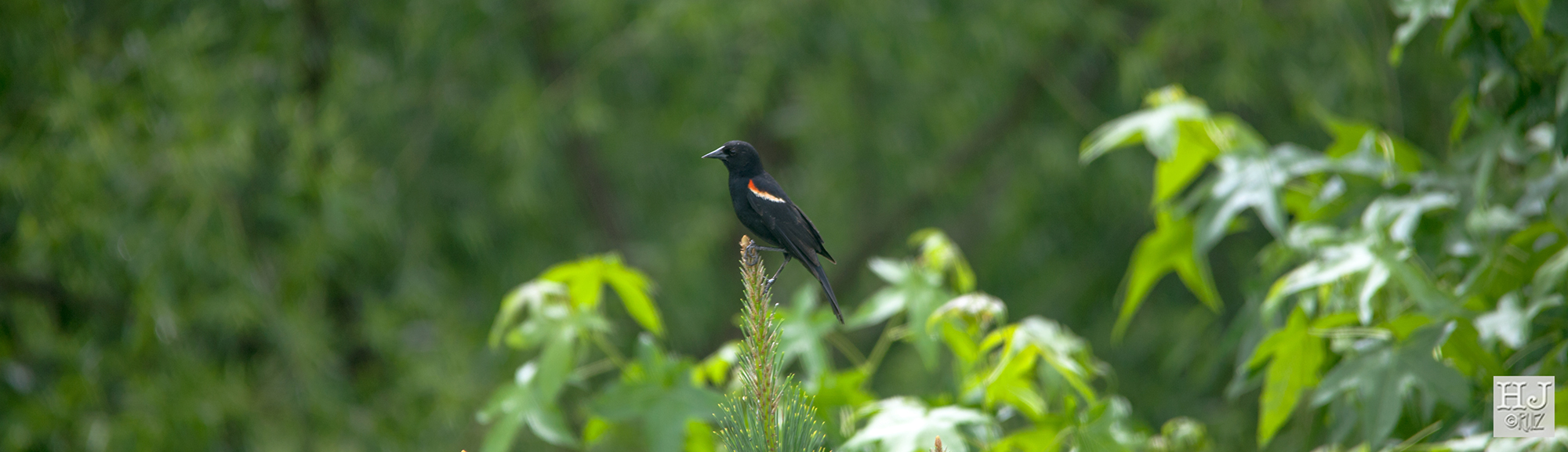
Red -winged Blackbird (M) —Click on image to see enlargement —
© HJ Ruiz – Avian101
Share this:

Memory Lane
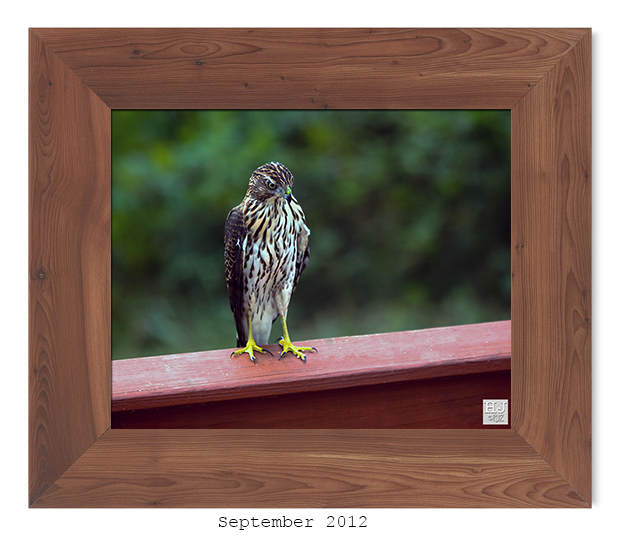
Cooper’s Hawk — Sept. 2012
© HJ Ruiz – Avian101
Share this:

Red-winged Blackbird
Some medium size birds that keep coming back after their annual migration are the Red-winged Blackbirds. Usually in company of other species of the family blackbirds.
The common name for the red-winged blackbird is taken from the mainly black adult male’s distinctive red shoulder patches, or “epaulets”, which are visible when the bird is flying or displaying. At rest, the male also shows a pale yellow wingbar. The female is blackish-brown and paler below. The female is smaller than the male.
Young birds resemble the female, but are paler below and have buff feather fringes. Both sexes have a sharply pointed bill. The tail is of medium length and is rounded. The eyes, bill, and feet are all black.
The red-winged blackbird is omnivorous. It feeds primarily on plant materials, including seeds from weeds and waste grain such as corn and rice, but about a quarter of its diet consists of insects and other small animals, and considerably more so during breeding season. It prefers insects, such as dragonflies, damselflies, butterflies, moths, and flies, but also consumes snails, frogs, eggs, carrion, worms, spiders, mollusks. The red-winged blackbird forages for insects by picking them from plants, or by catching them in flight. In season, it eats blueberries, blackberries, and other fruit. These birds can be lured to backyard bird feeders by bread and seed mixtures and suet. In late summer and in autumn, the red-winged blackbird will feed in open fields, mixed with grackles, cowbirds, and starlings in flocks which can number in the thousands.
Photo Gallery


Text and photographs © HJ Ruiz – Avian101
Share this:

Read Past Reviews

Book # 69
Quote from the Author
“A good chuckle is healthy, it helps you break the monotony of a serious life.” ~ H.J. Ruiz


You must be logged in to post a comment.