Memory Lane
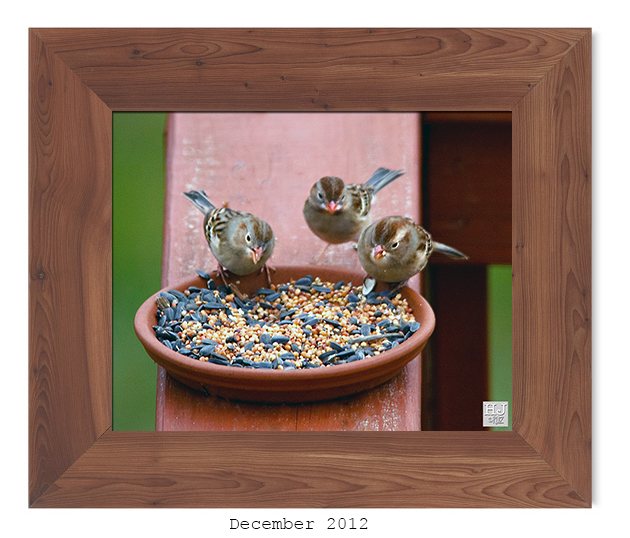
Field Sparrows — Dec. 2012
© HJ Ruiz – Avian101
Share this:

Offshore Sea Life ID Guide -Book Review
OFFSHORE SEA LIFE ID GUIDE – West Coast
By Authors: Steve N.G. Howell & Brian Sullivan
“The 5”x8” ID Guide is the perfect size and weight for having it in your carry-on or your jacket pocket. This guide has been written and edited by two well known authors with vast experience in the field.

Click image for more information
The study of species of the sea or land lead them to design a simple but concise guide with the necessary text information accompanied by 300 photographs to make any person visiting the West Coast of United States and then going on any pelagic trips, as knowledgeable as your touring guide.
The answers to your questions will be there in minutes when you make a comparison of what you see offshore and what is on the guide. in full color, with the brief description of the species on sight. The listed names of species are what you’d most likely see while on the day trip tours offshore or to West Coast Islands. I believe that this guide was taylor-made for these kind of offshore trips and will leave you satisfied that you could ID every creature that you saw!”
Book review by H.J. Ruiz – June 19th, 2015
Share this:

It’s Simply Nuts!
This precious little fellow is so dynamic! I’m talking about the Carolina Wren move at an accelerated rate from side a to side b in a way as if it was being chased by something…imaginary of course. Some birds are hyper by nature and takes a great amount of energy and precision to do things at a rapid pace.
They have a special predilection for their food…nuts! They really go nuts for nuts!.
For myself, It’s a treat seeing them eat a peanut. I get lucky to photograph the process if they choose the deck’s handrail to crack the peanut, other times they go to a safer place to eat (That’s one rule observed by most birds that eat unshelled or hard seeds or nuts that need cracking).
The process of cracking the peanut is done with a certain sense of science I’d say. And the process develops approximately like this: The bird places the nut on a hard surface and then proceeds to measure the distance of its bill tip to the center middle of the nut, once calculated the bird delivers hard downward strikes until the nut shatter in pieces! Isn’t it cool?
I find it quite fascinating the way it find the center point of an irregular shape object and the amount of force necessary to shatter the nut and not to cause any damage to the bill tip- point.
Photo Gallery


Text and photographs © HJ Ruiz – Avian101
Share this:

No Murmuration…Just Rumors!
European Starlings were just a species of birds that one day or two a year would show up in my backyard and then leave a couple of days later. It was hard for me to photograph them because they were more interested in getting worms out of the newly mowed lawn and acted very shy mostly.
It’s quite a difference for this year, the European Starling came and stayed to roost and now they are part of the backyard population!
There’s a hint of disdain about the referred species by some people, a great part of them base that concept because of the economic impact they cause to their damage to crops and the farming industry. I can understand that but other people dislike them simply because they are not “pretty” or “attractive”.
Viewing them from far they may look as very dark and plain but seen much closer they do look quite handsome an colorful. They are also great parents to their brood.
The most impressing thing that they can offer are “murmurations”, which consists of thousands of starlings flying at once, forming a gigantic flock that flies across the sky in unison, creating convoluted patterns and an incredible synchronized manner. There are many “theories” of how these birds are able to achieve this task. I’m sure that there will be more in the future.
“I don’t expect to have any murmurations in my area. I don’t want any that I will have to feed! No way!”
Photo Gallery


Text and photographs © HJ Ruiz – Avian101
Share this:

Read Past Reviews

Book # 69
Quote from the Author
“A good chuckle is healthy, it helps you break the monotony of a serious life.” ~ H.J. Ruiz


You must be logged in to post a comment.