A Touch of Gold
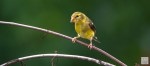
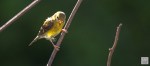
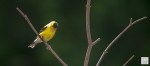
Once in a while, when I least expect it… boom! A couple of American Goldfinches show up for a short but delightful visit! They are very nice looking birds, their plumages are bright and virtually hard to miss in contrast with the green surrounding backyard.
Before I ever shot a picture of an American Goldfinch, they used to just fly by and skip my backyard a few years back, I was feeling a bit left out because I could see them in other backyards very often and I wanted to photograph them so badly…until one day when they decided to stop by and try feeding there, from that day they have been visiting my backyard!
These birds have refined features with a more delicate appearance compared to other finches such as the House Finches. However they are not very distant when it comes to sharing meals and getting along well in groups.
Photo Gallery
-
- Female
-
- Female
-
- Male
-
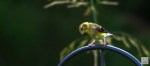
- Female
-
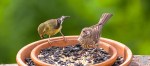
- Female and female House Finch
-

- Female
Text and photographs © HJ Ruiz – Avian101
Share this:

I Just Laughed
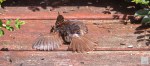
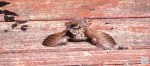
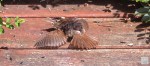
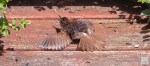
This short story is not fiction, it happened to me a couple of days ago, during my photo shooting of birds in my backyard. It’s my habit to prepare my camera gear, my tripod, etc, etc, for my photo sessions. Once ready, I aim my zoom lens to the feeders and surrounding areas looking for birds, they usually concentrate there taking turns to feed, that’s an advantage point for me and I choose what I want to shoot. Sometimes I have to wait for birds to show up and I wait for the best opportunities to shoot or it depends of what species of birds are showing up. From listening at the birds calls and sounds so many times, I have learned to imitate some birds calls by whistling. It gets the attention of some birds. That day, few birds were in the deck area, then I saw a Carolina Wren hopping around on the floor of the deck, I began to whistle like i know when suddenly the C. Wren dropped flat to the floor and started to act like I’d never seen him do before. He kept going around in circle, displaying all feathers. he did that for a while. I shot a series of photos but I was totally intrigued because I didn’t see any other wren in the vicinity nor dust to dust bathe. I researched about this behavior which I suspected it was a ritual dance for mating but I had not heard it mentioned for this bird previously. “As soon as a female wren comes close enough the male wren starts courting the female bird by circling around the bird and continuing on hopping in a stiff pattern. While doing this it puffs out its feathers and fans its tail as it tries to impress the female Carolina wren. Although not that common a sight, it has been reported that some male wrens even fetch and bring female wrens an offering of food while courting the female bird. Once the female bird is attracted to the male wren, they mate and is then bonded for life.” In conclusion, seems like I triggered a sexual reaction with my whistling imitating call of a wren. Since there was no other wren present at that moment the male thought there was an opportunity to woo a mate when it heard my whistle.
Photo Gallery

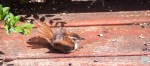
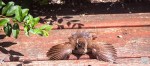
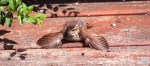
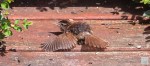
Text and photographs © HJ Ruiz – Avian101
Share this:

Precious Pal
The bird featured on this post is the Carolina Chickadee, a small little bird that I admire very much for many different reasons. These species have been nesting in my backyard for several years already. More detailed information about this bird next:
Adults have a black cap and bib with white sides to the face. Their underparts are white with rusty brown on the flanks; their back is grey. They have a short dark bill, short wings and a moderately long tail. Very similar to the black-capped chickadee, the Carolina chickadee is distinguished by the slightly browner wing with the greater coverts brown (not whitish fringed) and the white fringing on the secondary feathers slightly less conspicuous; the tail is also slightly shorter and more square-ended.
These birds hop along tree branches searching for insects, sometimes hanging upside down or hovering; they may make short flights to catch insects in the air. Insects form a large part of their diet, especially in summer; seeds and berries become important in winter. They sometimes hammer seeds on a tree or shrub to open them; they also will store seeds for later use.
During the fall migration and winter, chickadees often flock together. Many other species of birds, including titmice, nuthatches, and warblers can often be found foraging in these flocks. Mixed flocks stay together because the chickadees call out whenever they find a good source of food. This calling out forms cohesion for the group, allowing the other birds to find food more efficiently.
Carolina chickadees are able to lower their body temperatures to induce an intentional state of hypothermia called torpor. They do this to conserve energy during extremely cold winters. In extremely cold weather conditions they look for cavities where they can hide in and spend up to fifteen hours at a time in torpor; during this time they are awake but unresponsive; they should not be picked up and handled at this time, as the stress of being held may cause their death.
Photo Gallery


Text and photographs © HJ Ruiz – Avian101
Share this:

Look Outside my Window!
It’s not a secret that I’m very fond of the Carolina Chickadee which are a permanent avian specie resident of my backyard. Their perky attitude, sweet wavy flight pattern and superb skills to open sunflower seeds are only secondary to their bold feisty attitude if any other bird species dare to approach their nest when is breeding season. No matter how big the intruder may be, this little bird will definitely attack fearlessly! Good little friend!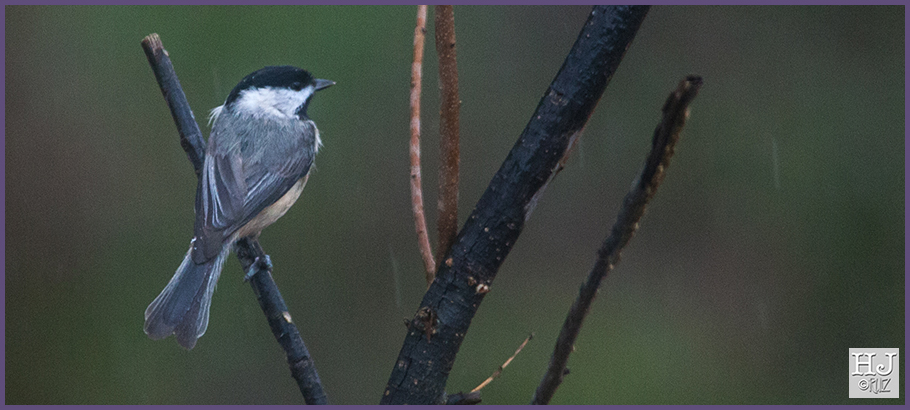
The male Red-winged Blackbirds are very handsome birds, great subjects for photography because they always pose their svelte and well delineated body just like model for a photo session. Their females are very much different (Sexually dimorphic) but with beauty of their own especially their plumage color patterns. The female is smaller than the male too. 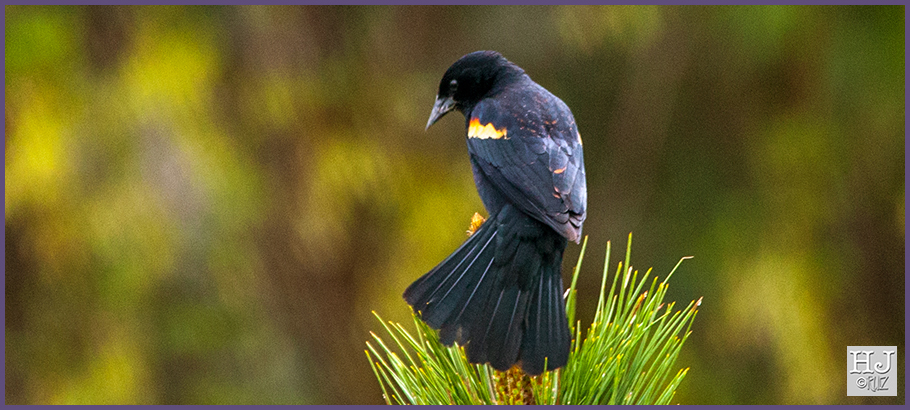
The Indigo Bunting is one of the most good looking birds I’ve seen when it comes to color. The color hue is unique and quite impressive to see in person. They are not birds that show up in groups or stay or long time in one place. I can just imagine that being a bird with that attractive color plumage it also makes you an easy target for predators.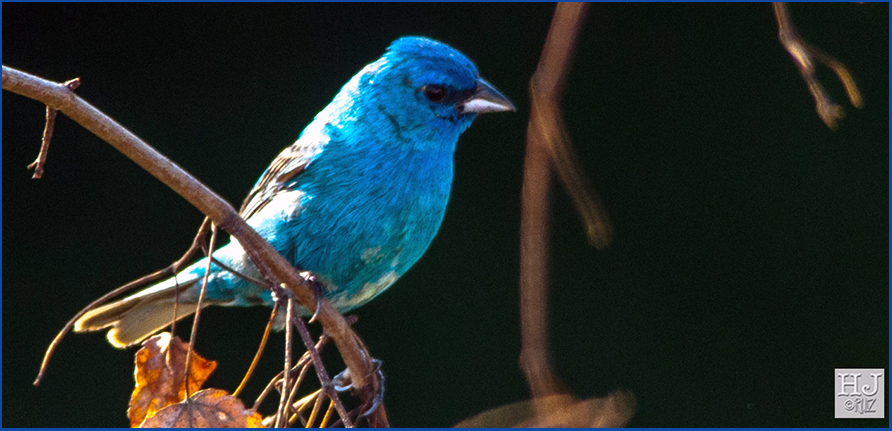
Text and photographs © HJ Ruiz – Avian101
Share this:

Read Past Reviews

Book # 69
Quote from the Author
“A good chuckle is healthy, it helps you break the monotony of a serious life.” ~ H.J. Ruiz


You must be logged in to post a comment.