Is Love… a Contest?
Whether we talk about love between humans or animals in general we end up taking about competition! The mating game kicks in to create competition and get a winner which will be the one mating with the potential breeder of the next generation.
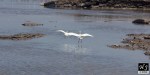
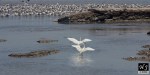
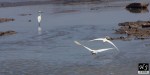
I was watching at a great gathering of sea birds while in Peru, the ocean has created large pools of sea water but being shallow pools it propitiate the growth of small fish, crustaceans and algae. These pools are teeming with several species of seagulls, seabirds and wading birds. Among the thousands of birds I noticed a whole semi drama going on with a trio of Snowy Egrets, which I could easily spot as two males and one female. I will not narrate what transpire from this event but I’m going to let the pictures show the sequence of the actions during those moments…you figure it out!
Photo Gallery
-

- #1





-
- # 10 – Let’s go, my snowy sweetheart!
© HJ Ruiz – Avian101
Share this:

Panoramic View of Birds

Carolina Chickadee —Click on image for larger size—
© HJ Ruiz – Avian101
Share this:

El Nino is a Bad Boy
While I was in Peru last February, their weather conditions were remarkably altered by the “El nino” current. The coastal areas were very warm and with high percentage of humidity. The humidity in form of clouds and fog would travel east toward the Andes and then precipitate as heavy rains that ultimately cause gigantic mudslides (Huaico in native Peruvian language).
My observations in the matter of El Nino current, this natural current flows waters at a warmer temperature than the regular Humboldt current that is much larger but it’s waters are frigid,which it propitious for abundant marine life Plankton which is highly nutritious for small and large fish. The presence of El Nino makes a chaotic environment for plankton to reproduce.
The lack of abundant small fish becomes a feeding problem for sea birds of all kinds. I noticed the presence of large flocks of sea birds idling at beaches and hardly going fishing, this in comparison to previous years.
Among the sea birds I could easily recognize a gentle giant such as:
The Peruvian pelican (Pelecanus thagus) is a member of the pelican family. It lives on the west coast of South America, from Lobos de Tierra Island in Peru to Pupuya Islet in Chile.
These birds are dark in color with a white stripe from the top of the bill up to the crown and down the sides of the neck. They have long tufted feathers on the top of their heads. It was previously considered a subspecies of the brown pelican (Pelecanus occidentalis). The Peruvian birds are nearly twice the bulk of the brown pelican, averaging 15.4 lb (7 kg) in weight; they are also longer, measuring about 5 ft (1.5 m) overall.
The main breeding season occurs from September to March. Clutch size is usually two or three eggs. Eggs are incubated for approximately 4 to 5 weeks, with the rearing period lasting about 3 months.
This bird feeds on several species of fish. It feeds by diving into the water from flight, like the brown pelican. Information © Wikipedia
Photo Gallery


© HJ Ruiz – Avian101
Share this:

Portraits of Birds
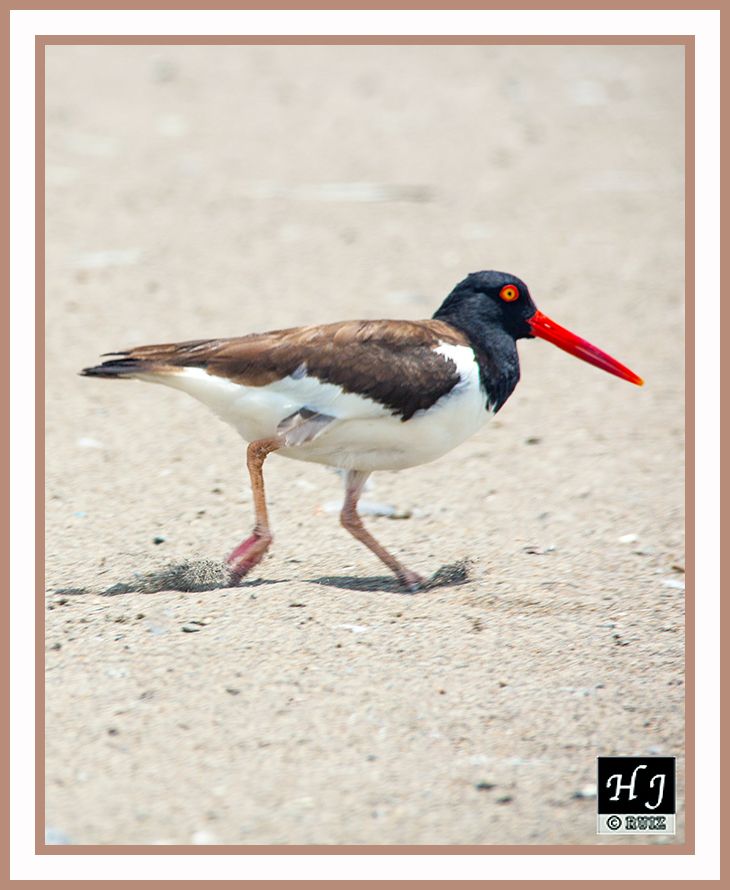
AMERICAN OYSTERCATCHER – HAEMATOPUS PALLIATUS
© HJ Ruiz
Share this:

Read Past Reviews

Book # 69
Quote from the Author
“A good chuckle is healthy, it helps you break the monotony of a serious life.” ~ H.J. Ruiz


You must be logged in to post a comment.