What’s Up?
MOLTING
Seeing a number of species under the molting process in my backyard prompted me to write about it today. It’s valid to say that great part of world population do not know the details of this process. Most animals, insects and even humans do molt, in different ways and forms but they all do.
In birds, molting is the periodic replacement of feathers by shedding old feathers while producing new ones. Feathers are dead structures at maturity which are gradually abraded and need to be replaced. Adult birds molt at least once a year, although many molt twice and a few three times each year.
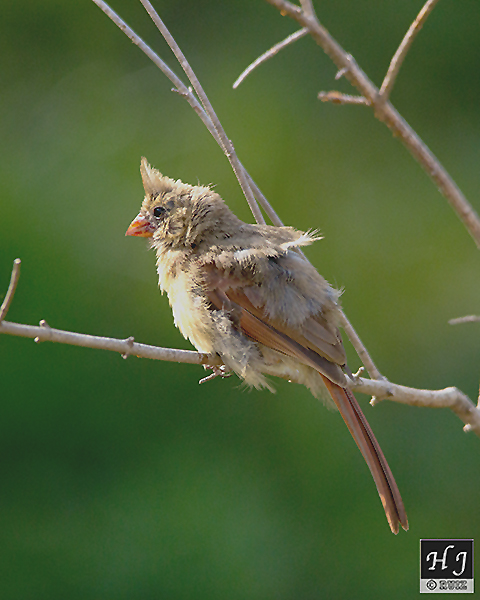
N. Cardinal (F)
It is generally a slow process as birds rarely shed all their feathers at any one time; the bird must retain sufficient feathers to regulate its body temperature and repel moisture. The number and area of feathers that are shed varies. In some molting periods, a bird may renew only the feathers on the head and body, shedding the wing and tail feathers during a later molting period. Some species of bird become flightless during an annual “wing molt” and must seek a protected habitat with a reliable food supply during that time. While the plumage may appear thin or uneven during the molt, the bird’s general shape is maintained despite the loss of apparently many feathers. There is such a thing as partial molting for certain species, depending on their own environments and needs.
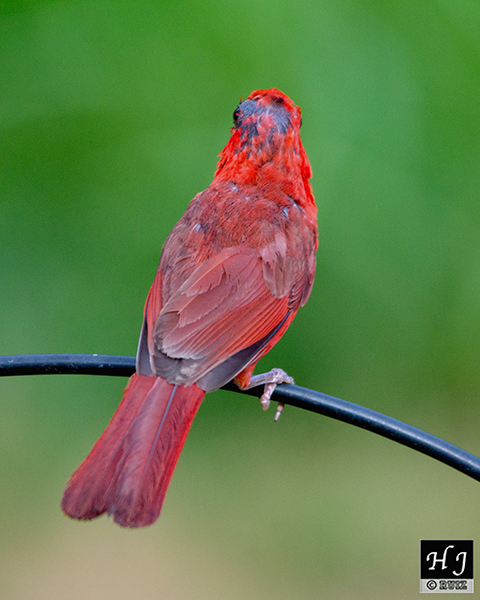
N. Cardinal (M)
The process of molting in birds is as follows: First, the bird begins to shed some old feathers, then pin feathers grow in to replace the old feathers. As the pin feathers become full feathers, other feathers are shed. This is a cyclical process that occurs in many phases. It is usually symmetrical, with feather loss equal on each side of the body. Because feathers make up 4–12% of a bird’s body weight, it takes a large amount of energy to replace them. For this reason, molts often occur immediately after the breeding season, but while food is still abundant. Or time before heading south for migration.
I try not to do much photo shooting of the birds during the molting process because they do not look at ‘their best’. It might sound silly but I do care for them as my friends, they deserve better, don’t you agree?
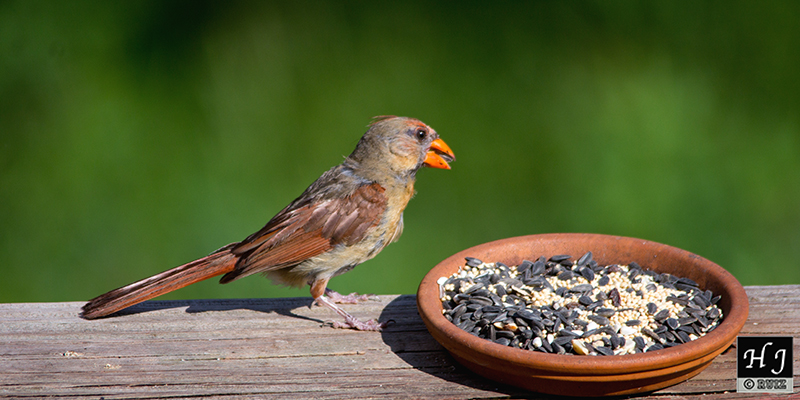
N. Cardinal (F)
© HJ Ruiz – Avian101
Share this:

Mottled Duck
| Scientific classification | |
|---|---|
| Kingdom: | Animalia |
| Phylum: | Chordata |
| Class: | Aves |
| Order: | Anseriformes |
| Family: | Anatidae |
| Subfamily: | Anatinae |
| Genus: | Anas |
| Species: | A. fulvigula |
| Binomial name | |
| Anas fulvigula Ridgway, 1874 |
|
Photo Gallery


© HJ Ruiz – Avian101
Share this:

Panoramic View of Birds
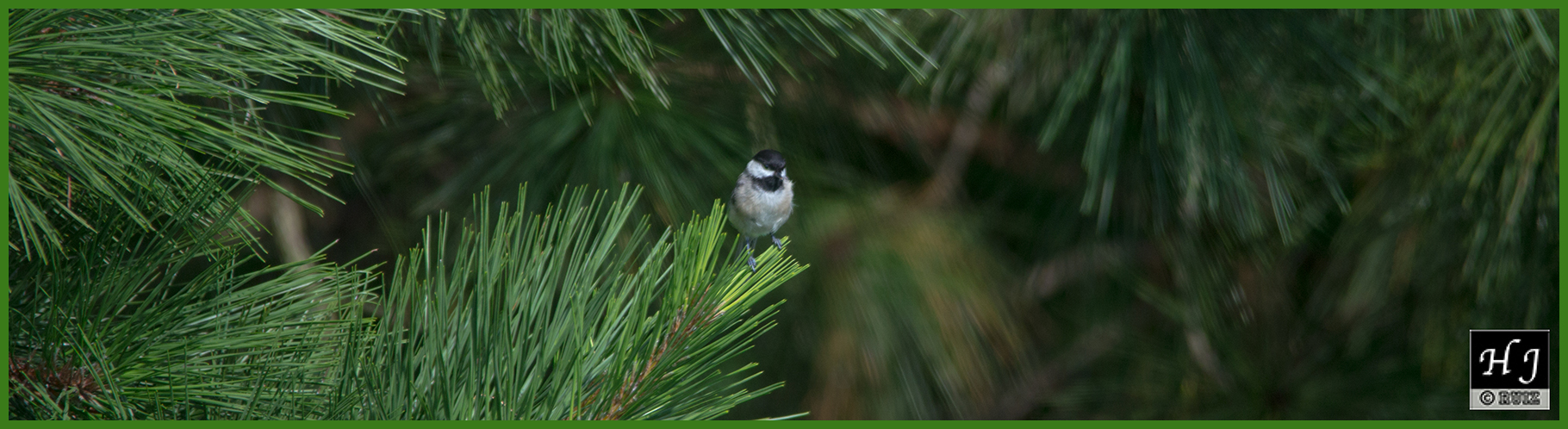
Carolina Chickadee —Click image for enlargement—
© HJ Ruiz – Avian101
Share this:

Laughing Gull
| Scientific classification | |
|---|---|
| Kingdom: | Animalia |
| Phylum: | Chordata |
| Class: | Aves |
| Order: | Charadriiformes |
| Family: | Laridae |
| Genus: | Leucophaeus |
| Species: | L. atricilla |
| Binomial name | |
| Leucophaeus atricilla Linnaeus, 1758 |
|
Photo Gallery


Share this:

Read Past Reviews

Book # 69
Quote from the Author
“A good chuckle is healthy, it helps you break the monotony of a serious life.” ~ H.J. Ruiz


You must be logged in to post a comment.