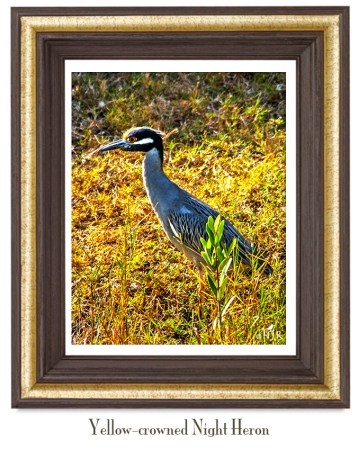
V.I.B. Gallery – Yellow-crowned Night Heron
V.I.B. (VERY IMPORTANT BIRDS) GALLERY
© HJ Ruiz – Avian101
Share this:

What’s Up?
Ruby-throated Hummingbird
Last week I wrote about some hummingbirds that visit my feeders and briefly described some of their activities. One of them was well illustrated via photographs. I should have given more information about the diet these birds are used to.
Nectar from flowers and flowering trees, as well as small insects and spiders, are its main food. Although hummingbirds are well-known to feed on nectar, small arthropods are an important source part of protein, minerals, and vitamins in the diet of adult hummingbirds. Hummingbirds show a slight preference for red, orange, and bright pink tubular flowers as nectar sources, though flowers not adapted to hummingbird pollination (e.g., willow catkins) are also visited. Their diet may also occasionally include sugar-rich tree sap taken from sapsucker wells. The birds feed from flowers using a long, extendable tongue and catch insects on the wing or glean them from flowers, leaves, bark, and spiders’ webs.
Young birds are fed insects for protein since nectar is an insufficient source of protein for the growing birds.
I have some photos for you that fit the above narrative. They depict a hummingbird that has been in contact with a sticky cow web most likely trying to get a laborious spider.
Photo Gallery


© HJ Ruiz – Avian101
Share this:

My Visitor: Field Sparrow
Field Sparrow
The field sparrow (Spizella pusilla) is a small New World sparrow in the family Emberizidae. It is about 140 mm (6 in) long and weighs about 12.5 g (0.4 oz). The head is grey with a rust-coloured crown, white eye-ring and pink bill. The upper parts are brown streaked with black and buff, the breast is buff, the belly is white and the tail is forked. There are two different colour morphs, one being greyer and the other more rufous.
The field sparrow is distributed across eastern Canada and the eastern United States, with northern populations migrating southwards to southern United States and Mexico in the fall. The typical habitat of this bird is bushy country with shrubs and grassland. The nest is a cup-shaped construction built on the ground and hidden beneath a bush or clump of grass. The birds forage on the ground or in low vegetation, feeding mainly on seeds and insects.
Photo Gallery


© HJ Ruiz – Avian101
Share this:

Panoramic View of Birds – American Goldfinch
American Goldfinch (M)
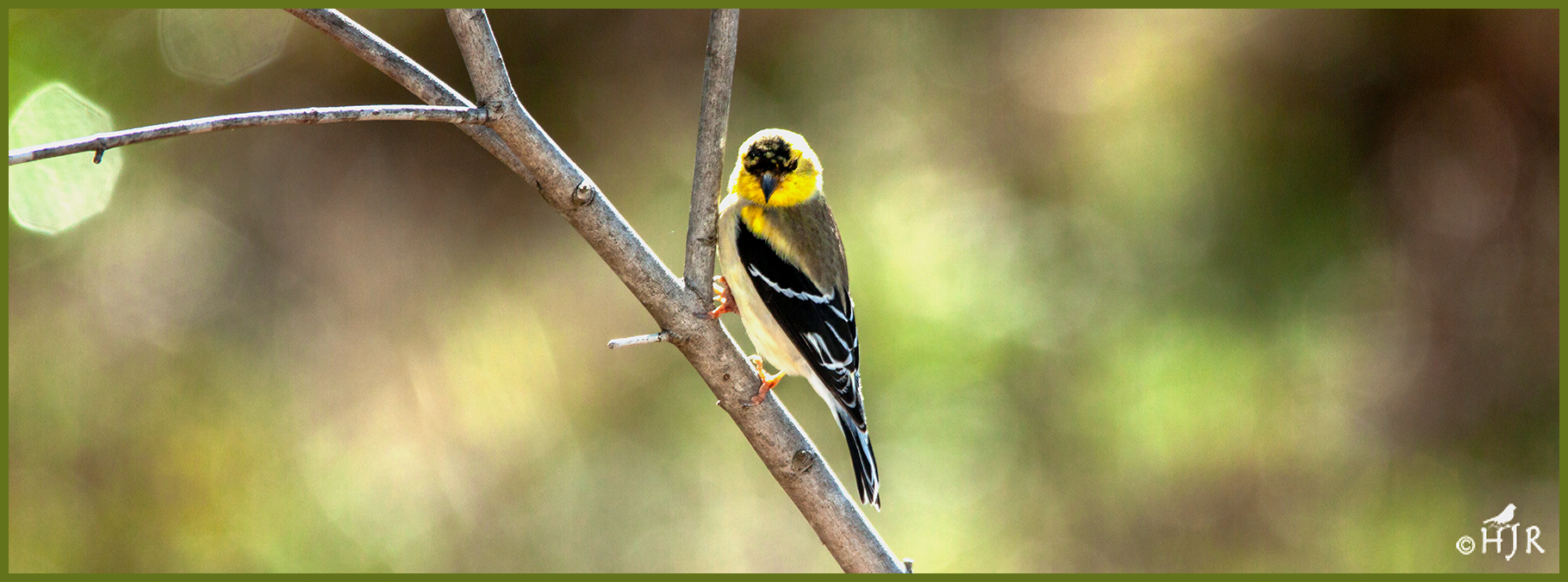
Click to enlarge
© HJ Ruiz – Avian101
Share this:

Read Past Reviews

Book # 69
Quote from the Author
“A good chuckle is healthy, it helps you break the monotony of a serious life.” ~ H.J. Ruiz
 H.J. Ruiz - Avian101
You must be logged in to post a comment.