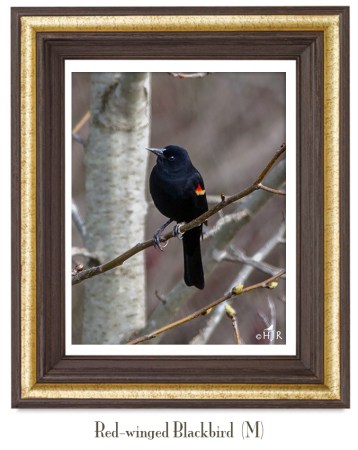
V.I.B. Gallery – Red-winged Blackbird
V.I.B. (VERY IMPORTANT BIRDS) GALLERY
© HJ Ruiz – Avian101
Share this:

What’s Up? – The last snow, for the birds…
The Last Snow, For the Birds…!
Today I’m posting some photos of my birds, shot the day we got the 12 inches of snow. Despite the weather conditions, I could capture some scenes of how the birds cope with the snow, especially while looking for a meal.
After the snow-day we’ve had very cold days and they are getting a bit warmer that allows the seeds and everything to freeze. I just hope it warms up more so we can have more birds come out. This is the coldest Autumn I’ve had in the 12 years I’m living in Georgia.
Photo Gallery


© HJ Ruiz – Avian101
Share this:

Tricolored Heron
Tricolored Heron
The Tricolored Heron (Egretta tricolor), formerly known in North America as the Louisiana heron, is a small heron. It is a resident breeder from the Gulf states of the United States and northern Mexico south through Central America and the Caribbean to central Brazil and Peru. There is some post-breeding dispersal to well north of the nesting range.
Tricolored heron’s breeding habitat is sub-tropical swamps. It nests in colonies, often with other herons, usually on platforms of sticks in trees or shrubs. In each clutch, 3–7 eggs are typically laid.
This species measures from 56 to 76 cm (22 to 30 in) long and has a wingspan of 96 cm (38 in). The slightly larger male heron weighs 415 g (14.6 oz) on average, while the female averages 334 g (11.8 oz). It is a medium-large, long-legged, long-necked heron with a long pointed yellowish or greyish bill with a black tip. The legs and feet are dark.
Adults have a blue-grey head, neck, back and upperwings, with a white line along the neck. The belly is white. In breeding plumage, they have long blue filamentous plumes on the head and neck, and buff ones on the back.
The tricolored heron stalks its prey in shallow or deeper water, often running as it does so. It eats fish, crustaceans, reptiles, and insects.
Photo Gallery


© HJ Ruiz – Avian101
Share this:

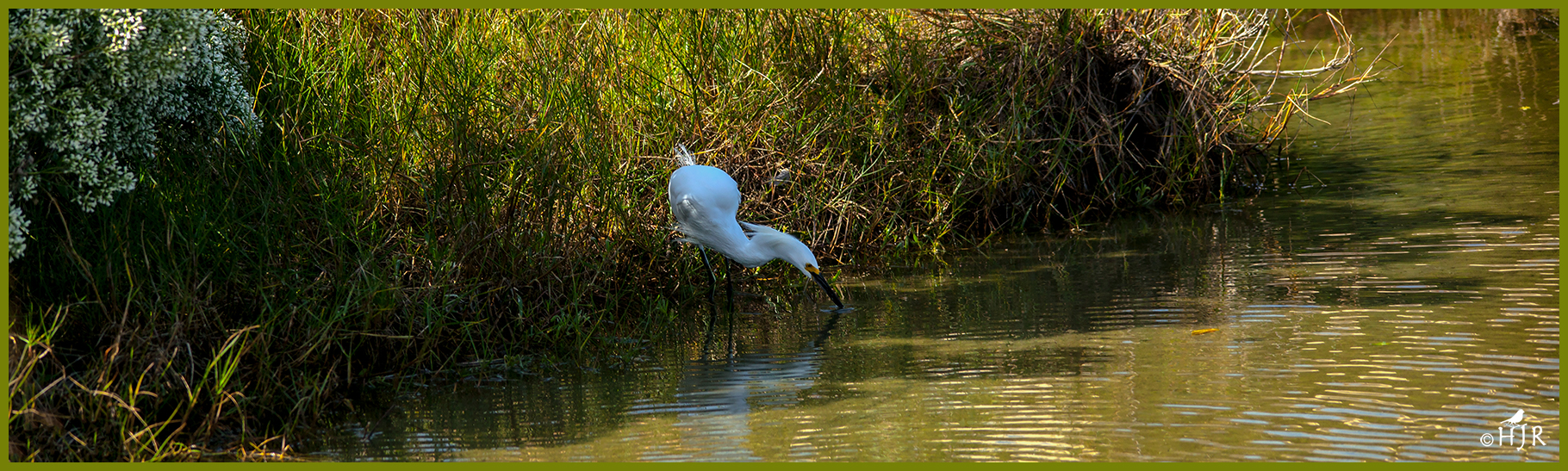
Panoramic View of Birds – Snowy Egret
Snowy Egret
Click to enlarge
© HJ Ruiz – Avian101
Share this:

Read Past Reviews

Book # 69
Quote from the Author
“A good chuckle is healthy, it helps you break the monotony of a serious life.” ~ H.J. Ruiz
 H.J. Ruiz - Avian101
You must be logged in to post a comment.