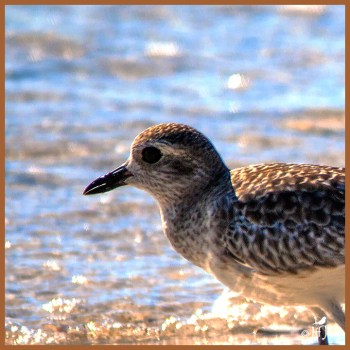
Close Friends – Golden Plover
Golden Plover
© HJ Ruiz – Avian101
Share this:

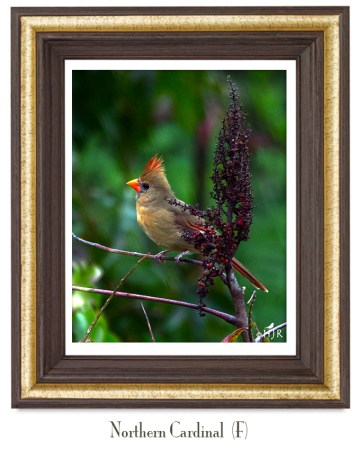
V.I.B. Gallery – Northern Cardinal
V.I.B. (VERY IMPORTANT BIRDS) GALLERY
© HJ Ruiz – Avian101
Share this:

What’s Up? – Better Days are coming…
Better Days are Coming…
When the weather temperatures, are not within the average numbers for the Season, all wildlife habitual patterns change accordingly. In the case of birds, it becomes evident the decrease of individuals of all local species from the backyard feeders. I’m not even considering the birds that regularly migrate during Winter time.
My backyard feeders are not frequented by birds at the same patterns and many of those birds are not following their usual habits. Believe or not, I waste a great amount of feed because the weather ruins it with rain, frost or wind.
My opportunities to getting good photo shots are very limited because of the weather. It’s very cold, too breezy, dark and cloudy or dark and rainy…Non of these conditions are propitious to a Photographer.
I just hope that we will get better weather, more favorable and more suitable for this time of the year, here in Georgia.
Photo Gallery


© HJ Ruiz – Avian101
Share this:

Snowy Egret
Snowy Egret
The Snowy Egret (Egretta thula) is a small white heron. The genus name comes from the Provençal French for the little egret aigrette, a diminutive of aigron, “heron”.
The snowy egret is the American counterpart to the very similar Old World little egret, which has established a foothold in the Bahamas. At one time, the beautiful plumes of the snowy egret were in great demand by market hunters as decorations for women’s hats. This reduced the population of the species to dangerously low levels.
Now protected in the United States by law, under the Migratory Bird Treaty Act, this bird’s population has rebounded.
Snowy egrets nest in colonies on thick vegetation in isolated places, such as barrier islands, dredge-spoil islands, salt marsh islands, swamps, and marshes. They often change location from year to year. During the breeding season, snowy egrets feed in estuaries, salt-marshes, tidal channels, shallow bays, and mangroves. They winter in mangroves, saltwater lagoons, freshwater swamps, grassy ponds, and temporary pools, and forage on beaches, shallow reefs, and wet fields.
Photo Gallery


© HJ Ruiz – Avian101
Share this:

Read Past Reviews

Book # 69
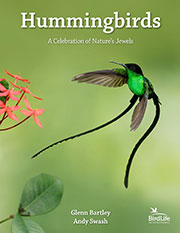
Quote from the Author
“A good chuckle is healthy, it helps you break the monotony of a serious life.” ~ H.J. Ruiz
 H.J. Ruiz - Avian101
You must be logged in to post a comment.