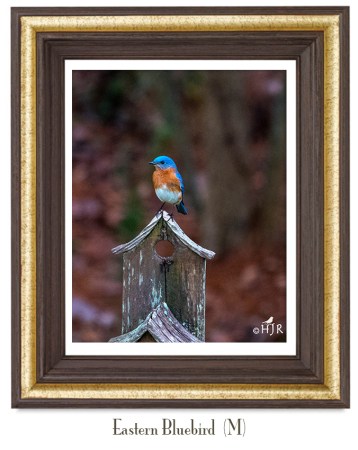
V.I.B. Gallery – Eastern Bluebird
V.I.B. (VERY IMPORTANT BIRDS) GALLERY
© HJ Ruiz – Avian101
Share this:

What’s Up? – Not Bad at All…
Not Bad at All…
We’ve had a wonderful spring type, sunny and warm days! Very much as I suggested it would be last week. Today, as I write this, it’s raining intensely.
It was very therapeutic to have warm days, being able to open windows and seeing much more bird traffic in my backyard. here is a list of birds I’ve seen:
- American Robin
- Song Sparrow
- American Goldfinch (M & F)
- Eastern Bluebird (M & F)
- House Finch (M & F)
- Mourning Dove
- Northern Cardinal (M & F)
- Northern Mockingbird
- Carolina Wren
- Carolina Chickadee
- Brown-headed Cowbird (M & F)
- Brown-headed Nuthatch
- European Starling
- Pine Warbler
- Yellow-rumped Warbler
- Field Sparrow
- Tufted Titmouse
- Downy Woodpecker
- “Nutcase” (Squirrel)
As you can see, I had a good number of avian visitors…With their presence in my backyard it makes me happy and glad for their return. I have a nice photo gallery for you, The photos are from some of the birds listed above.
Photo Gallery


Extra
A friend sent me the following cut out from an Alabama Community Newspaper… Have a look:

Click to enlarge
© HJ Ruiz – Avian101
Share this:

Reddish Egret
Reddish Egret
The Reddish Egret (Egretta rufescens) is a medium-sized heron. It is a resident breeder in Central America, The Bahamas, the Caribbean, the Gulf Coast of the United States, and Mexico. There is post-breeding dispersal to well north of the nesting range. In the past, this bird was a victim of the plume trade.
According to the Texas Parks and Wildlife Department, there are only 1,500 to 2,000 nesting pairs of reddish egrets in the United States — and most of these are in Texas.They are classified as “threatened” in Texas and receive special protection.
The reddish egret is considered one of the most active herons, and is often seen on the move. It stalks its prey visually in shallow water far more actively than other herons and egrets, frequently running energetically and using the shadow of its wings to reduce glare on the water once it is in position to spear a fish; the result is a fascinating dance.
Photo Gallery


© HJ Ruiz – Avian101
Share this:

Panoramic View of Birds – Yellow-rumped Warbler
Yellow – Rumped Warbler
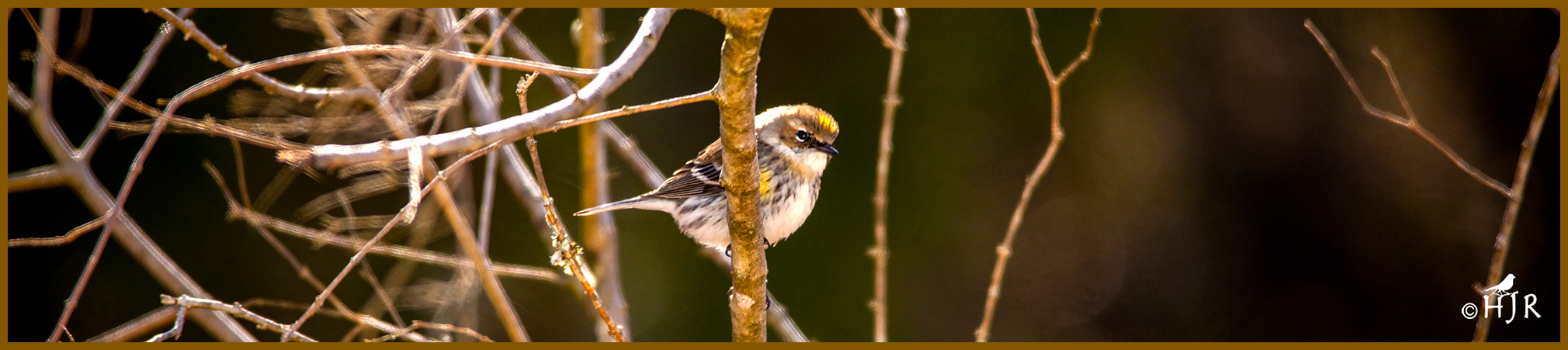
Click to enlarge
© HJ Ruiz – Avian101
Share this:

Read Past Reviews

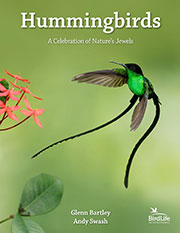
Book # 69
Quote from the Author
“A good chuckle is healthy, it helps you break the monotony of a serious life.” ~ H.J. Ruiz
 H.J. Ruiz - Avian101
You must be logged in to post a comment.