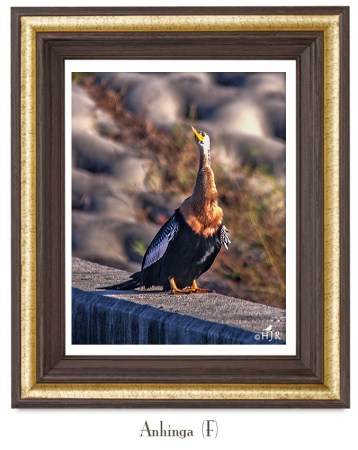
V.I.B. Gallery – Anhinga
V.I.B. (VERY IMPORTANT BIRDS) GALLERY
© HJ Ruiz – Avian101
Share this:

What’s Up? – You Feed Them, They’ll Come…
You Feed Them, They’ll Come…
Post: March 25, 2018
This time I’m going to skip writing about weather. I prefer writing about what’s going on in my backyard. Little by little, the amount of birds is increasing because they are returning from their migrations. I have photos of twelve species on today’s post not including the Northern Cardinals (Saturdays only).
- Red-winged Blackbird (M), he’s been flitting around and trying to find the best way to get the seeds he likes. He arrived with a group of cowbirds.
- I have a couple of Northern Mockingbirds that are changing the relax old ways in my backyard. They have a nest in a Holly Tree near my front porch. The male (Sheriff) is so dedicated now to shoo the other birds from the deck feeders. I think he’s waiting for new family and wants to have food for the female that rarely shows up to eat.
- For a few days I’ve seen a group of Brown-headed Cowbirds coming to eat and then leave then come back again hours later to do the same…(what’s new about that?)
- House Finches as usual, show up in couples and later will show up in groups of new families.
- Carolina Chickadees are a fixture in my backyard, so full of energy. They are lovable little birds.
- The Field Sparrows are pacific birds that only fight among themselves. They are nice behaving with the rest of the birds.
- Mourning Doves are many too but believe it or not they are aggressive and pushy with other birds and they are even more aggressive with their peers. (So much for peace…)
- This solitary Pine Warbler minds his own business and avoids all conflicts. I think he’s planning on waiting for a mate to show up and live happy ever after.
- European Starling, it’s part of a group of blackbirds coming and going.
- Song Sparrows have been nesting in my backyard for many years, I see them all year round. They hop all over , top and bottom of the deck and everywhere. Good guys though.
- My new addition in the backyard are the Downy Woodpeckers. Cute little fellows, they don’t hang out too long so you have to act fast if you want photos.
- Finally…the Carolina Wrens that nest here also, they can be heard all the time but love to move fast on the ground, where they prefer to feed themselves. Love their powerful voice.
Photo Gallery


© HJ Ruiz – Avian101
Share this:

American Oystercatcher
American Oystercatcher
The American Oystercatcher (Haematopus palliatus), occasionally called the American pied oystercatcher, is a member of family Haematopodidae.
The American oystercatcher has distinctive black and white plumage and a long, bright orange beak. The head and breast are black and the back, wings and tail greyish-black. The underparts are white, as are feathers on the inner part of the wing which become visible during flight.
The American oystercatcher is found on the Atlantic coast of North America from New England to northern Florida, where it is also found on the Gulf coast, and south to Brazil, Uruguay and Argentina. It is found also in the Pacific coast of California, Mexico, Central America, Peru, and Chile. In the 19th century they became locally extinct in the northeast of the United States due to market hunting and egg collecting. After receiving protection under the Migratory Bird Treaty Act, their range extended northward to re-occupy historical habitat in New England.
Photo Gallery


© HJ Ruiz – Avian101
Share this:

Panoramic View of Birds – American White Ibis
American White Ibis
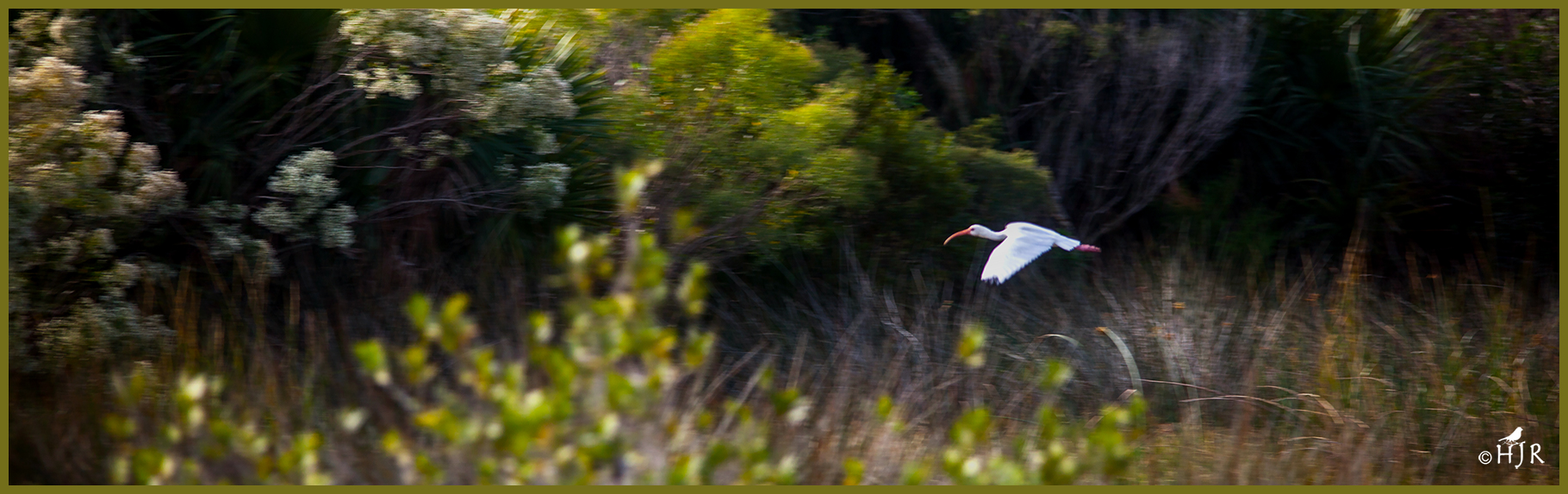
Click to enlarge
© HJ Ruiz – Avian101
Share this:

Read Past Reviews

Book # 69
Quote from the Author
“A good chuckle is healthy, it helps you break the monotony of a serious life.” ~ H.J. Ruiz
 H.J. Ruiz - Avian101
You must be logged in to post a comment.