
Bird’s ID – Carolina Wren
Carolina Wren
The Carolina Wren (Thryothorus ludovicianus) is a common species of wren that is a resident in the eastern half of the United States of America, the extreme south of Ontario, Canada, and the extreme northeast of Mexico. Severe winters restrict the northern limits of their range while favorable weather conditions lead to a northward extension of their breeding range. Their preferred habitat is in dense cover in forests, farm edges and suburban areas. This wren is the state bird of South Carolina.
There are seven recognized subspecies across the range of these wrens and they differ slightly in song and appearance. The birds are generally inconspicuous, avoiding the open for extended periods of time. When out in the open, they investigate their surroundings and are rarely stationary. After finding a mate, pairs maintain a territory and stay together for several years. Both sexes give out alarm calls, but only males sing to advertise territory. Carolina wrens raise multiple broods during the summer breeding season, but can fall victim to brood parasitism by brown-headed cowbirds, among other species. Some populations have been affected by mercury contamination.
Photo Gallery
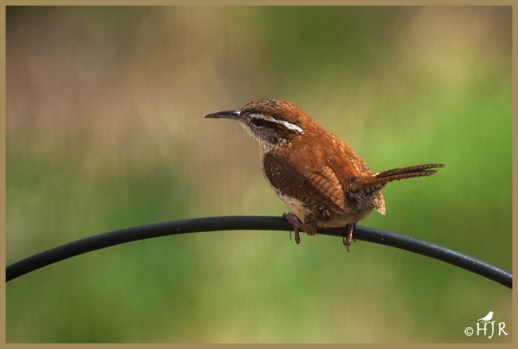

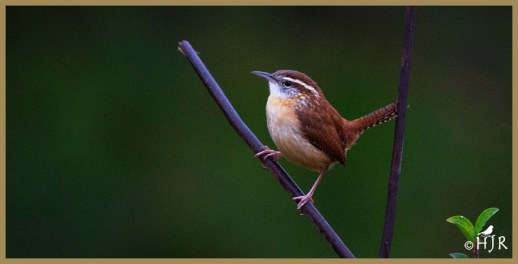
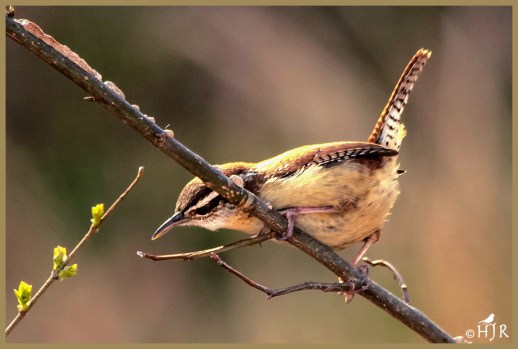
© HJ Ruiz – Avian101
Share this:

Photo Capture # 12 – Mourning Doves
Mourning Doves – “Three Amigos”
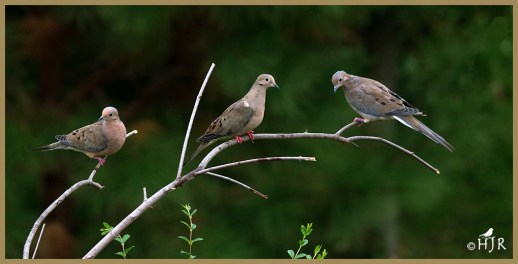
© ˙HJ Ruiz – Avian101
Share this:

Bird’s ID – White-throated Sparrow
White -throated Sparrow
The White-throated Sparrow (Zonotrichia albicollis) is a passerine bird of the American sparrow family Passerellidae.
There are two adult plumage variations known as the tan-striped and white-striped forms. On the white-striped form the crown is black with a white central stripe. The supercilium is white as well. The auriculars are gray with the upper edge forming a black eye line.
On the tan form, the crown is dark brown with a tan central stripe. The supercilium is tan as well. The auriculars are gray/light brown with the upper edge forming a brown eye line. Both variations feature dark eyes, a white throat, yellow lores and gray bill. There is variation and some individuals may show dark lateral stripes of each side of the throat.
They almost always pair with the opposite color morph for breeding. The two color morphs occur in approximately equal numbers. Both male and female white-striped birds are more aggressive than tan-striped birds during the breeding season.
The breast has gray/tan streaks and the streaks continue down the flanks but the belly is generally light gray. The wings are rufous with two distinct white wing bars. Sexes are morphologically similar.
Photo Gallery
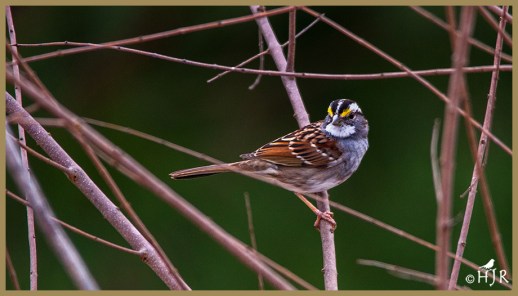
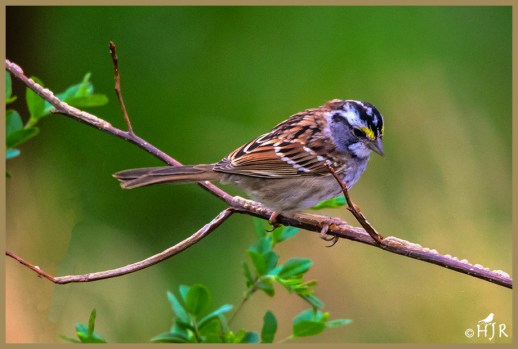
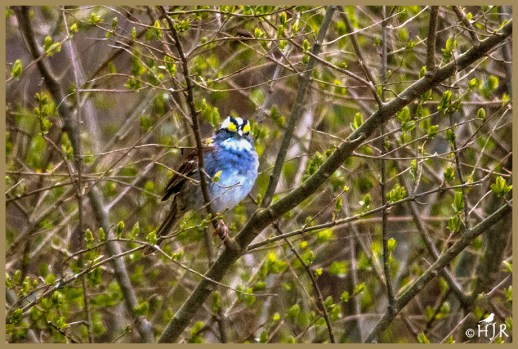
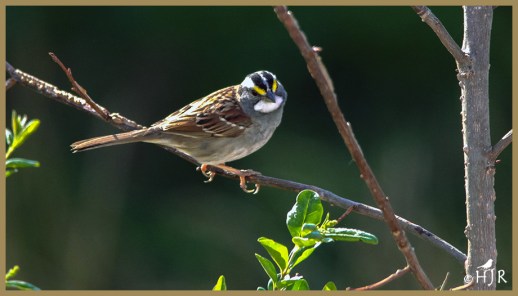
© HJ Ruiz – Avian101
Share this:

Photo Capture # 11 – House Finches
House Finch Family – “Chow time”

House Finch family – “Chow time”
© HJ Ruiz – Avian101
Share this:

Read Past Reviews

Book # 69
Quote from the Author
“A good chuckle is healthy, it helps you break the monotony of a serious life.” ~ H.J. Ruiz
 H.J. Ruiz - Avian101
You must be logged in to post a comment.