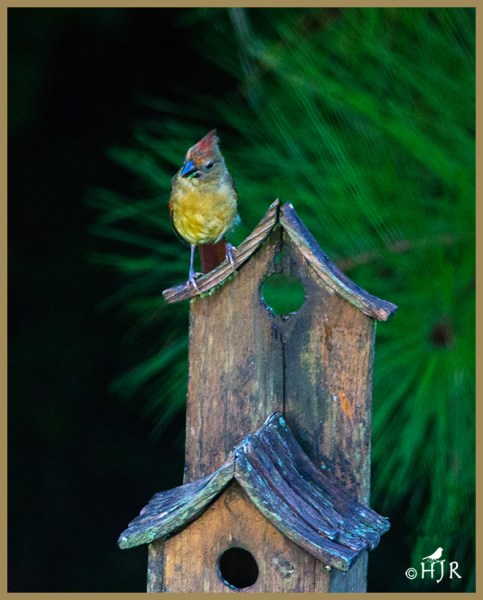
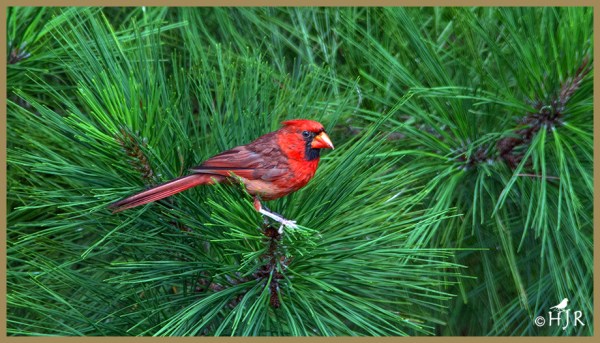
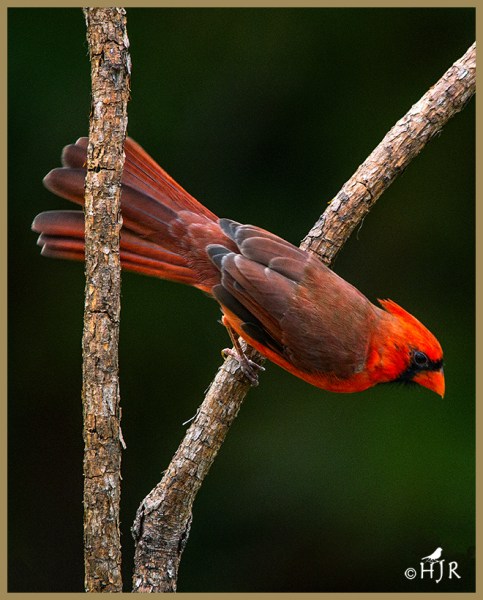
Red Gallery – Northern Cardinal
Northern cardinal males normally metabolize carotenoid pigments to create plumage pigmentation of a color different from the ingested pigment. When fed only yellow pigments, males become a pale red color. A few “yellow morph” cardinals lack the enzyme to do this conversion. Their beak and feathers (except for black face mask) are yellow. Sightings are rare.
Photo Gallery

© HJ Ruiz – Avian101
Share this:

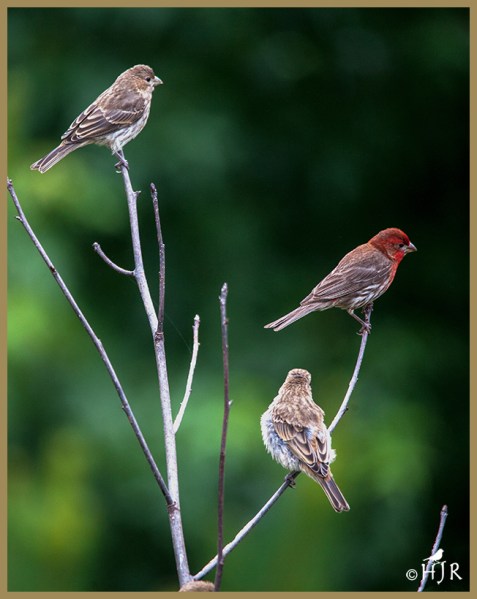
Bird’s ID – House Finch
House Finch
The House Finch (Haemorhous mexicanus) is a bird in the finch family Fringillidae. It is native to western North America, and has been introduced to the eastern half of the continent and Hawaii. This species and the other “American rosefinches” are placed in the genus Haemorhous.
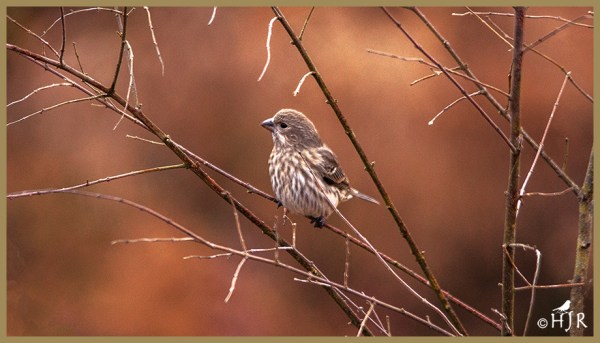
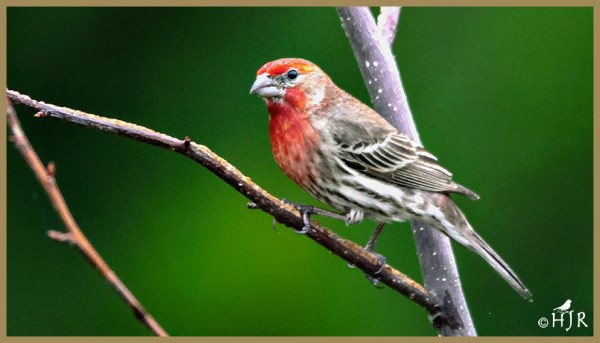
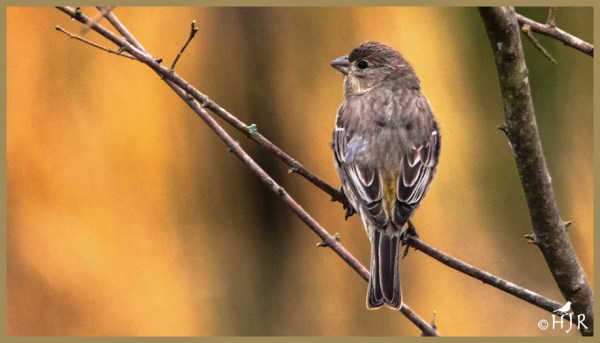
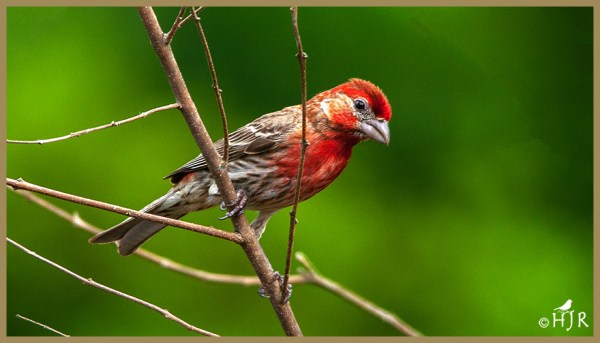
This is a moderately-sized finch. Adult birds are 12.5 to 15 cm (4.9 to 5.9 in) and span 20 to 25 cm (7.9 to 9.8 in). to 0.71 in). Adults have a long, square-tipped brown tail and are a brown or dull-brown color across the back with some shading into deep gray on the wing feathers. Breast and belly feathers may be streaked; the flanks usually are. In most cases, adult males’ heads, necks and shoulders are reddish. This color sometimes extends to the belly and down the back, between the wings. Male coloration varies in intensity with the seasons and is derived from the berries and fruits in its diet. As a result, the colors range from pale straw-yellow through bright orange (both rare) to deep, intense red. Adult females have brown upper parts and streaked under parts.
Their song is a rapid, cheery warble or a variety of chirps.
During courtship, the male will touch bills with the female. He may then present the female with choice bits of food, and if she mimics the behavior of a hungry chick, he may actually feed her. The male also feeds the female during breeding and incubation of the eggs, and raising of the young, and the male is the primary feeder of the fledgelings (who can be differentiated from the females by the pin feathers remaining on their heads). Females are typically attracted to the males with the deepest pigment of red to their head, more so than the occasional orange or yellowish-headed males that sometimes occur.
Photo Gallery
© HJ Ruiz – Avian101
Share this:

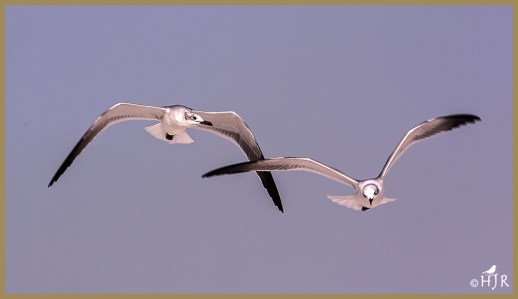
Photo Capture # 27 – Laughing Gulls
Laughing Gulls
Laughing Gulls
© HJ Ruiz – Avian101
Share this:

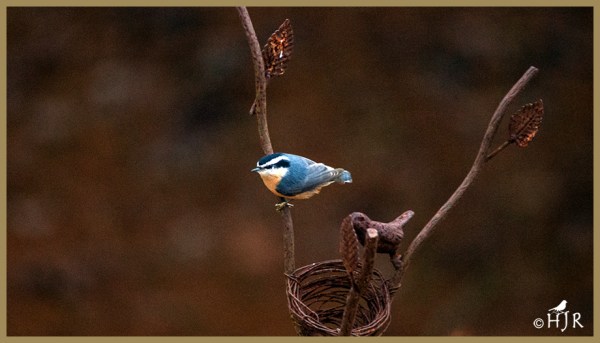
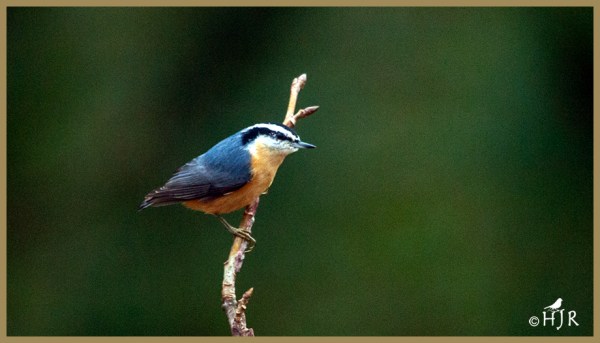
Bird’s ID – Red-breasted Nuthatch
Red-breasted Nuthatch
The Red-breasted Nuthatch (Sitta canadensis) is a small songbird. The adult has blue-grey upper parts with cinnamon underparts, a white throat and face with a black stripe through the eyes, a straight grey bill and a black crown. Its call, which has been likened to a tin trumpet, is high-pitched and nasal. It breeds in coniferous forests across Canada, Alaska and the northeastern and western United States. Though often a permanent resident, it regularly irrupts further south if its food supply fails. There are records of vagrants occurring as far south as the Gulf Coast and northern Mexico. It forages on the trunks and large branches of trees, often descending head first, sometimes catching insects in flight. It eats mainly insects and seeds, especially from conifers. It excavates its nest in dead wood, often close to the ground, smearing the entrance with pitch.
The red-breasted nuthatch is a small passerine, measuring 4.5 in (11 cm) in length, with a wingspan of 8.5 in (22 cm) and a weight of 9.9 g (0.35 oz). Its back and upper tail are bluish, and its underparts rust-colored. It has a black cap and eye line and a white supercilium (eyebrow). Sexes are similarly plumaged, though females and youngsters have duller heads and paler underparts.
Like all nuthatches, the red-breasted nuthatch is an acrobatic species, hitching itself up and down tree trunks and branches to look for food. It goes headfirst when climbing down. It can “walk” on the underside of branches. Unlike woodpeckers and creepers, it does not use its tail as a prop while climbing. It tends to forage singly or in pairs.
The red-breasted nuthatch’s diet changes depending on the season. In the summer, it eats mostly insects, occasionally even fly catching, while in the winter, it switches to conifer seeds. At feeders it will take sunflower seeds, peanut butter, and suet. It often wedges food pieces in bark crevices in order to break them up with the bill (as opposed to holding the food in their feet, like the black-capped chickadee does).
Important Note:
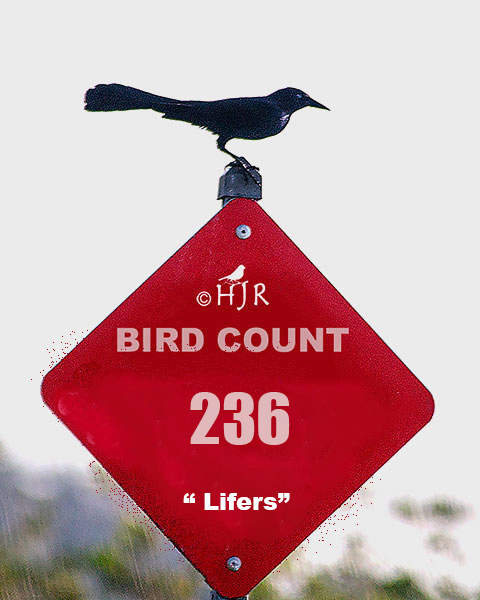
The Red-breasted Nuthatch adds the Avian101 “Lifer” list count to # 216
Photo Gallery

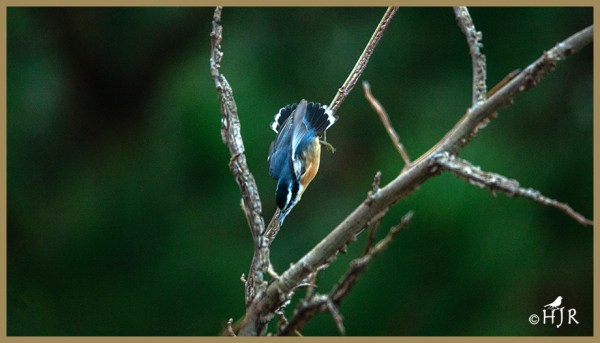
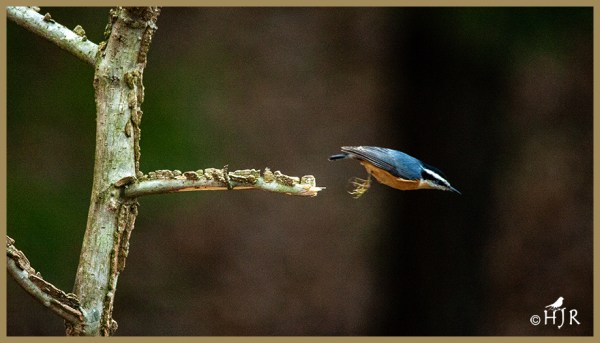
© HJ Ruiz – Avian101
Share this:

Read Past Reviews

Book # 69
Quote from the Author
“A good chuckle is healthy, it helps you break the monotony of a serious life.” ~ H.J. Ruiz


You must be logged in to post a comment.