Photo Capture # 43 – Eastern Bluebird and Brown-headed Nuthatch
Eastern Bluebird and Brown-headed Nuthatch
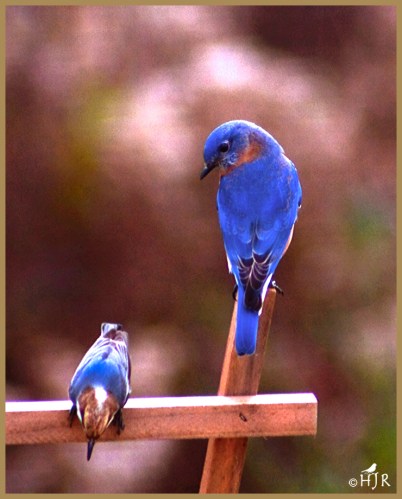
Eastern Bluebird and Brown-headed Nuthatch
© HJ Ruiz – Avian101
Share this:

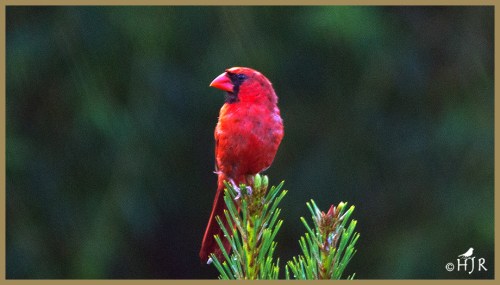
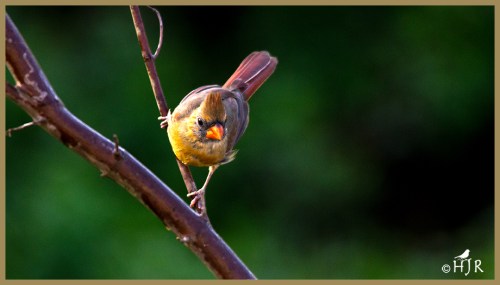
Red Gallery – Northern Cardinal
Northern cardinals are preyed upon by a wide variety of predators native to North America, including falcons, all Accipiter hawks, shrikes, bald eagles, golden eagles and several owls, including long-eared owls, and eastern screech owls. Predators of chicks and eggs include milk snakes, coluber constrictors, blue jays, eastern gray squirrels, fox squirrels, eastern chipmunks, and domestic cats.


© HJ Ruiz – Avian101
Share this:

Bird’s ID – Palm Warbler
Palm Warbler
The Palm Warbler (Setophaga palmarum) is a small songbird of the New World warbler family.
The species comprises two distinct subspecies that may merit specific status.
Palm warblers breed in open coniferous bogs and edge east of the Continental Divide, across Canada and the northeastern United States.
These birds migrate to the southeastern United States, the Yucatán Peninsula, islands of the Caribbean, and eastern Nicaragua south to Panama to winter. They are one of the earlier migrants to return to their breeding grounds in the spring, often completing their migration almost two months before most other warblers. Unlike most Setophaga species, the Palm warbler’s winter range includes much of the Atlantic coast of North America, extending as far north as southern Nova Scotia.
Palm warbler has been recorded as a vagrant to Iceland.
Palm warbler nests take the form of an open cup, usually situated on or near the ground in an open area.
Palm warblers forage on the ground much more than other warblers, sometimes flying to catch insects. These birds mainly eat insects and berries. Their constant tail bobbing is an identifying characteristic. Kirtland’s, prairie, and palm warblers are the only Setophaga species that incessantly bob their tails.
The song of this bird is a monotonous buzzy trill. The call is a sharp chek.
Photo Gallery
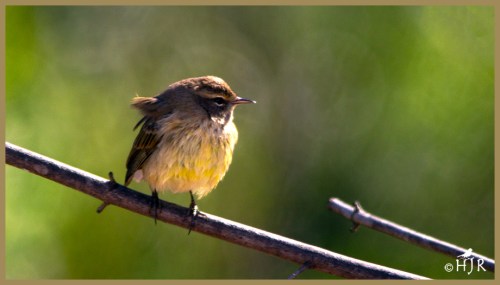
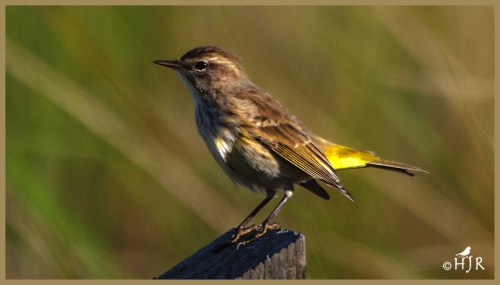
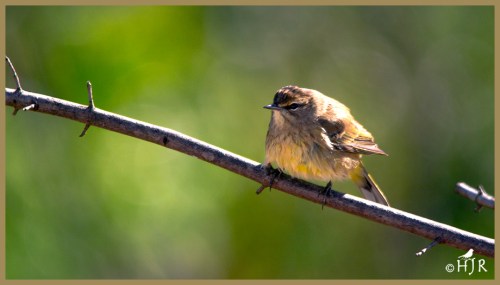
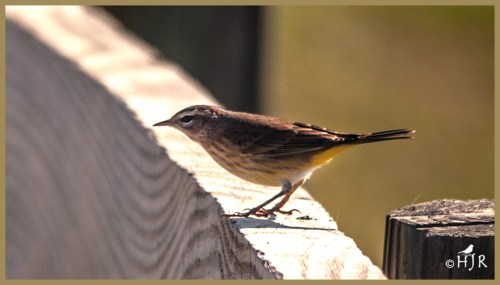
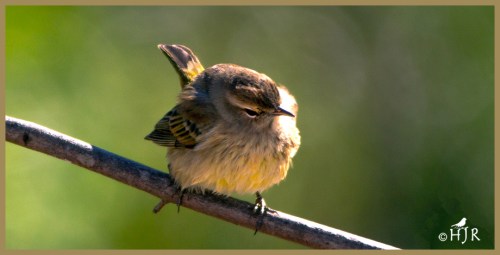
© HJ Ruiz – Avian101
Share this:

Photo Capture # 42 – Black Skimmers
Black Skimmers
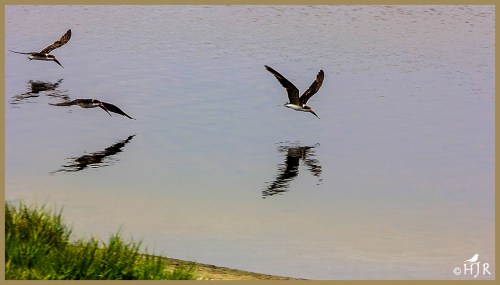
Black Skimmers
© HJ Ruiz – Avian101
Share this:

Read Past Reviews

Book # 69
Quote from the Author
“A good chuckle is healthy, it helps you break the monotony of a serious life.” ~ H.J. Ruiz


You must be logged in to post a comment.