
Bird’s ID – Red-headed Woodpecker
Red-headed Woodpecker
The Red-headed Woodpecker (Melanerpes erythrocephalus) is a small or medium-sized woodpecker from temperate North America. Their breeding habitat is open country across southern Canada and the eastern-central United States. It is rated as least concern on the International Union for Conservation of Nature (IUCN)’s Red List of Endangered species, having been downlisted from near threatened in 2018.
Adults are strikingly tri-colored, with a black back and tail and a red head and neck. Their underparts are mainly white. The wings are black with white secondary remiges. Adult males and females are identical in plumage. Juveniles have very similar markings, but have an all grey head. While red-bellied woodpeckers have some bright red on the backs of their necks and heads, red-headed woodpeckers have a much deeper red that covers their entire heads and necks, as well as a dramatically different overall plumage pattern.
These are mid-sized woodpeckers. Both sexes measure from 19 to 25 cm (7.5 to 9.8 in) in length, with a wingspan of 42.5 cm (16.7 in). They weigh from 56 to 97 g (2.0 to 3.4 oz) with an average of 76 g (2.7 oz). Each wing measures 12.7–15 cm (5.0–5.9 in), the tail measures 6.6–8.5 cm (2.6–3.3 in), the bill measures 2.1–3 cm (0.83–1.18 in) and the tarsus measures 1.9–2.5 cm (0.75–0.98 in). The maximum longevity in the wild is 9.9 years. They give a tchur-tchur call or drum on their territory.
These birds fly to catch insects in the air or on the ground, forage on trees or gather and store nuts. They are omnivorous, eating insects, seeds, fruits, berries, nuts, and occasionally small rodents and even the eggs of other birds. About two thirds of their diet is made up of plants. They nest in a cavity in a dead tree, utility pole, or a dead part of a tree that is between 2.45 and 24.5 m (8.0 and 80.4 ft) above the ground. They lay 4 to 7 eggs in early May which are incubated for two weeks. Two broods can be raised in a single nesting season. Northern birds migrate to the southern parts of the range, with most having arrived on the breeding range by late April, and having left for winter quarters by late October; southern birds are often permanent residents.
Photo Gallery


© HJ Ruiz – Avian101
Share this:

Photo Capture # 53 – Brown Pelicans
Brown Pelicans
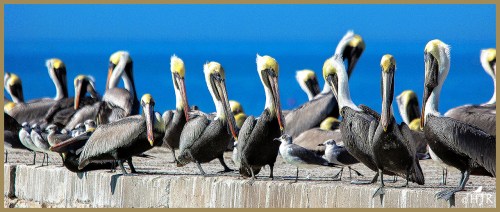
Brown Pelicans
© HJ Ruiz – Avian101
Share this:

What’s Up? – Back from Vacation
Back from Vacation…
My family and I are back from a wonderful vacation in Florida. This vacation has been one of the best we’ve had in long time. While at we were enjoying warm and sunny week, here, at home in Georgia it had rained buckets every day!
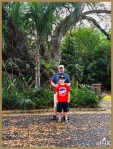
HJ & Tyler – Clearwater, FL
We went to Clearwater first, we went to the beach where Tyler had a ball! He loves the beach and the pools. We went to Sandy Key Island also, while my wife went to the beach with Tyler, I shot pictures at the salt marsh nearby.
We continued our trip south, across Tampa Bay and reached Bradenton where we visited the beach, the place was in excellent conditions, properly renewed infrastructure and the weather in optimum conditions.


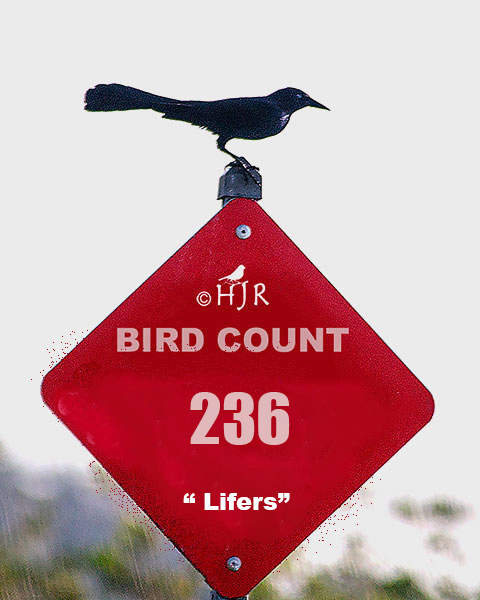
We then moved to Sarasota, where we stayed a bit longer. From there, we went to Ackerman Park, Sarasota Audubon Natural Center, Celery Fields. (See photos). My assistant is showing the signs in reference.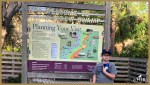
After being to those places, we drove south again, to reach Audubon Corkscrew Swamp in Naples where we had a long hike on the boardwalk. Tyler was happy, looking for anything that moved within the swamp. It was very interesting, not so many birds at that time.
One of the Audubon’s guides answered some of Tyler’s questions and the man gave him a photograph of a baby aligator hitching a ride on mama aligator’s back. Tyler is very excited with the photo and he’ll be taking it to School on Monday to do show and tale.
We returned to Sarasota and stayed a bit more, enjoyed the lovely sunsets in the Gulf of Mexico.
In general, my wife and Tyler were very happy and satisfied with our wonderful vacation, so was I.
Photo Gallery


Eating Lunch With…
Brown – headed Nuthatch
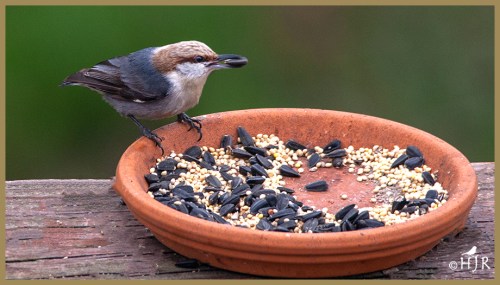
Brown-headed Nuthatch
© HJ Ruiz – Avian101
Share this:

Photo Capture # 52 – Purple Martins
Purple Martins F & M
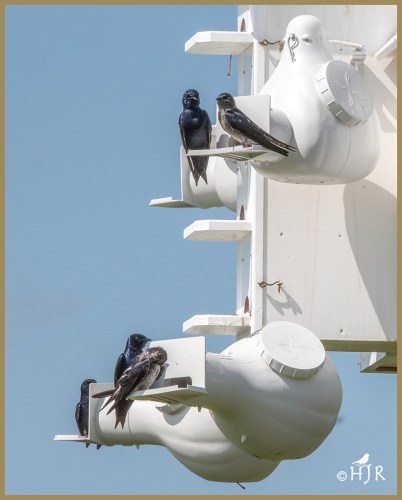
Purple Martins F & M
© HJ Ruiz – Avian101
Share this:

Read Past Reviews

Book # 69
Quote from the Author
“A good chuckle is healthy, it helps you break the monotony of a serious life.” ~ H.J. Ruiz


You must be logged in to post a comment.