Red Gallery – Northern Cardinal
Photo Gallery


© HJ Ruiz – Avian101
Share this:

Photography of Birds – Set # 50
Set # 50
Reddish Egret

Reddish Egret
The reddish egret is considered one of the most active herons, and is often seen on the move. It stalks its prey visually in shallow water far more actively than other herons and egrets, frequently running energetically and using the shadow of its wings to reduce glare on the water once it is in position to spear a fish; the result is a fascinating dance.
Red-winged Blackbird

Red-winged Blackbird (F)
Claims have been made that it is the most abundant living land bird in North America, as bird-counting censuses of wintering red-winged blackbirds sometimes show that loose flocks can number in excess of a million birds per flock and the full number of breeding pairs across North and Central America may exceed 250 million in peak years.
© HJ Ruiz – Avian101
Share this:

Photography of Birds – Set # 49
Set # 49 – (Local Birds)
Photo Gallery

House Finch (M)

Lincoln’s Sparrow

European Starling

Mourning Dove
Our weather predictions are calling for a week of sunshine and warmer weather. It really makes a big difference from what we’ve been getting for long time. This change will encourage more birds to get in our area, as it was normally. I’m happy that my birds are thriving nicely and in good health. I just hope that we get over the pandemic and we can live our lives as it should. I pray for that to happen.
© HJ Ruiz – Avian101
Share this:

Photography of Birds – Set # 48
Set # 48
Ring-billed Gull
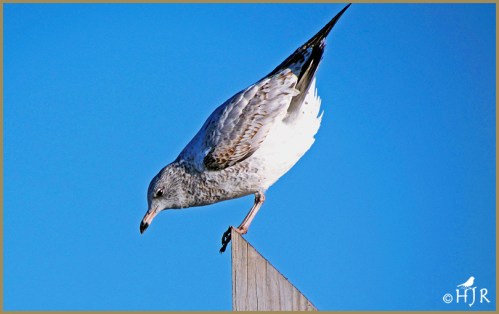
Ring-billed Gull
Ring-billed gulls forage in flight or pick up objects while swimming, walking or wading. They also steal food from other birds and frequently scavenge. They are omnivorous; their diet may include insects, fish, grain, eggs, earthworms and rodents. These birds are opportunistic and have adapted well to taking food when discarded or even left unattended by people.
Willet
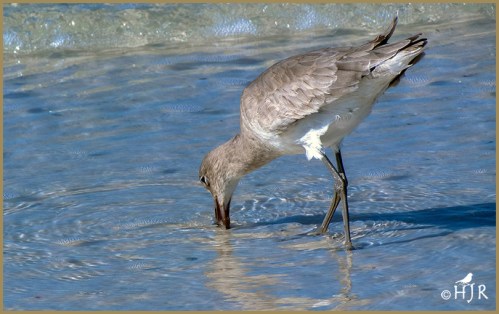
Willet
Willets are flexible in their feeding habits and hunt by walking steadily and pecking prey from the substrate, although they also probe into the mud or silt with their sensitive bill and may actively stalk larger prey in shallow water. A favored prey on the coasts are small fiddler crabs as well as mole crabs, worms, clams and other invertebrates.
© HJ Ruiz – Avian101
Share this:

Read Past Reviews

Book # 69
Quote from the Author
“A good chuckle is healthy, it helps you break the monotony of a serious life.” ~ H.J. Ruiz


You must be logged in to post a comment.