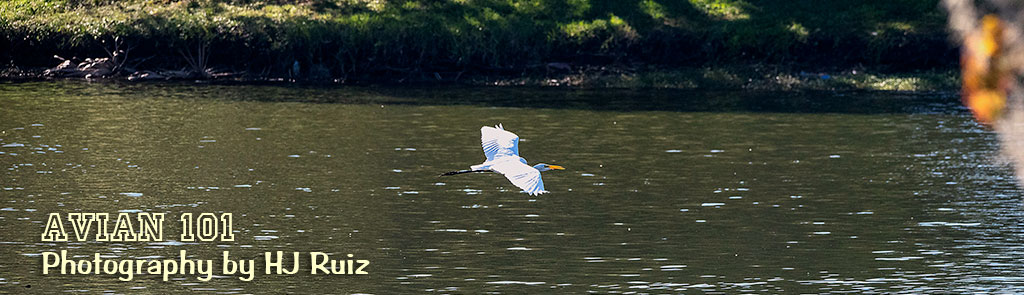
Red Gallery – Northern Cardinal

Photo Gallery


© HJ Ruiz – Avian101
Share this:

Photography of Birds – Set # 91
Set # 91
Dark-eyed Junco
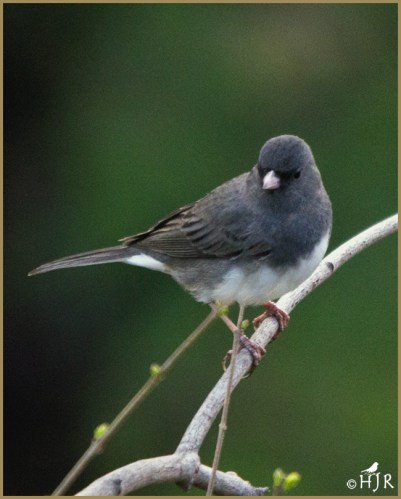
Dark-eyed Junco
Their breeding habitat is coniferous or mixed forest areas throughout North America. In otherwise optimal conditions they also utilize other habitat, but at the southern margin of its range it can only persist in its favorite habitat. Northern birds migrate further south, arriving in their winter quarters between mid-September and November and leaving to breed from mid-March onwards, with almost all gone by the end of April or so. Many populations are permanent residents or altitudinal migrants, while in cold years birds may choose to stay in their winter range and breed there. For example, in the Sierra Nevada of eastern California, J. hymealis populations will migrate to winter ranges 5,000–7,000 feet (1,500–2,100 m) lower than their summer range. In winter, juncos are familiar in and around towns, and in many places are the most common birds at feeders. These birds forage on the ground. In winter, they often forage in flocks that may contain several subspecies. They mainly eat insects and seeds.
Common Grackle
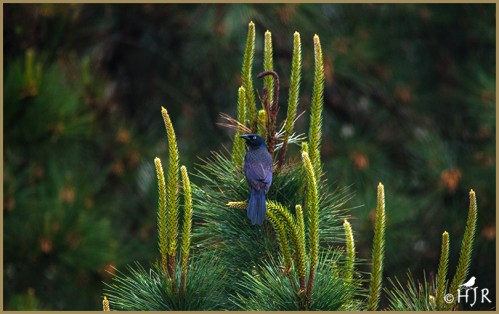
Common Grackle
Grackles have a unique adaptation in the keel within their bill which allows them to crack and cut hard nuts or kernels. The keel projects downward from the horny palate and is sharper and more abrupt anterior. It extends below the level of the tomium and is used in a sawing motion to score open acorns or dried kernels. Large adductor muscle within their jaw compared to other icterids also makes this adaptation even more useful for opening hard seeds and acorns.
Along with some other species of grackles, the common grackle is known to practice “anting”, rubbing insects on its feathers possibly to apply liquids such as formic acid secreted by the insects.
© HJ Ruiz – Avian101
Share this:

Photography of Birds – Set # 90
Set # 90
Palm Warbler
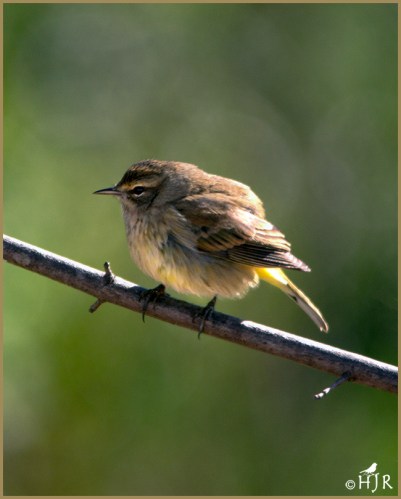
Palm Warbler
These birds migrate to the southeastern United States, the Yucatán Peninsula, islands of the Caribbean, and eastern Nicaragua south to Panama to winter. They are one of the earlier migrants to return to their breeding grounds in the spring, often completing their migration almost two months before most other warblers. Unlike most Setophaga species, the Palm warbler’s winter range includes much of the Atlantic coast of North America, extending as far north as southern Nova Scotia.
White-throated Sparrow

White-throated Sparrow
In winter, this species migrates to the southern and eastern United States. They are differential migrants with females migrating farther, increasing the proportion of females at lower latitudes in the Atlantic flyway. Females are smaller so they would not perform as optimally at colder, higher latitudes, and females avoid competition with the dominant males of the winter hierarchies by migrating farther. There is also no benefit for females to be among the first to return after winter, so migrating farther allows the males to return and establish territory a few weeks before their arrival.
© HJ Ruiz – Avian101
Share this:

Framed Memories # 5
-
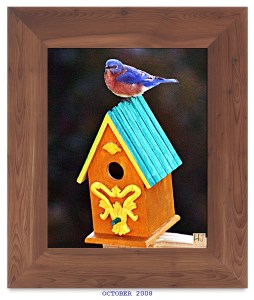
- Eastern Bluebird (M)
-
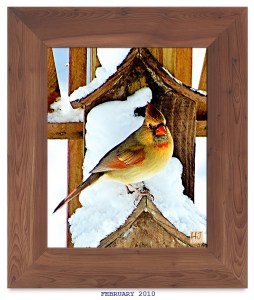
- Northern Cardinal (F)
© HJ Ruiz – Avian101
Share this:

Read Past Reviews

Book # 69

Quote from the Author
“A good chuckle is healthy, it helps you break the monotony of a serious life.” ~ H.J. Ruiz
 H.J. Ruiz - Avian101
You must be logged in to post a comment.