Photography of Birds – Set # 106
Set # 106
Brown-headed Nuthatch
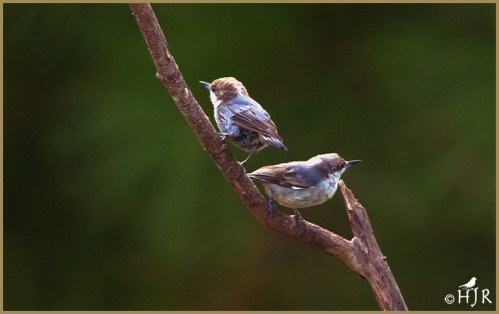
Brown-headed Nuthatch
Bold and inquisitive, this bird is readily approachable by humans. The bird is frequently observed using a small chip of bark held in its beak as a tool to dig for insects.
Carolina Chickadee

Carolina Chickadee
During the fall migration and winter, chickadees often flock together. Many other species of birds, including titmice, nuthatches, and warblers can often be found foraging in these flocks. Mixed flocks stay together because the chickadees call out whenever they find a good source of food. This calling out forms cohesion for the group, allowing the other birds to find food more efficiently.
© HJ Ruiz – Avian101
Share this:

Photography of Birds – Set # 105
Set # 105
Indigo Bunting
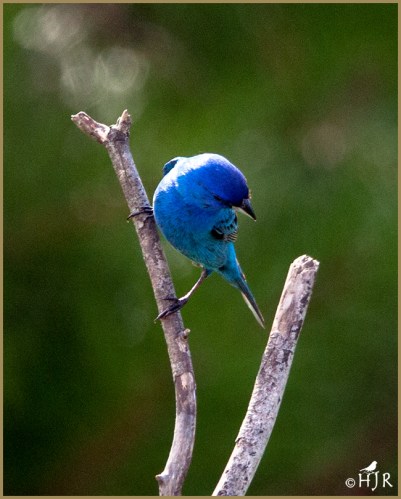
Indigo Bunting
The brown-headed cowbird may parasitize this species. Indigo buntings abandon their nest if a cowbird egg appears before they lay any of their own eggs, but accept the egg after that point. Pairs with parasitized nests have less reproductive success. The bunting chicks hatch, but have lower survival rates as they must compete with the cowbird chick for food.
Blue Grosbeak
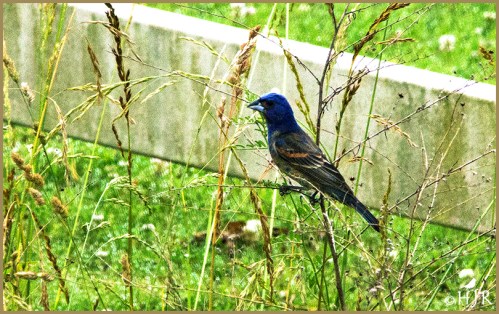
Blue Grosbeak
This is a migratory bird, with nesting grounds across most of the southern half of the United States and much of northern Mexico, migrating south to Central America and in very small numbers to northern South America; the southernmost record comes from eastern Ecuador. It eats mostly insects, but it will also eat snails, spiders, seeds, grains, and wild fruits. The blue grosbeak forages on the ground and in shrubs and trees.
© HJ Ruiz – Avian101
Share this:

Framed Memories – # 8
Photo Gallery
-

- Brown Thrasher
-
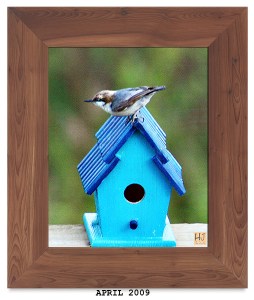
- Brown-headed Nuthatch
© HJ Ruiz – Avian101
Share this:

Photography of Birds – Set # 104
Set # 104
American Crow
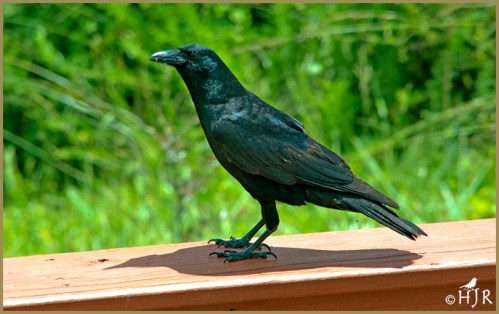
American Crow
The American crow is omnivorous. It will feed on invertebrates of all types, carrion, scraps of human food, seeds, eggs and nestlings, stranded fish on the shore and various grains. American crows are active hunters and will prey on mice, frogs, and other small animals. In winter and autumn, the diet of American crows is more dependent on nuts and acorns. Occasionally, they will visit bird feeders. The American crow is one of only a few species of bird that has been observed modifying and using tools to obtain food.
Common Grackle
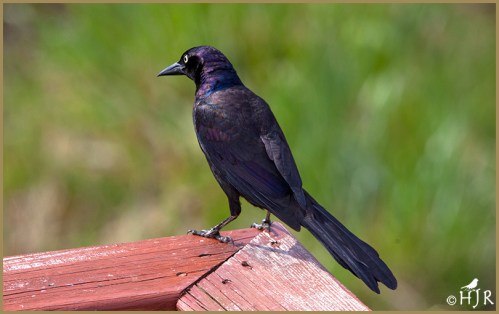
Common Grackle
This bird is a permanent resident in much of its range. Northern birds migrate in flocks to the Southeastern United States. The distribution of the common grackle is largely explained by annual mean temperature, and the species has expanded its range by greater than three-fold since the last glacial maximum, approximately 22,000 years ago.
© HJ Ruiz – Avian101
Share this:

Read Past Reviews

Book # 69
Quote from the Author
“A good chuckle is healthy, it helps you break the monotony of a serious life.” ~ H.J. Ruiz
 H.J. Ruiz - Avian101
You must be logged in to post a comment.