
Red Gallery – Northern Cardinal

Photo Gallery


© HJ Ruiz – Avian101
Share this:

Photography of Birds – Set # 161
Set # 161
Gray Catbird
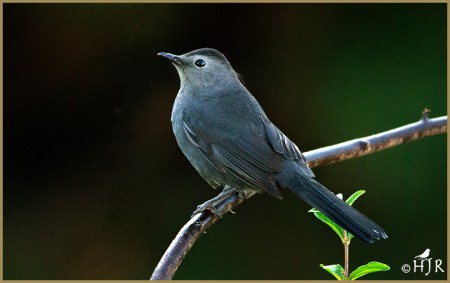
Gray Catbird
The Gray catbird tends to avoid dense, unbroken woodlands, and does not inhabit coniferous, pine woodland. Catbirds prefer a dense vegetative substrate, especially if thorny vegetation is present. Scrublands, woodland edges, overgrown farmland and abandoned orchards are generally among the preferred locations of the catbird. In Bermuda, its preferred habitats are scrub and myrtle swamp. During the winter season, the catbird has an affinity for berry-rich thickets, especially within proximity of water sources.
Brown-headed Cowbird
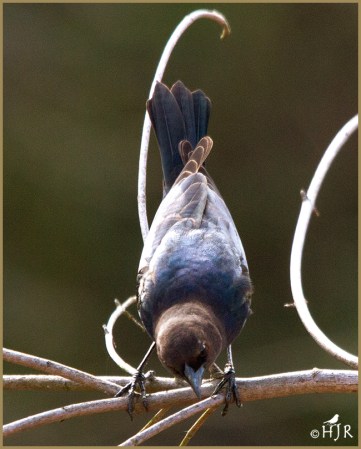
Brown-headed Cowbird (M)
The brown-headed cowbird is an obligate brood parasite: it lays its eggs in the nests of other small passerines (perching birds), particularly those that build cup-like nests. The brown-headed cowbird eggs have been documented in nests of at least 220 host species, including hummingbirds and raptors. The young cowbird is fed by the host parents at the expense of their own young. Brown-headed cowbird females can lay 36 eggs in a season. More than 140 different species of birds are known to have raised young cowbirds. Some host species, such as the house finch, feed their young a vegetarian diet. This is unsuitable for young brown-headed cowbirds, meaning almost none survive to fledge.
© HJ Ruiz – Avian101
Share this:

Photography of Birds – Set # 160
Set # 160
American Goldfinches
-
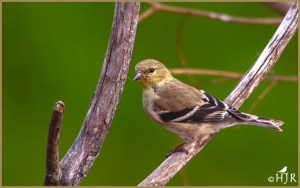
- Female
-
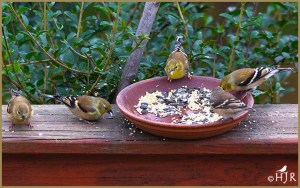
- Family
The American goldfinch is a granivore and adapted for the consumption of seedheads, with a conical beak to remove the seeds and agile feet to grip the stems of seedheads while feeding. This finch has also been known to eat garden vegetation, and is particularly fond of beet greens. It is a social bird, and will gather in large flocks while feeding and migrating. It may behave territorially during nest construction, but this aggression is short-lived. Its breeding season is tied to the peak of food supply, beginning in late July, which is relatively late in the year for a finch. This species is generally monogamous, and produces one brood each year.
© HJ Ruiz – Avian101
Share this:

Framed Memories – # 19
Photo Gallery
-
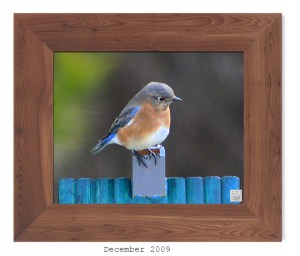
- Eastern Bluebird
-
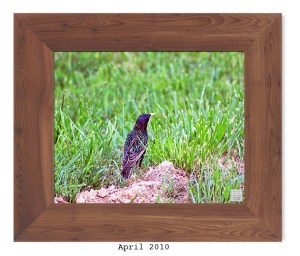
- European Starling
© HJ Ruiz – Avian101
Share this:

Read Past Reviews

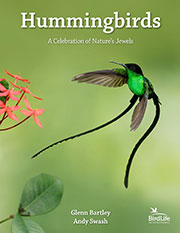
Book # 69
Quote from the Author
“A good chuckle is healthy, it helps you break the monotony of a serious life.” ~ H.J. Ruiz
 H.J. Ruiz - Avian101
You must be logged in to post a comment.