
Photography of Birds – Set # 167
Set # 167
Blue Jays
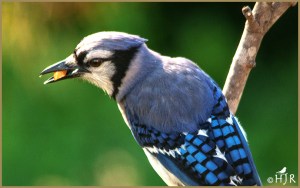

The Blue Jay (Cyanocitta cristata) is a passerine bird in the family Corvidae, native to eastern North America. It resides through most of the eastern and central United States, although eastern populations may be migratory. Resident populations are also found in Newfoundland, Canada while breeding populations can be found across southern Canada. It breeds in both deciduous and coniferous forests, and is common in residential areas.
I find the Blue Jays to be beautiful birds, medium size, shy but will get what they want through aggression.
© HJ Ruiz – Avian101
Share this:

Red Art Gallery – Northern Cardinal # 1
Red Art Gallery

Northern Cardinal (Male)
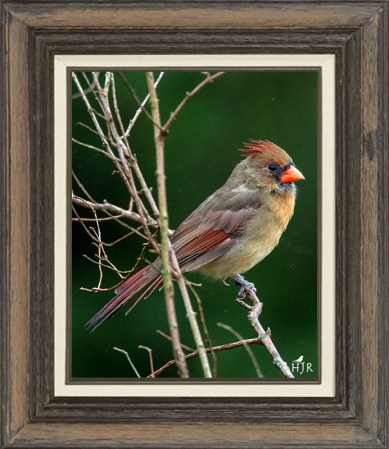
Northern Cardinal (Female)
© HJ Ruiz – Avian101
Share this:

Photography of Birds – Set # 166
Set # 166
Yellow-crowned Night Heron
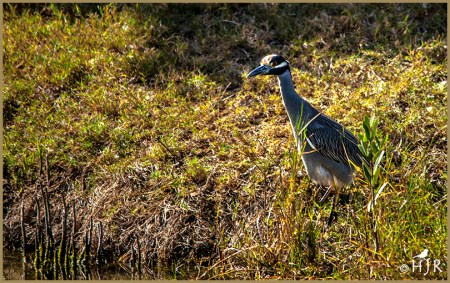
Yellow-crowned Night Heron
The yellow-crowned night heron is a rather stocky wading bird, ranging from 55 to 70 cm (1 ft 10 in–2 ft 4 in) and from 650 to 850 g (1.43–1.87 lb), the females being a little smaller than the males. The yellow-crowned night heron has a wingspan ranging from 101-112 cm.The neck, slim when extended, gives the bird a comically large head compared to its body, with a large and heavy bill.
Brown Pelicans
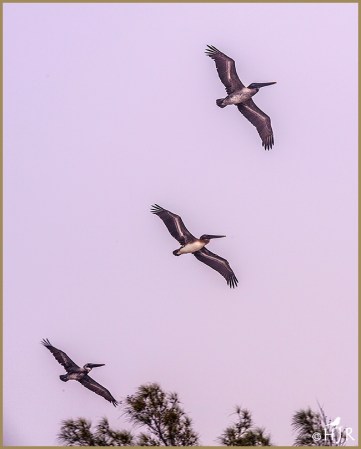
Brown Pelicans
The nonbreeding, adult, Brown Pelican has a white head and neck, and the pre-breeding adult has a creamy yellow head. The pink skin around the eyes becomes dull and gray in the non-breeding season. It lacks any red hue, and the pouch is strongly olivaceous ochre tinged and the legs are olivaceous gray to blackish-gray. It has pale blue to yellowish white irides which become brown during the breeding season. During courtship, the bill becomes pinkish red to pale orange, redder at the tip, and the pouch is blackish. Later in the breeding season the bill becomes pale ash-gray over most of the upper jaw and the basal third of the mandible.
© HJ Ruiz – Avian101
Share this:

Photography of Birds – Set # 165
Set # 165
Note at 10:20 a.m.Thursday:
Hurricane Zeta showed its power starting at midnight until this morning. Luckily, despite the heavy rain and strong wind did not cause any damage to our home. I saw during the event trees bent by wind, it rained buckets, sideways in direction of the wind. The sound was tremendous. It was the closest we ever had the hurricane. We lost electric power until ten minutes before my post. So here I am!
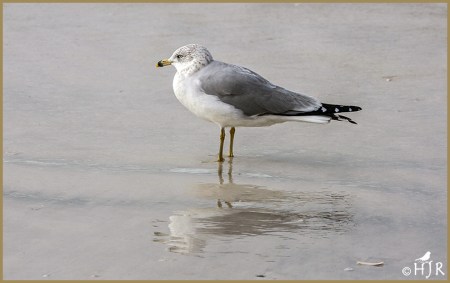
Ring-billed Gull
Ring-billed Gull
The Ring-billed gull’s head, neck and underparts are white; the relatively short bill is yellow with a dark ring; the back and wings are silver gray; and the legs are yellow. The eyes are yellow with red rims. This gull takes three years to reach its breeding plumage; its appearance changes with each fall molt. The average lifespan of an individual that reaches adulthood is 10 years.
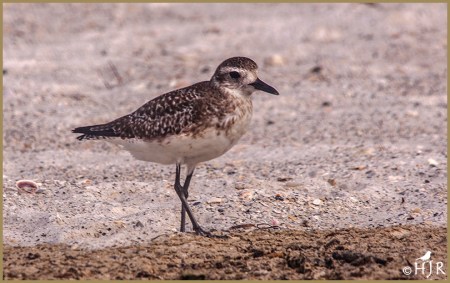
Black-bellied Plover
Black-bellied Plover
In spring and summer (late April or May to August), the adults are spotted black and white on the back and wings. The face and neck are black with a white border; they have a black breast and belly and a white rump. The tail is white with black barring. The bill and legs are black. They moult to winter plumage in mid August to early September and retain this until April; this being a fairly plain grey above, with a grey-speckled breast and white belly. The juvenile and first-winter plumages, held by young birds from fledging until about one year old, are similar to the adult winter plumage but with the back feathers blacker with creamy white edging. In all plumages, the inner flanks and axillary feathers at the base of the underwing are black, a feature which readily distinguishes it from the other three Pluvialis species in flight.
© HJ Ruiz – Avian101
Share this:

Read Past Reviews

Book # 69
Quote from the Author
“A good chuckle is healthy, it helps you break the monotony of a serious life.” ~ H.J. Ruiz
 H.J. Ruiz - Avian101
You must be logged in to post a comment.