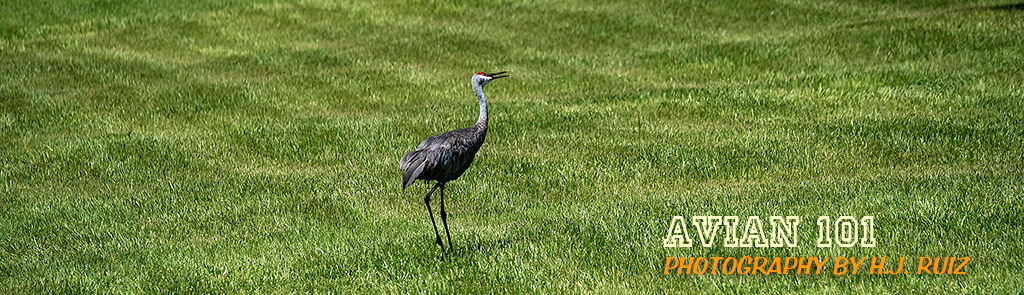
Photography of Birds – Set # 175
Set # 175
Downy Woodpecker
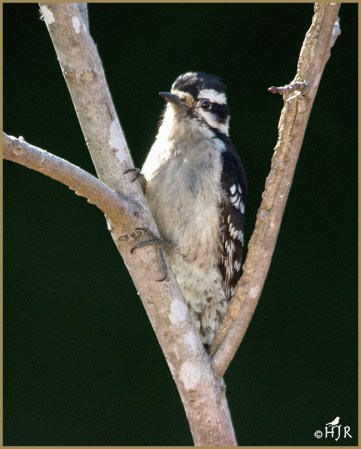
Downy Woodpecker
The Downy Woodpecker gives a number of vocalizations, including a short pik call. One may identify the woodpecker by pik-call, counting half a second between piks (a total of four must be heard). The rattle-call is a short burst that sounds similar to a bouncing ball, while that of the Hairy Woodpecker is a shorter burst of the same amplitude. Like other woodpeckers, it also produces a drumming sound (sounds like four taps )with its beak as it pecks into trees. Compared to other North American species its drums are slow.
Red-winged Blackbird (F)

Red-winged Blackbird (F)
Young birds resemble the female, but are paler below and have buff feather fringes. Both sexes have a sharply pointed bill. The tail is of medium length and is rounded. The eyes, bill, and feet are all black. Unlike most North American passerines, which develop their adult plumage in their first year of life, so that the one-year-old and the oldest individual are indistinguishable in the breeding season, the sergeant thrush does not. it acquires until after the breeding season of the year following its birth, when it is between thirteen and fifteen months of age. Young males go through a transition stage in which the wing spots have an orange coloration before acquiring the most intense tone typical of adults.
© HJ Ruiz – Avian101
Share this:

Framed Memories # 22
Photo Gallery
-
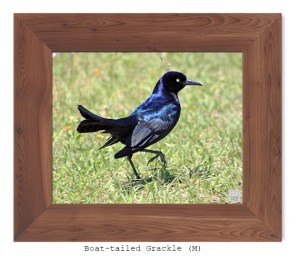
- Boat-tailed Grackle
-
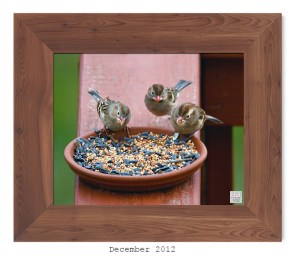
- Field Sparrows
© HJ Ruiz – Avian101
Share this:

Photography of Birds – Set # 174
Set # 174
Great Egret

Great Egret
The great egret feeds in shallow water or drier habitats, feeding mainly on fish, frogs, small mammals, and occasionally small reptiles and insects, spearing them with its long, sharp bill most of the time by standing still and allowing the prey to come within its striking distance of its bill, which it uses as a spear. It often waits motionless for prey, or slowly stalks its victim.
Glossy Ibis

Glossy Ibis
The diet of the Glossy Ibis is variable according to the season and is very dependent on what is available. Prey includes adult and larval insects such as aquatic beetles, dragonflies, damselflies, grasshoppers, crickets, flies and caddisflies, Annelida including leeches, molluscs (e.g. snails and mussels), crustaceans (e.g. crabs and crayfish) and occasionally fish, amphibians, lizards, small snakes and nestling birds.
© HJ Ruiz – Avian101
Share this:

Photography of Birds – Set # 173
Set # 173
Lincoln’s Sparrow
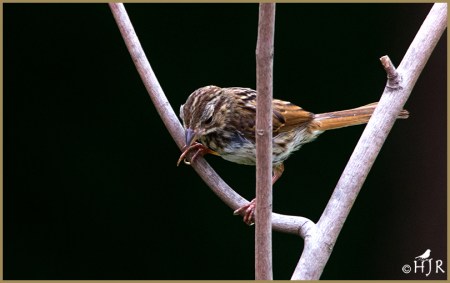
Lincoln’s Sparrow
Male Lincoln’s Sparrows arrive to the breeding ground in mid or late May and begin to sing in order to attract a mate. In early June, females build their nests on the ground under dense grass or shrub cover, usually inside a low willow shrub, mountain birch, or sunken in a depression of sphagnum moss Their nest is a well-covered shallow open cup of grasses or sedges. Clutch size is typically 3-5 eggs which are oval in shape and colored pale green to greenish-white and spotted reddish brown. One egg is laid per day, and females begin incubating eggs before the clutch is complete, while males do not incubate. Incubation lasts for about 12-14 days. Young are born altricial and leave the nest about 9-12 days after hatching, although they may be cared for by their parents for another 2-3 weeks. Fledglings are mostly flightless their first day, but their flying abilities quickly improve, and by day six they can fly more than 10 meters at a time.
Song Sparrow
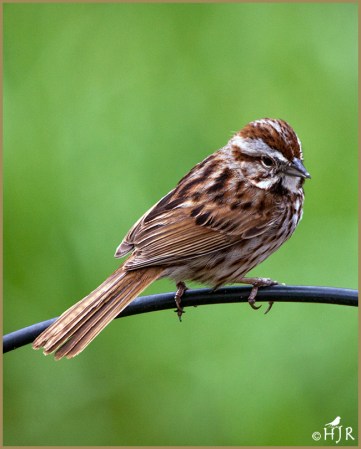
Song Sparrow
Song Sparrows’ nests are parasitized by the brown-headed cowbird. The cowbirds’ eggs closely resemble song sparrows’ eggs, although the cowbirds’ eggs are slightly larger. Song sparrows recognize cowbirds as a threat and attack the cowbirds when they are near the nest. There is some evidence that this behavior is learned rather than instinctual. A more recent study found that the behavior of attacking female cowbirds near nests may actually attract cowbird parasitism because the female cowbirds use such behavior to identify female song sparrows that are more likely to successfully raise a cowbird chick. One study found that while cowbird parasitism did result in more nest failure, overall there were negligible effects on song sparrow populations when cowbirds were introduced to an island. The study pointed to a number of explanatory factors including song sparrows raising multiple broods, and song sparrows’ abilities to raise cowbird chicks with their own.
© HJ Ruiz – Avian101
Share this:

Read Past Reviews

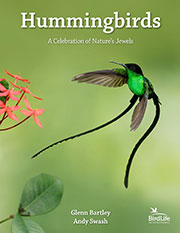
Book # 69
Quote from the Author
“A good chuckle is healthy, it helps you break the monotony of a serious life.” ~ H.J. Ruiz
 H.J. Ruiz - Avian101
You must be logged in to post a comment.