
Red Art Gallery – Northern Cardinal # 5
Red Art Gallery
-
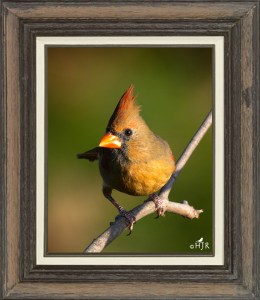
- Female
-

- Male
© HJ Ruiz – Avian101
Share this:

Photography of Birds – Set # 186
Set # 186
Red-headed Woodpecker
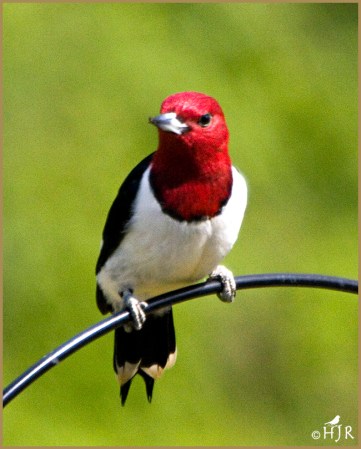
Red-headed Woodpecker
The Red-headed Woodpecker (Melanerpes erythrocephalus) is a small- or medium-sized woodpecker from temperate North America. Their breeding habitat is open country across southern Canada and the eastern-central United States. It is rated as least concern on the International Union for Conservation of Nature (IUCN)’s Red List of Endangered species, having been down-listed from near threatened in 2018. The red-bellied woodpecker also has its most prominent red part of its plumage on the head, but it looks quite different in other respects.
Northern Flicker
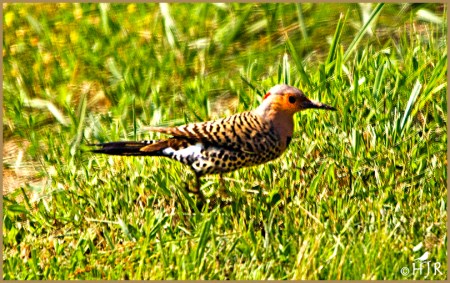
Northern Flicker
The Northern Flicker (Colaptes auratus) or common flicker is a medium-sized bird of the woodpecker family. It is native to most of North America, parts of Central America, Cuba, and the Cayman Islands, and is one of the few woodpecker species that migrate. Over 100 common names for the northern flicker are known, including yellowhammer (not to be confused with the Eurasian yellowhammer) Many of these names derive from attempts to imitate some of its calls.
© HJ Ruiz – Avian101
Share this:

Photography of Birds – Set # 185
Set # 185
Little Blue Heron

Little Blue Heron
The Little Blue Heron (Egretta caerulea) is a small heron belonging to the family Ardeidae. These herons breed in the Gulf states of the United States, through Central America and the Caribbean south to Peru and Uruguay. It is a resident breeder in most of its range, but some northern breeders migrate to the southeastern US or beyond in winter. There is post-breeding dispersal to well north of the nesting range, as far as the Canada–US border.
Great Blue Heron
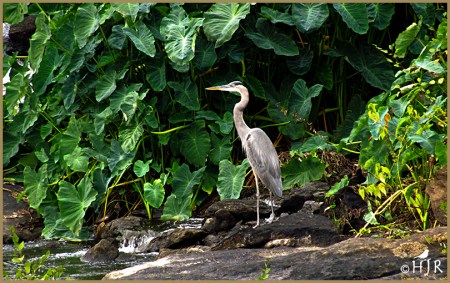
Great Blue Heron
The Great Blue Heron (Ardea herodias) is a large wading bird in the heron family Ardeidae, common near the shores of open water and in wetlands over most of North America and Central America, as well as the Caribbean and the Galápagos Islands. It is a rare vagrant to coastal Spain, the Azores, and areas of far southern Europe. An all-white population found in south Florida and the Florida Keys is known as the Great White Heron. Debate exists about whether this represents a white color morph of the great blue heron, a subspecies of it, or an entirely separate species. The status of white individuals known to occur elsewhere in the Caribbean, and very rarely elsewhere in eastern North America, is unclear.
© HJ Ruiz – Avian101
Share this:

Framed Memories # 24
Photo Gallery
-

- American Crow
-
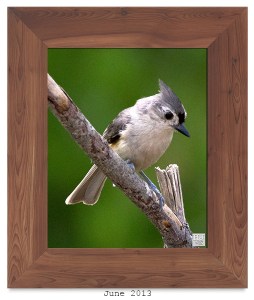
- Tufted Titmouse
© HJ Ruiz – Avian101
Share this:

Read Past Reviews

Book # 69

Quote from the Author
“A good chuckle is healthy, it helps you break the monotony of a serious life.” ~ H.J. Ruiz
 H.J. Ruiz - Avian101
You must be logged in to post a comment.